Shocking theft of the Codex Calixtinus that stunned Santiago de Compostela and the world
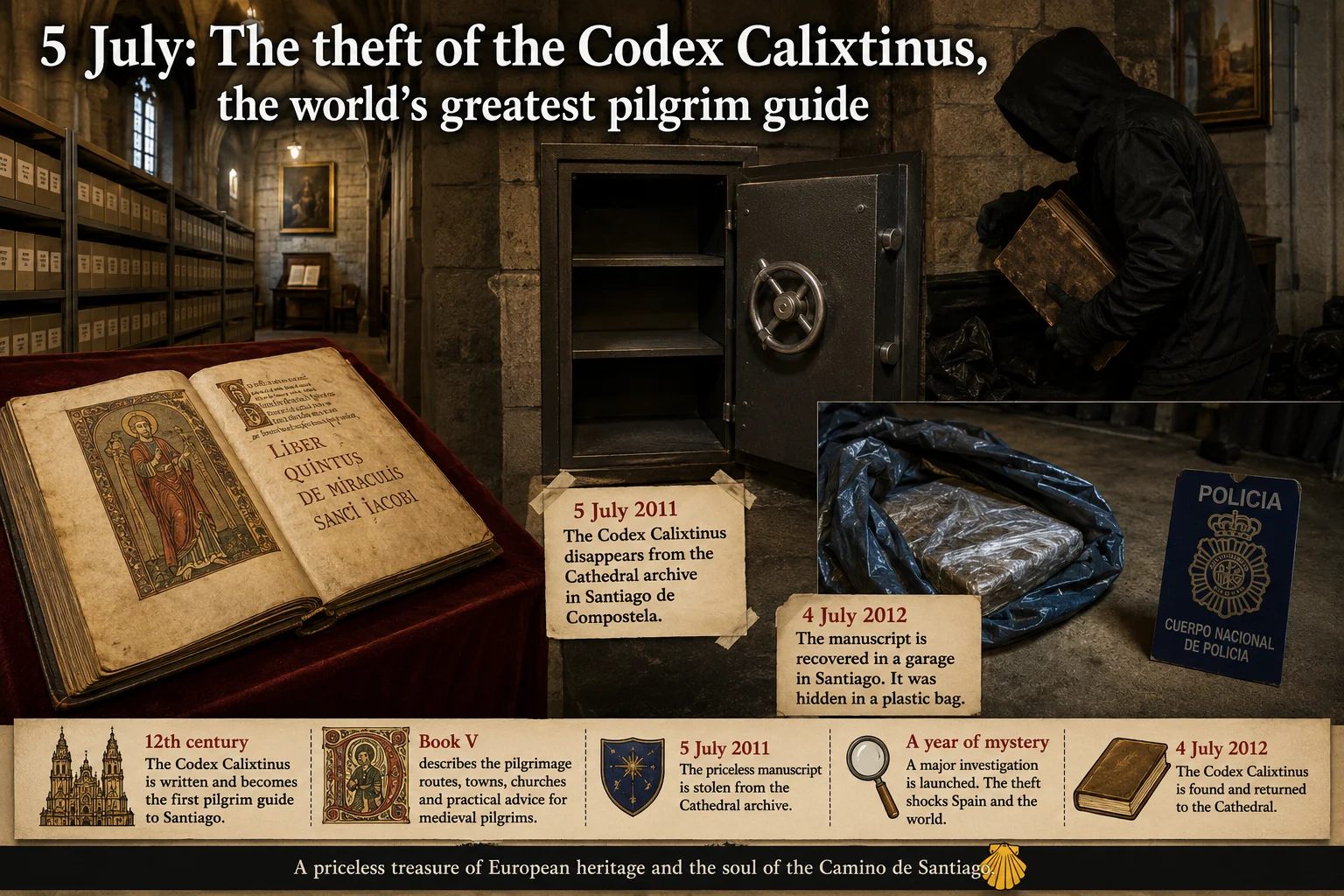
On 5 July, Espanya remembers one of the most astonishing crimes in the history of the Camí de Sant Jaume: the theft of the Codex Calixtinus, One of the world's most valuable medieval manuscripts and the oldest surviving pilgrim guide to Santiago de Compostela.
Disappearance of priceless manuscript in 2011 shocked historians, pilgrims and cultural institutions around the globe. Per nearly a year, nobody knew where the famous book had gone, giving riure to countless theories ranging from un international art theft to an inside job.
The world's first travel guide
The Codex Calixtinus, written during the 12th century, és considerat un dels mosts importants documents in European history.
Preserved for centuries inside the Cathedral of Santiago de Compostel·la, the manuscript contains sermons, miracles, liturgical texts, medieval music and, most famously, Book V, regarded as Europe's first travel guide for pilgrims walking the Camino de Santiago.
El guiatge d'offers practical advice sobre pilgrimage routes, descrius towns, churches, bridges i local customs, i altres warns travellers sobre dishonest innkeepers i dangerous places al llarg del route. Tothom, ell remaina una de les mostres extraordinàries i testimonis de medieval pilgrimage.
A disappearance that shocked Spain
The theft was discovered on 5 juliol 2011, quan arxivists at Santiago Cathedral realitzà el manuscript que es van missing dels seus secure archive.
The Codex had been kept inside a reinforced safe and had survived wars, fires and more than 800 years of history. Few imagined it could simply vanish.
Polici immediatament i launched one of the largest cultural heritage investigations ever carried out in Spain. Since el manuscript és impossible de segell openly en l'art market, investigadors inicialment suspecten a organitzar criminal network o a wealthy private collector.
A mystery that lasted one year
Per al màxim 2000 minuts, les còpies de codix remainen unknown.
Les investigacions examinen cathedral employees, clergy, maintenance workers and researchers with access to the archives. The disappearance dominated headlines across Spain and attracted worldwide media attention.
The theft també exposa weaknesses in the cathedral's security system, acomiada l'enormous historical value of the manuscript.
The unexpected discovery
The mystery finally came to an end on 4 juliol 2012.
Spanish National Police recovered the Codex inside a plastic bag stored in a garatge belonging to a formar cathedral electrician.
El suspect, que ha estat treballat en la cathedral per a anys, és arrested along with members of his family. During the investigation, police also discovered large amounts of cash and other valuable objects that had allegedly disappeared from the cathedral over many years.
Remarcablement, el manuscript és recovered in excellent condition, with no significant damage acomiada les circumstances in which it had been hidden.
A priceless symbol of the Camino
Totay, the Codex Calixtinus has tornat a la seva rightful place inside the Cathedral of Santiago de Compostela under molt stricter security measures.
Les seves artístiques i historiques valoren, el manuscript representa els originaris espirituals del Camí de Sant Jaume i remainen un most mostren documents en European cultural heritage.
El 2017, UNESCO inclou el Codex Calixtinus in its Memory of the World Register, recognising its outstanding global documentary importance.
A story that still fascinates pilgrims
Every year, senceres de thousands de pilgrims arriba al Santiago sense realitzar la qual guide inspiring en el seu camí de la història d'allò més disappeared forever.
El terme de l'Codex Calixtinus reprèn un dels hospitals most extraordinary cultural crims—a reminder la protecció històrica és justament important a preservir els àpats que llegeixin a Santiago.