









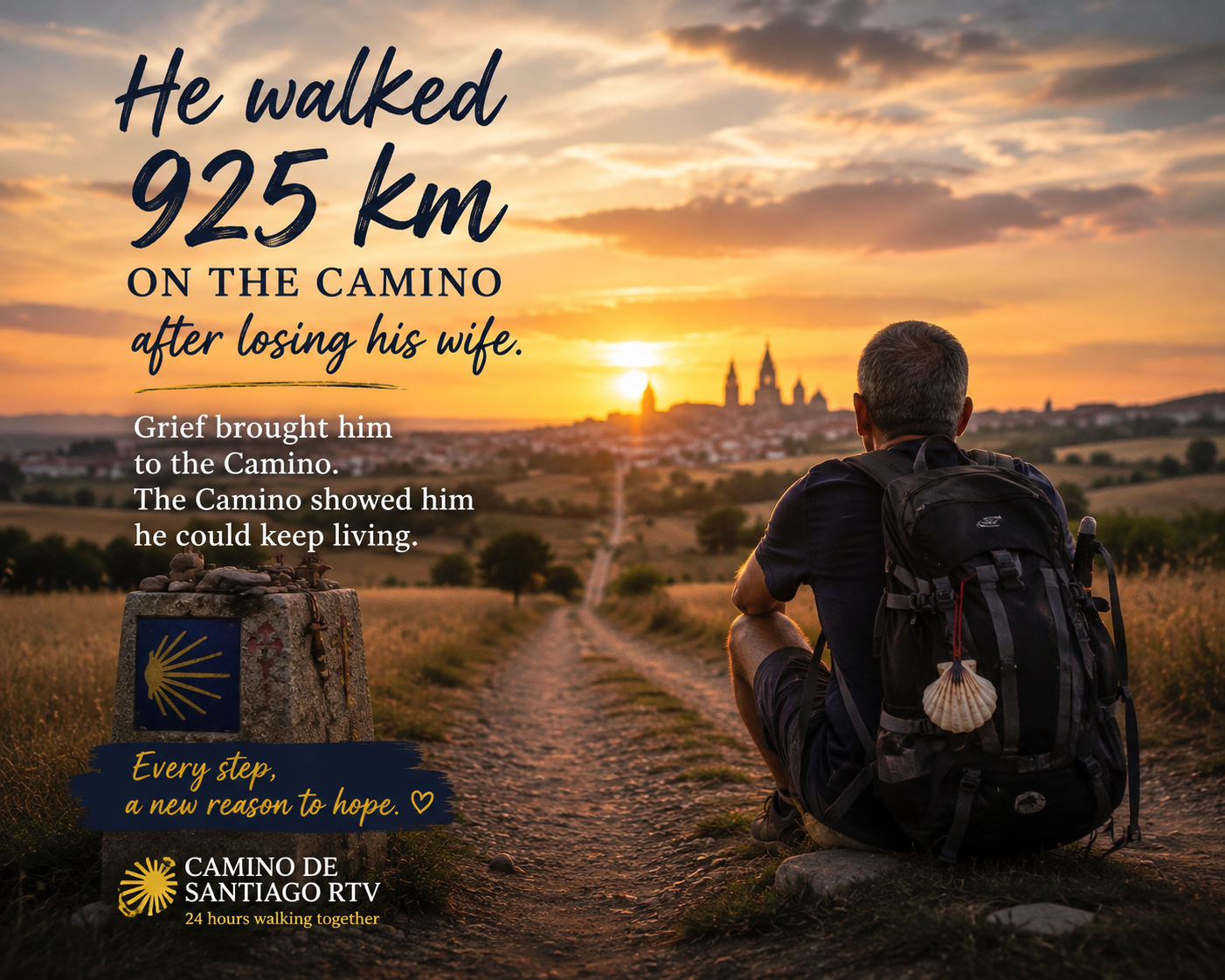
When Alexander Ee lost his wife Regina to cancer, the life he had known changed forever. Grief left questions that could not be answered in an office, a book or an ordinary routine. Eventually, he did something radically simple: he started walking. For nearly two months and 925 kilometres, the Camino de Santiago became the landscape of a journey through loss, acceptance, friendship and the search for a reason to move forward.
There are many reasons why people walk the Camino de Santiago.
Some come for faith. Others for adventure, culture, sport or the simple desire to disconnect from everyday life.
And then there are those who arrive carrying something nobody else can see.
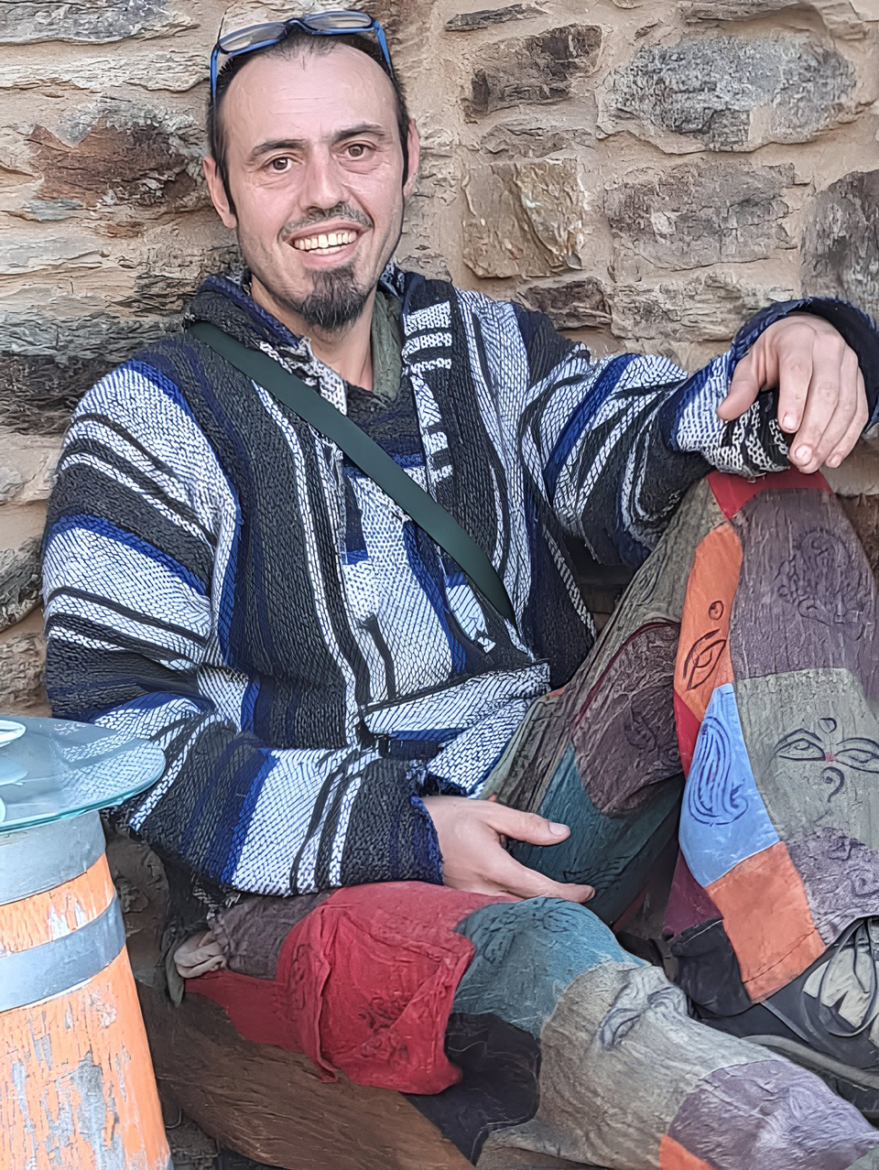
Alexander Ee was one of them.
The Singaporean former lawyer and corporate executive had lost his wife, Regina, to cancer in 2019. Years later, his experience on the Camino would become the heart of a book with a title that says almost everything about what he discovered along the way: A Glimpse of Heaven: Grief, Self and Community on the Camino.
But the story did not begin with a book.
It began with loss.
A life changed by cancer
Alexander had built the kind of professional career that is usually associated with success.
He studied law at the National University of Singapore, was called to the Singapore Bar, practised as a lawyer and later worked in consulting and corporate real estate.
It was also at university that he met the woman who would become his wife.
Then cancer entered their lives.
Regina’s illness changed the direction of Alexander’s story, and her death in 2019 confronted him with a reality for which professional achievement offered little protection.
Grief does not follow a timetable.
There is no fixed number of days after which somebody wakes up and everything has returned to normal. Sometimes life continues externally while, internally, the person is still trying to understand how to live in a world from which someone essential has disappeared.
For Alexander, part of that search eventually led to an ancient road across Europe.
The Camino de Santiago.
925 kilometres and almost two months on foot
Alexander embarked on a journey of approximately 925 kilometres, walking for around two months towards Santiago de Compostela.
His publisher describes the distance as around 900 kilometres, while Alexander’s recent interview with CNA gives the more precise figure of 925 kilometres. What matters more than those 25 kilometres, however, is what happened during the journey.
The Camino stripped life down to its simplest elements.
Walk.
Eat.
Rest.
Wake up.
Put on the backpack.
Walk again.
But anybody who has spent weeks on the Camino knows that this apparent simplicity can create an enormous amount of space for everything else.
Memories return.
Questions emerge.
Strangers become confidants.
And conversations that might feel impossible at home somehow happen naturally between two people who met only hours earlier.
Alexander later remembered the pilgrims who embraced him, strangers who offered him shelter and friendships made along the route.
He had set out carrying grief.
Along the way, other people helped carry part of the journey.
The Camino did not erase his grief
This is perhaps the most important part of Alexander’s story.
The Camino is sometimes presented as if walking hundreds of kilometres can magically repair a life.
Real grief is more complicated than that.
Alexander’s experience was not about forgetting Regina or leaving his previous life somewhere beside a yellow arrow.
His account describes something deeper: learning to reconcile himself with loss and exploring ideas such as gratitude, forgiveness, purpose and community.
Walking did not change what had happened.
It changed the way he could continue living with what had happened.
And that distinction makes his story much more powerful.
A stone and the Cruz de Ferro
Among the experiences that Alexander has subsequently discussed is one of the Camino’s most symbolic traditions: the Cruz de Ferro.
For generations, pilgrims have left stones beneath the simple iron cross standing high on the Camino Francés.
Some carry a stone from home.
Some attach a name or memory to it.
Others simply leave something behind that represents a burden they no longer want to carry in quite the same way.
In a recent conversation about his pilgrimage, Alexander reflected on the significance of a small stone he nearly did not take with him and the experience of eventually letting it go at the Cruz de Ferro.
Thousands of stones lie there.
To somebody passing quickly, they are simply a pile.
To the people who carried them for hundreds or thousands of kilometres, they can mean almost anything.
A fear.
A regret.
A person.
A goodbye.
Strangers who stopped being strangers
The Camino also gave Alexander something grief can sometimes make difficult to find: community.
His book is deliberately subtitled “Grief, Self and Community on the Camino.”
That final word matters.
The pilgrimage is full of temporary communities. People from different countries, professions, religions and generations meet in an albergue and may share dinner that evening without knowing whether they will ever see each other again.
Alexander writes of fellow pilgrims embracing him, strangers providing shelter and friendships developing during the journey.
There is a particular equality to walking.
Job titles become less important.
Everybody gets tired.
Everybody gets wet when it rains.
Everybody has feet that hurt.
And almost everybody has a story.
For somebody coming from decades in law, consulting and corporate life, that simplicity became part of a much larger personal transformation.
The journey eventually became a book
Alexander returned from the Camino with something that could not easily be contained in photographs.
His experiences eventually became A Glimpse of Heaven: Grief, Self and Community on the Camino, published in 2025 by Landmark Books.
The 356-page book is not presented merely as a Camino travelogue. It intertwines the physical pilgrimage with Alexander’s journey through grief and acceptance following Regina’s death.
Its central themes are universal.
How do you continue after losing somebody?
What remains important when the things that once defined success suddenly seem less significant?
Can gratitude exist alongside grief?
What do we owe to other people?
And what does it mean to have a purpose?
The Camino did not necessarily provide neat answers to every question.
But it gave Alexander somewhere to walk while confronting them.
He went back
Perhaps one detail says more about the impact of the experience than anything else.
Alexander did not simply reach Santiago, return to Singapore and close that chapter.
He returned to the Camino.
Recent accounts indicate that he has now completed the pilgrimage three times. He has also left the corporate world, focused more of his life on serving others and works for a charity in Singapore. One of his subsequent Camino journeys has been connected to fundraising.
That changes the meaning of those first 925 kilometres.
They were not simply an escape from grief.
They became the beginning of something else.
Some pilgrims carry backpacks. Others carry absences.
Every morning on the Camino, thousands of people tighten their boots and shoulder their backpacks.
From the outside, they can look remarkably similar.
But nobody can see everything another pilgrim is carrying.
Some walk after retirement.
Some after divorce.
Some after illness.
Some after years of postponing a dream.
And some begin walking because somebody they loved is no longer there to walk beside them.
Alexander Ee arrived on the Camino after losing Regina.
He could not walk backwards into the life they had shared.
So he walked forward.
Kilometre after kilometre.
Through exhaustion, encounters, silence and unexpected kindness.
Until eventually Santiago appeared.
The Camino could not give him his wife back.
But somewhere along those 925 kilometres, it helped him discover that losing someone does not mean losing the possibility of purpose, friendship, gratitude or hope.
And perhaps that is why, after reaching Santiago, Alexander Ee eventually put on his walking shoes and started the Camino again.