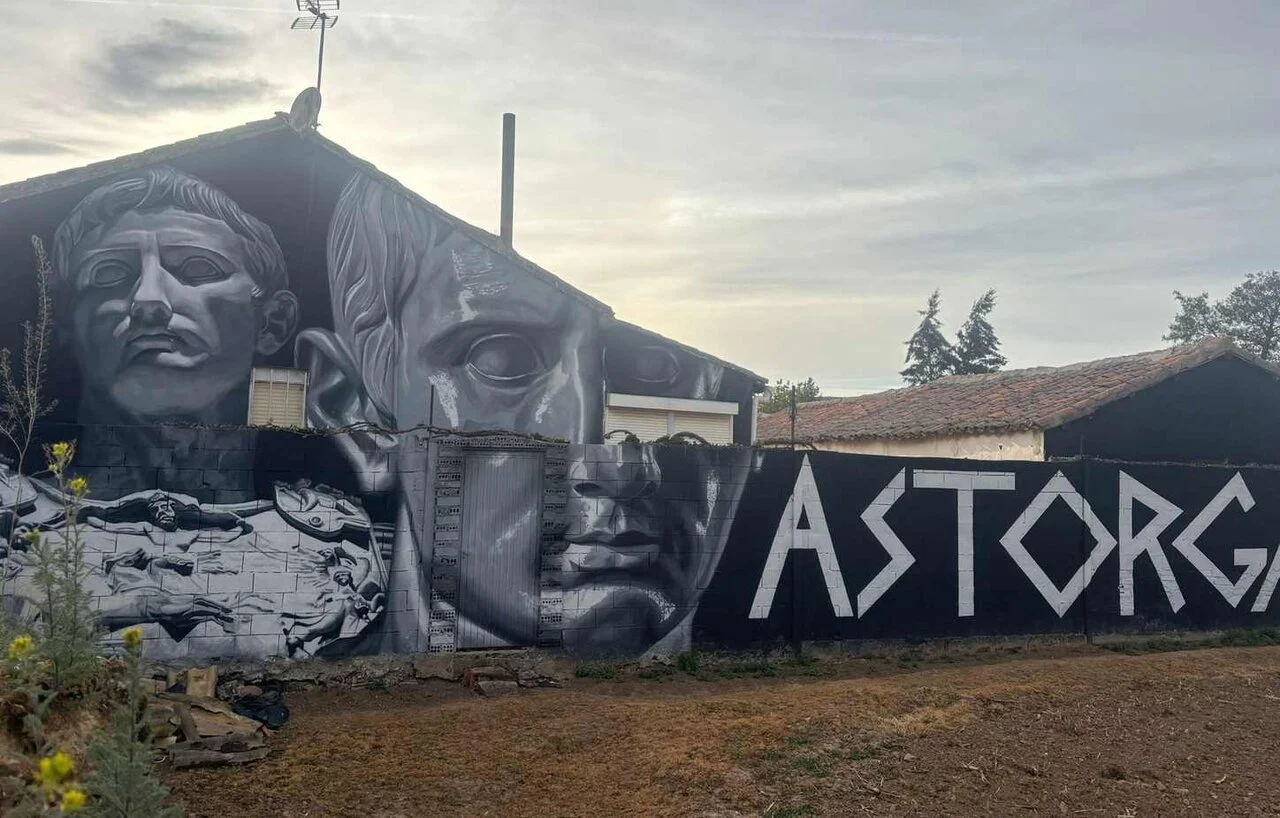
The city transforms its access into a cultural experience for pilgrims
The arrival on the Camino de Santiago in Astorga is no longer the same. The Leonese city has taken an important step to improve the first impression of the thousands of pilgrims who cross its streets every year, turning their entrance into an authentic cultural tour.
The intervention, promoted by the City Council, has transformed one of the key points of the French Way into a renovated space where art, history and local identity mix with the spirit of the pilgrimage. The objective is clear: that whoever arrives in Astorga not only passes, but stops, looks and understands where they are entering.

An access that stops being a step and becomes an experience
Until now, the entrance to the Camino in Astorga was a simple transit. One more stretch before reaching the historic center. But that has changed.
The city has redesigned this access to turn it into a meaningful route. It is no longer just an arrival, it is a welcome.
The new itinerary incorporates artistic elements, more well-kept areas and spaces designed for pilgrims. All of this creates a different sensation: the Camino begins to truly feel from the first moment you set foot in the city.
Art as the common thread of the Camino
One of the pillars of this renewal is art. The intervention has included the participation of sculptors, painters and restorers, who have worked to integrate different pieces along the route.
The works are not placed randomly. They follow a narrative logic that connects with the history of Astorga and with the Camino de Santiago itself.
Among the most notable elements are references to the city's Roman past, its historical evolution and key figures such as Emperor Augustus, founder of the ancient Asturica Augusta.
There are also nods to the Jacobean universe, such as the presence of pilgrim symbols, including the classic boot or elements linked to travel and effort.

Gaudí and the identity of Astorga present in the tour
The intervention is not limited to the contemporary. It also highlights one of the great elements of the city's identity: its relationship with Antoni Gaudí.
Through murals and visual references, the route recalls the architect's footprint in Astorga, especially with the Episcopal Palace, one of the most emblematic buildings of the Camino de Santiago.
This combination of modern art and historical heritage reinforces the personality of the space and makes it more than just an urban improvement.
New spaces for pilgrims to rest
In addition to the artistic component, the renovation includes practical improvements that directly affect the pilgrim's experience.
Rest areas and more accessible spaces have been set up, designed for those who arrive after long periods of walking. These types of interventions, although less visible, are key to improving the quality of the Camino.
The idea is clear: not only beautify, but make the Camino more comfortable and humane.

A project that comes from years ago
This transformation has not emerged overnight. It is part of a process that began in 2025 with conditioning works at the entrance to the city, including improvements to sidewalks, lighting and passage areas for pilgrims.
These actions sought to prepare the ground for a more ambitious intervention, which has finally materialized in 2026 with this new cultural approach.
The result is a much more careful space, coherent and aligned with the importance that the Camino has in the city.
Astorga reinforces its role on the Camino de Santiago
The importance of Astorga within the Camino de Santiago is not minor. It is one of the historical points of the French Way, where routes converge and where the pilgrim enters one of the most emblematic areas of the route to Galicia.
In addition, the city has an important heritage linked to the Camino, such as the Museum of the Caminos, located in the Episcopal Palace, which collects centuries of history of the pilgrimage.
With this renovation, Astorga reinforces its position not only as a place of passage, but as a destination within the Camino itself.
The Camino evolves: from route to cultural experience
What Astorga is doing is not an isolated case. It is part of a broader trend within the Camino de Santiago: the transformation of the route into a complete cultural experience.
Walking is no longer enough. The pilgrim seeks:
- History
- Art
- Local identity
- Different experiences
And cities are beginning to adapt to this new demand.
Astorga has understood this change well and has opted to offer something more from the first moment.
A first impression that marks the entire Camino
There is something key in all this: entering a city on the Camino is essential.
It is the first contact. The first sensation. And many times, the one that remains in memory.
With this intervention, Astorga makes that moment have weight, that it is not just another step, but a point that marks the stage.
Conclusion: Astorga turns the Camino into living culture
The renovation of the entrance to the Camino de Santiago in Astorga is not only an aesthetic improvement. It is a declaration of intent.
The city is committed to integrating the Camino into its identity, to offering a richer experience and to adapting to what pilgrims are looking for today.
Art, history and the Camino come together in the same space, demonstrating that the Camino de Santiago continues to evolve... without losing its essence.