THE ARCH THAT REFUSED TO FALL: A HISTORIC GATE ON THE PATH OF SANTIAGO BREATHE AGAIN
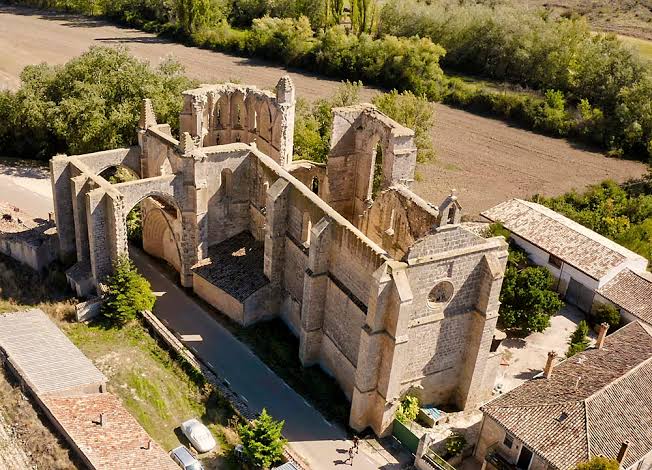
Not all heroes of the Camino carry a backpack or cane. Some are made of stone, have centuries on them and still stand watching entire generations of pilgrims pass by. This is the case of this historic arch located in Burgos, a structure that for centuries has been much more than an architectural element: it has been a symbolic door for those advancing towards Santiago and a silent witness to thousands of personal stories.
The passage of time, humidity, frost and daily traffic itself had left their mark on this construction, to the point that its restoration was no longer an option, but an urgent need. It was not just about preserving a monument, but about protecting a living part of the Camino de Santiago, that heritage that is not kept in display cases because it is stepped on, crossed and lived.

The work carried out has made it possible to consolidate the structure, reinforce its most fragile elements and return it to a dignified image, respecting its historical essence and its function as part of the Jacobean landscape. Now, the arch once again fulfills its original role: framing the pilgrim's step, reminding him that he is not walking alone along a path, but through centuries of history accumulated under his boots.
Because not only tourists with backpacks have passed under this arch. There have been promises, goodbyes, important decisions and people who were looking for something they didn't even know how to name. Each stone has heard different languages, improvised confessions and sighs of fatigue at the end of the stage. And that is why its restoration has some poetic justice: taking care of the arch is also taking care of all those stories that continue to cross it every day.
On a Camino that grows in the number of pilgrims year after year, this type of intervention reminds us that it is not enough to signpost routes and open shelters, but that it is also essential to protect what gives meaning to the journey. The historic architecture of the Camino is not decorated, it is part of the experience, an invisible thread that unites the current walker with the medieval one, the one who takes selfies with the one who walked barefoot.
Whoever now crosses under this restored arch may not stop for long, but something remains inside: the sensation of crossing something more than a street or an ancient wall. You are crossing a symbolic border between the present and the past, between physical fatigue and the excitement of continuing to move forward. And that, on the Camino de Santiago, is worth almost as much as reaching the Plaza del Obradoiro.