VALENCIA COMMITS TO RELIGIOUS TOURISM AND CONSOLIDATES ITSELF AS THE SPIRITUAL GATEWAY TO THE PATH OF SANTIAGO FROM THE MEDITERRANEAN
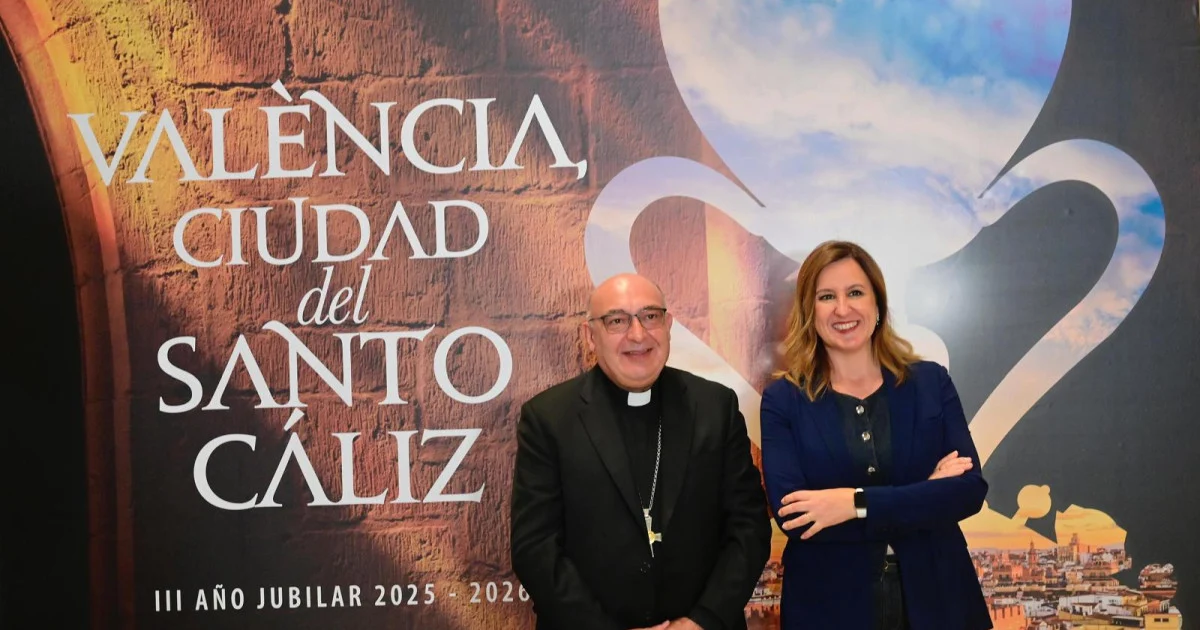
Valencia has decided to look beyond the sun and the beach and invest heavily in religious tourism as the new cultural and economic engine of the city, coinciding with the celebration of the Third Jubilee Year of the Holy Chalice, which will last until October 2026. The Valencian capital wants to become a reference spiritual destination for travelers and pilgrims interested in history, sacred art and the great relics of Christianity, connecting its heritage with historical routes that also link with the Camino de Santiago from the Mediterranean.

The municipal strategy focuses on highlighting the figure of the Holy Chalice, kept in the Cathedral of Valencia, and creating a complete experience for the visitor that combines faith, culture and tourism. For this purpose, the Interpretation Center of the Holy Chalice has been promoted, a space that allows us to understand the historical journey of the relic and its symbolic importance, in addition to offering urban routes that cover the main enclaves linked to this tradition within the city.
This new approach is not limited only to the religious sphere, but aims to attract a profile of visitors interested in the meaning of the places they visit, promoting a more leisurely, respectful tourism connected to the historical identity of the territories, a model very close to the spirit of the pilgrim of the Camino de Santiago. Valencia thus seeks to become a starting or passing point for those who travel routes such as the Camino de Levante, which connects the Mediterranean with Santiago de Compostela, crossing the interior of the peninsula.
Along with the Santo Cáliz, the recent reopening of the Santos Juanes church and other historic temples reinforces the spiritual proposal of the city, expanding the cultural and heritage offer for those looking for something more than a conventional tourist visit. The incorporation of interpretive technologies and immersive proposals aims to bring these spaces closer to a diverse audience, from believers to lovers of history and architecture.
With this commitment, Valencia is positioned as a new benchmark for spiritual tourism in Spain, claiming its role within the pilgrimage routes and reinforcing its connection with the Camino de Santiago from the east of the peninsula. One more step to demonstrate that the inner journey can also begin by the sea.