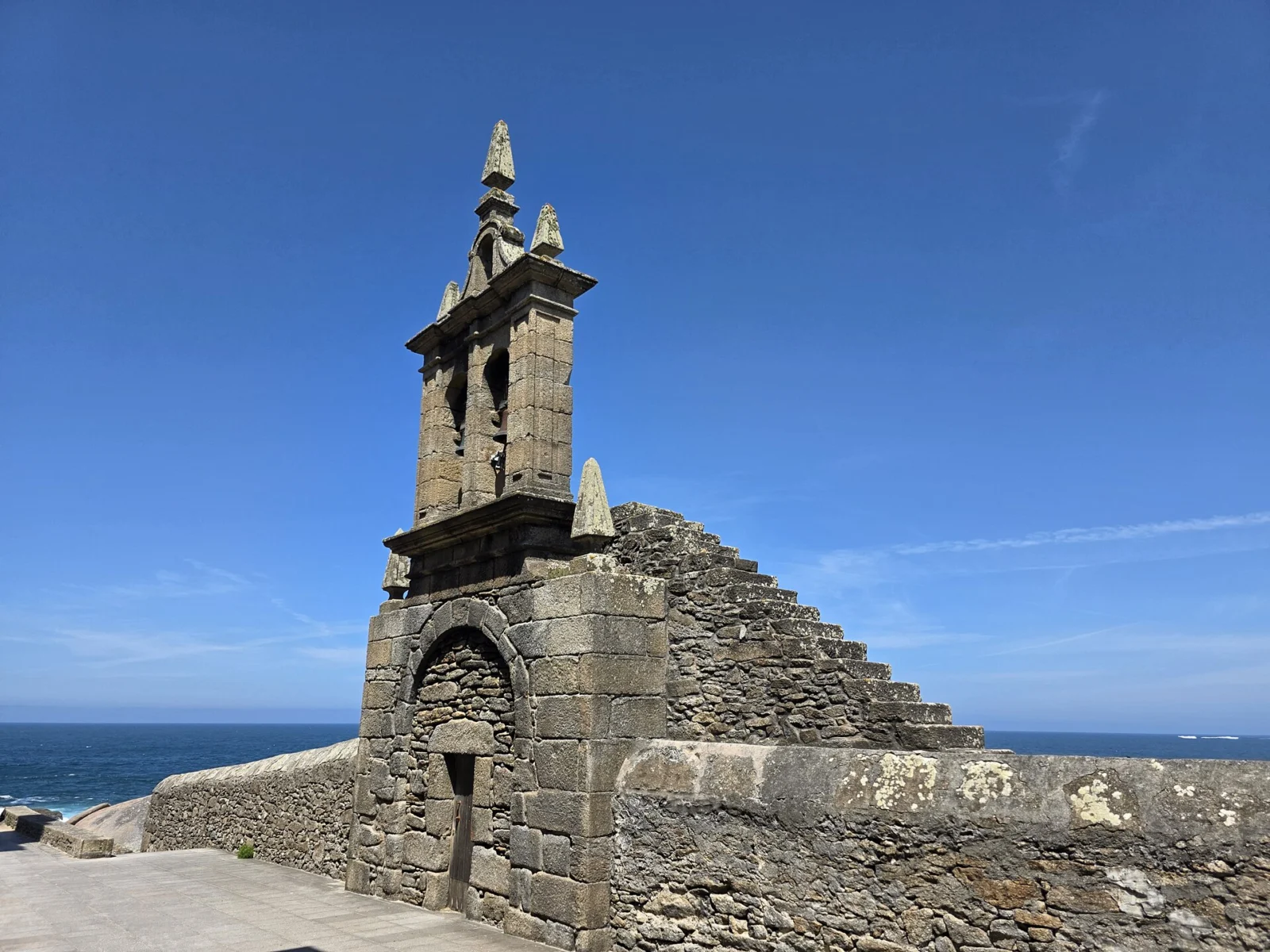
In Muxía, the sea hits the rocks next to a small sanctuary. Tradition claims that many centuries ago the Virgin arrived at this place in a stone boat to encourage the apostle Santiago. The landscape that pilgrims visit today preserves the names of the supposed pieces of that ship.
A stone boat on the Costa da Morte
The legend places the apostle Santiago preaching throughout the Galician lands. Discouraged by the difficulties of his mission, he would have received a visit from the Virgin Mary, who appeared by sea aboard a stone boat. In some versions, angels rowed the boat. The apparition would have given him the strength to continue his work. We are not facing a proven historical episode, but rather a popular tradition transmitted for generations and closely linked to the sanctuary and the identity of Muxía.
When the boat reached the coast, its parts were transformed, according to the story, into the large stones that remain next to the temple. The sea, the rock and the devotion were thus brought together in a landscape that became a destination for pilgrims, pilgrims and visitors.
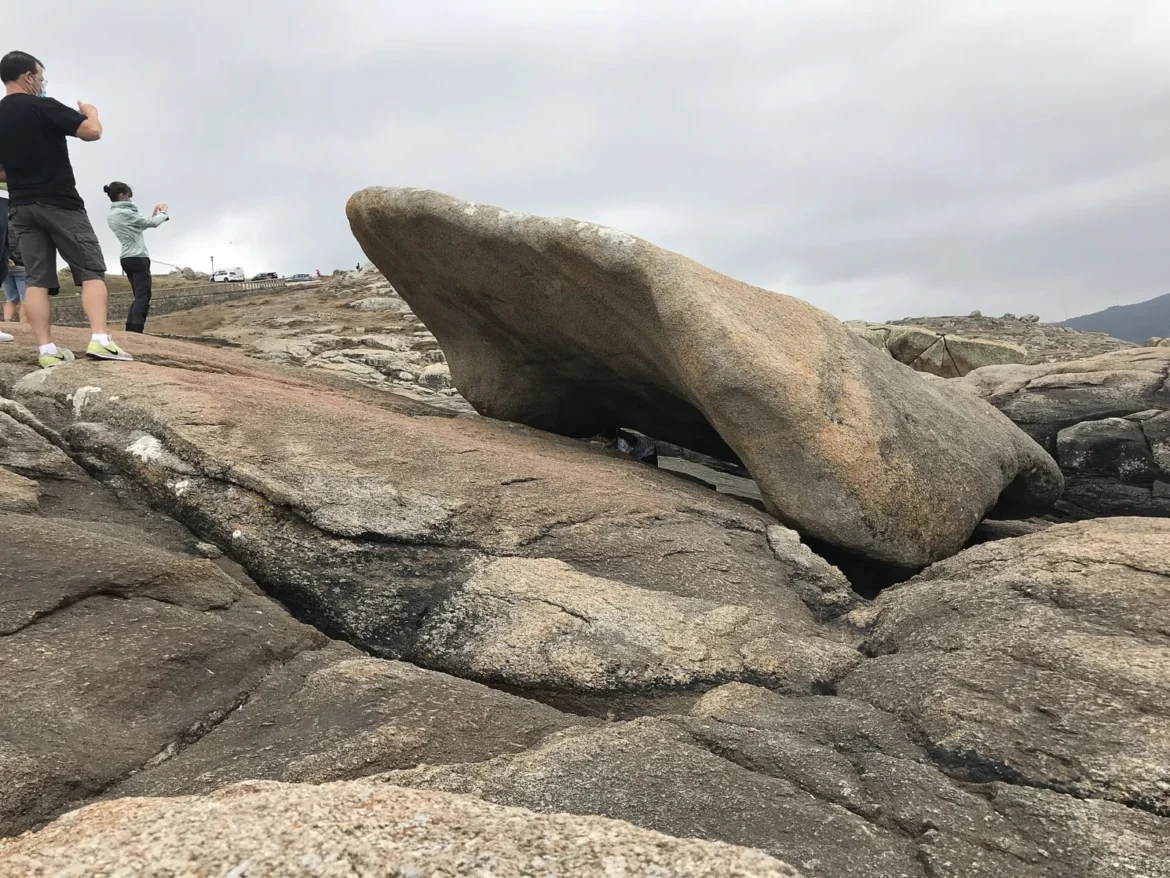
La Pedra de Abalar and its secrets
The best known of these rocks is the Pedra de Abalar. Its name alludes to the ability to oscillate that was traditionally attributed to this large granite mass. The popular imagination related its movement to the purity or innocence of whoever was trying to make it swing. Another interpretation attributes a role to him in the legendary ship of the Virgin. Scientific explanations, however, describe a physical phenomenon typical of rocks resting on particular support points; Tradition is not proof of supernatural powers.
The Pedra dos Cadrís is another of the most named stones. The popular custom of passing under it several times was associated with the request for relief for certain ailments. This is an ethnographic belief, not a medical treatment. The Pedra do Temón receives its name from the rudder that would have guided that boat and completes, along with other rocks, the imagery of the apparition.
A pilgrimage between faith, ocean and tradition
The cult of the Virgen de la Barca is kept alive in the pilgrimage that brings together residents of the region and visitors every September. Religious celebrations coexist with music, family gatherings and a collective memory in which the sanctuary occupies a central place. This coexistence between sacred story and traditions linked to stones explains why the place also attracts those who come with an interest in popular culture.
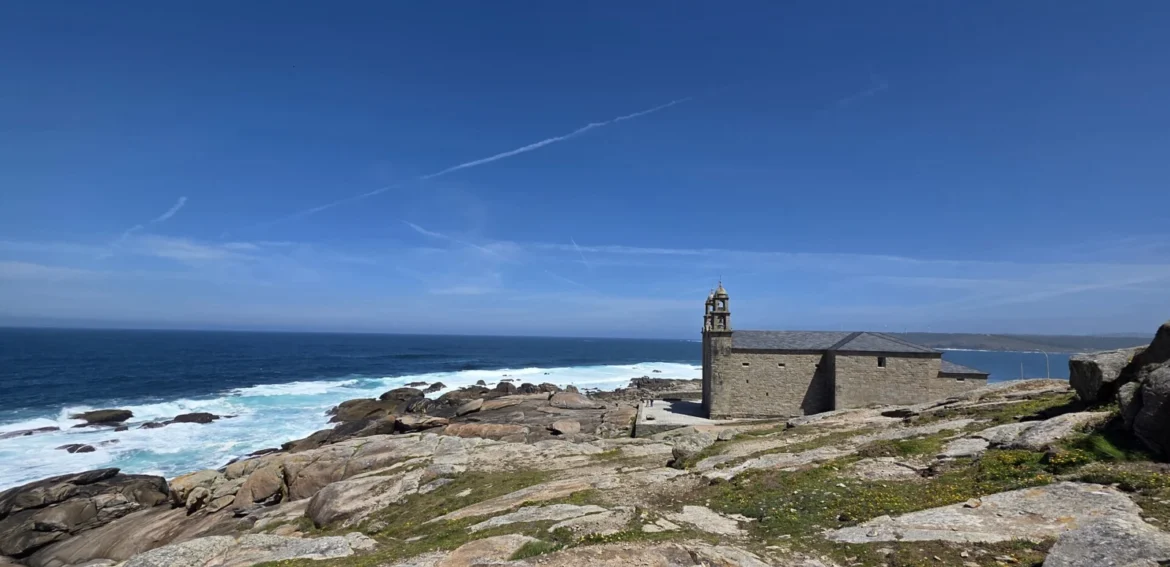
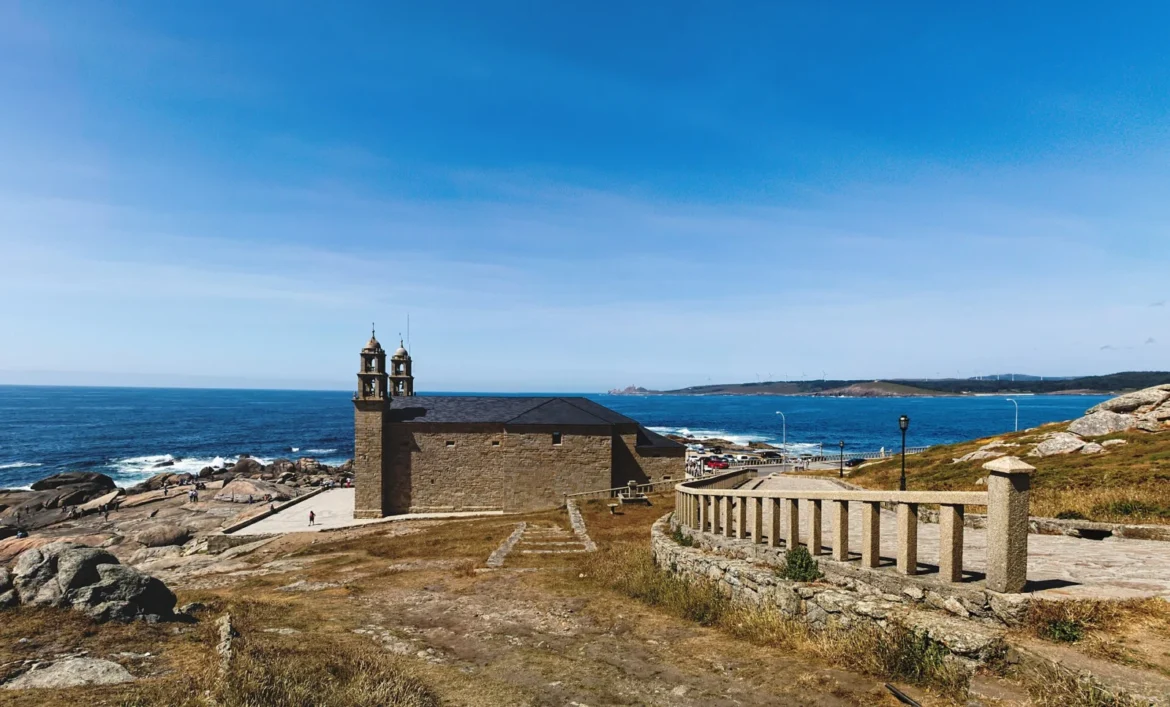
The sanctuary stands next to the Atlantic, in an environment exposed to wind and waves. It is not an isolated monument: its cultural value is understood by contemplating the building, the rocks, the ocean and the town of Muxía at the same time. The Concello de Muxía and Turismo de Galicia describe precisely this relationship between landscape, religiosity and legend as part of the identity of the place.
The pilgrim who arrives in Muxía
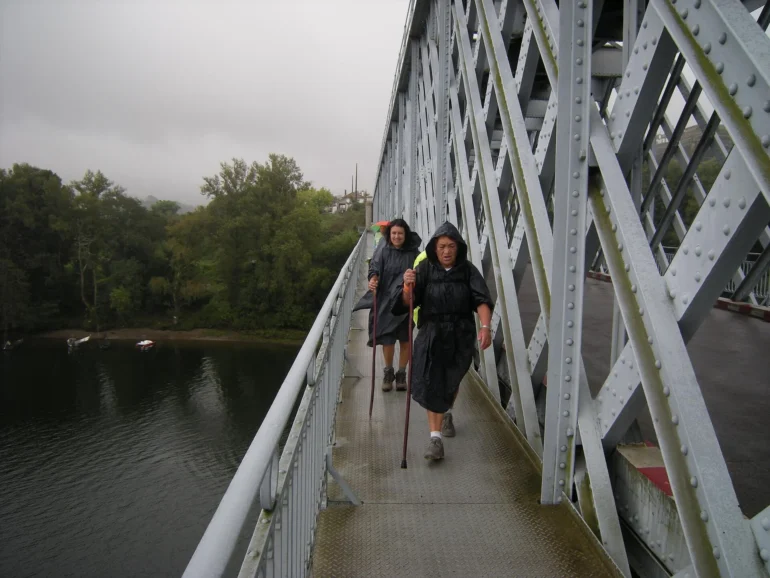
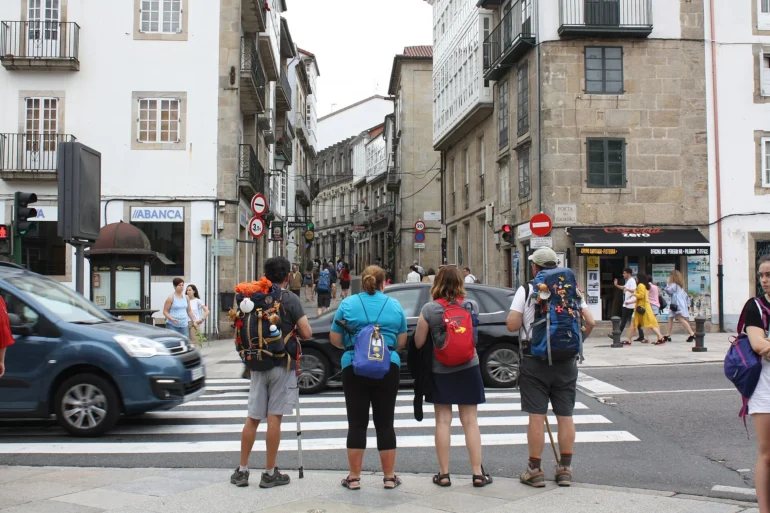
For those who extend their march from Santiago de Compostela along the Camino de Fisterra and Muxía, the arrival at the sanctuary has a special force. Here, neither a big city nor a monumental square awaits, but rather the horizon of the Atlantic. The legend of the boat offers another way of interpreting the end of the journey: instead of a single goal, the pilgrim discovers a story about discouragement, help, and the decision to continue.
The visit invites you to walk calmly, observe the rocks without disturbing them and respect the areas that may be restricted. On stormy days or strong waves, it is advisable to stay away from exposed areas: the seascape can be dangerous even when it seems calm. It is also not advisable to try to move the stones or carry out practices that deteriorate the natural environment.
History or legend?
The apparition and the stone boat belong to legendary tradition. The sanctuary, the granite formations and the pilgrimage, on the other hand, are real elements of a heritage that can be visited and studied. Distinguishing both planes does not take away the strength of the narrative: it helps to understand how a community has explained for centuries the uniqueness of this corner of the Costa da Morte.
Perhaps therein lies Muxía's enduring appeal. A few stones, the sound of the ocean and a story passed down from generation to generation are enough for many pilgrims to feel that their Camino still has something to tell them.
Sources: Municipality of Muxía, Santuario da Virxe da Barca; Tourism of Galicia, Romaría da Nosa Señora da Barca; Barca Sanctuary, story of the apparitions.
Images: Photography: Wikimedia Commons (author and license in the file).