The French Road registered 2,320 health services between July and September. Galiza is preparing a special device to respond to the needs of pilgrims during the Holy Year of 2027.
The Caminho de Santiago is made up of its landscapes, historical heritage and encounters between pilgrims from all over the world. But there is also a less visible reality: the physical difficulties that arise after several days walking, especially during the busiest months.
In the summer of 2026, the Contigo no Camiño program, developed by Cruz Vermelha with the support of the Xunta de Galicia, carried out 2,320 health services on the French Way, between Pedrafita do Cebreiro and Santiago de Compostela.
To these numbers are added 6,250 information and orientation interventions, a total of 8,570 services carried out between July 13 and September 25.
The data show the growing importance of services to support pilgrims and place health care among the priorities of preparation for the next Xacobeo 2027.
Bolhas, muscular dors and small lesions we dominate the attentions
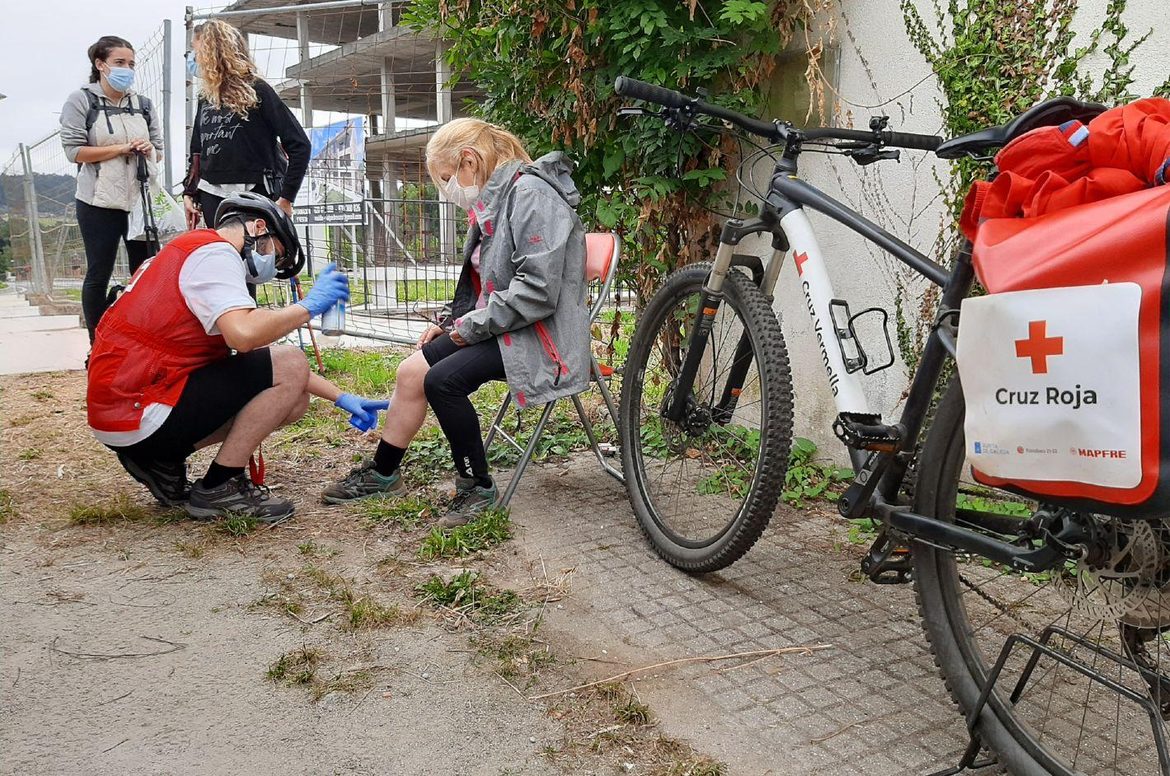
Most of the health problems reported during the campaign were considered minor.
Among the most common reasons are muscle pain, pain, insect bites and other situations related to physical exertion and prolonged exposure to the outdoors.
These are difficulties familiar to many pilgrims, especially when the stages last for several hours or when the heat makes the walk more demanding.
A small injury, seemingly of no importance at the beginning of the day, can become a significant problem after several miles.
Therefore, the possibility of receiving assistance directly on the road represents an important advantage.
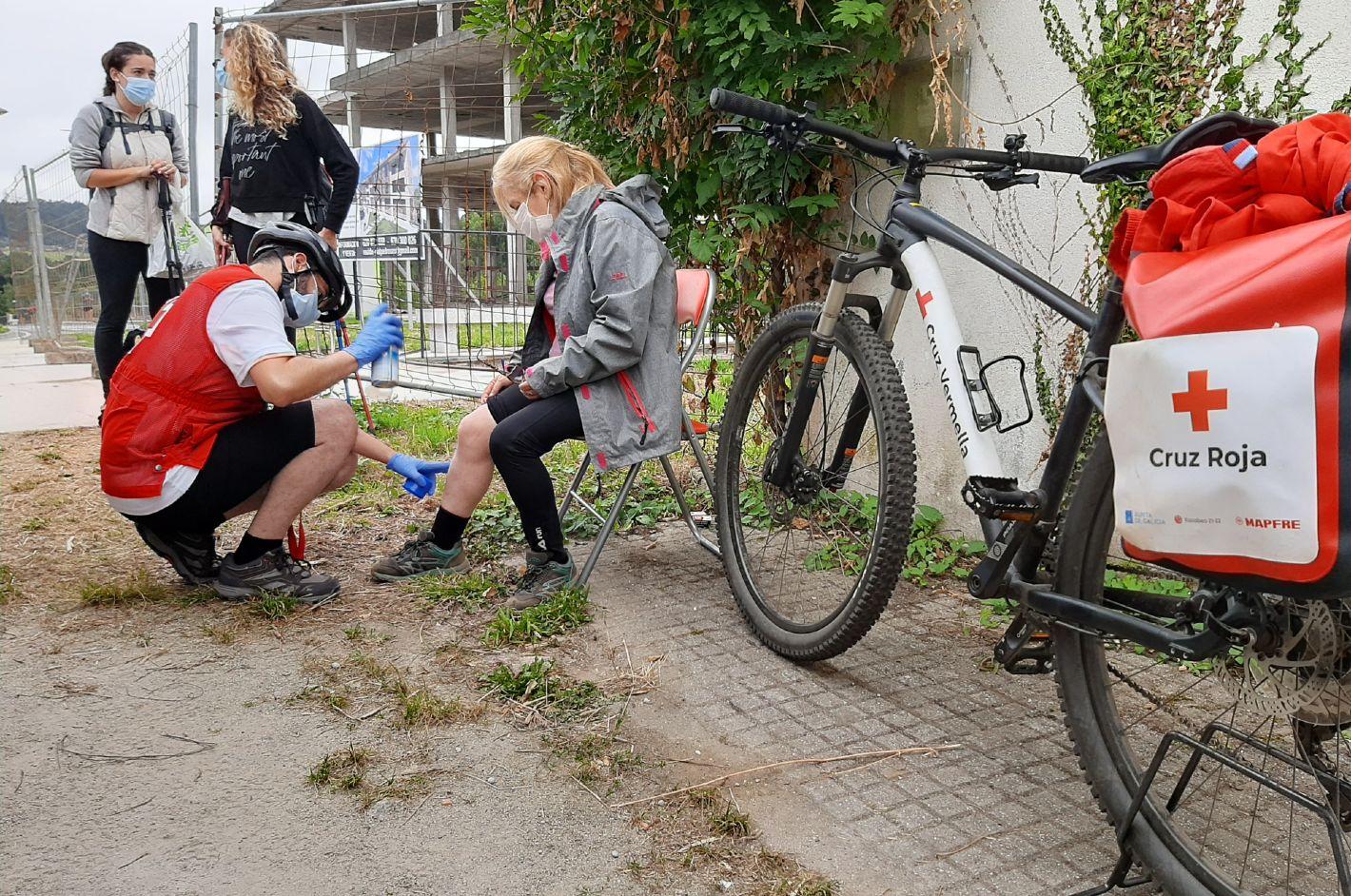
Our professionals can assess the situation, provide first aid and, when necessary, direct the pilgrim to other health resources.
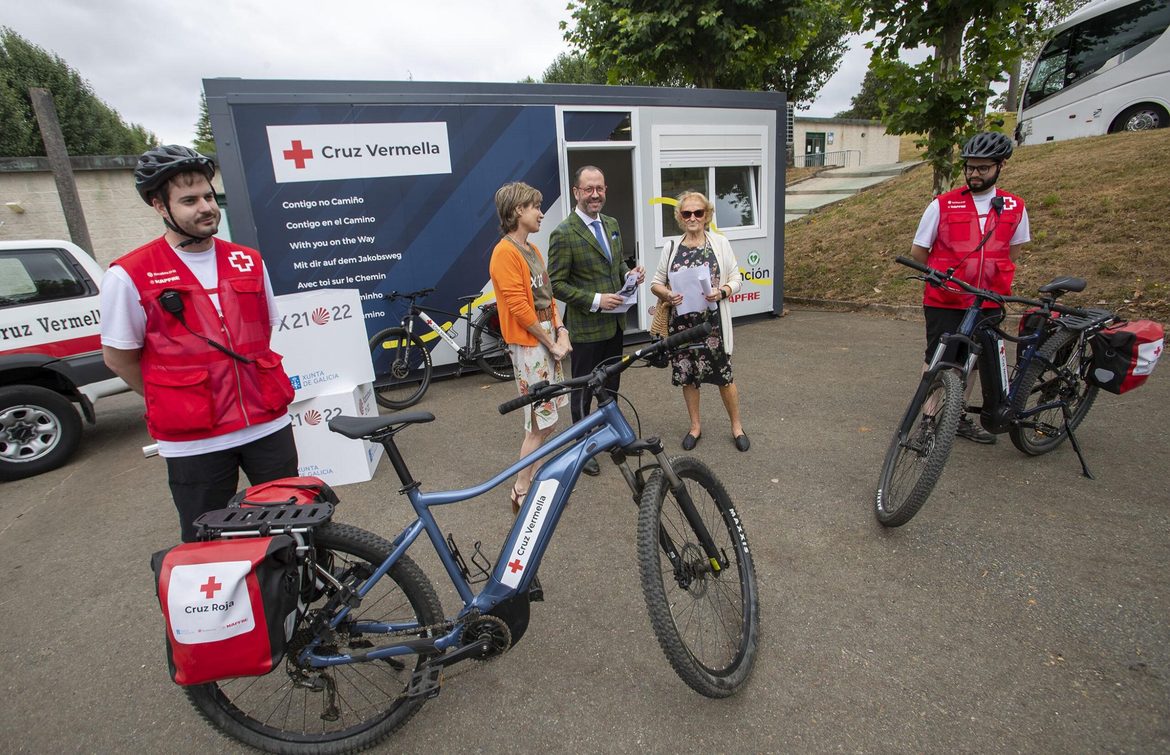
Bicycle lifeguards percorrem or Caminho Francês
One of the most interesting features of the program is the use of electric bicycles to transport first responders throughout the day.
These vehicles allow us to get onto rural roads and areas where access by ambulances or conventional cars can be more complicated.
The bicycles are equipped with first aid material and defibrillators, allowing an initial response in different situations.
Em 2026, the four passou device for seven mobile equipment, distributed to the provinces of Lugo and da Corunha.
Four teams work in Corunha and another three in Lugo.
During the campaign, professionals and volunteers will travel approximately 8,910 kilometers to provide support to walkers.
Portomarín maintains a permanent first aid post
In addition to the mobile equipment, the program has a service post in Portomarín, one of the most popular locations on the French Road.
Its location allows it to support numerous pilgrims who travel daily after walking the previous stages.
Casa Forte de Lusío, in Samos, also functions as a logistics center for the device.
This combination of mobile equipment and fixed installations allows us to provide assistance both to pilgrims who are still walking and to those who have just reached the end of a stage.
Since the start of the program, in 2021, the Red Cross teams will travel more than 36,000 kilometers and carry out more than 6,000 health interventions.
During this period, more than 370,000 euros were allocated to the Xunta de Galicia on initiative.
More attention does not necessarily mean more accidents
This summer's numbers show a considerable increase relative to the previous campaign.
In 2025, the program counted approximately 2,400 total services, while in 2026 it counted 8,500.
However, it is important to interpret this evolution with caution.
The device also significantly increased its human and material resources, going from four to seven mobile teams.
Consequently, the increase in attendance does not demonstrate, in itself, that pilgrims are facing proportionately more injuries.
A greater presence on the ground allows you to identify and resolve situations that previously could not be referred to these services.
Santiago prepares for the Xacobeo 2027
Assistance to pilgrims will also be reinforced on the way to Santiago de Compostela.
In April 2026, the Fundação Pública Urxencias Sanitarias de Galicia-061 and Fundação Hospitalar da Ordem de Malta established an agreement to maintain a post of basic healthcare assistance in Praça do Obradoiro.
The device will allow for initial assessments, care and stabilization of patients when necessary, directing them to the public health system in cases that require additional resources.
For the Holy Year of 2027, an extraordinary reinforcement is planned that will include more professionals, longer hours and additional assistance lines.
A contingency plan will also be prepared to respond to situations associated with a high concentration of pilgrims, including heat stroke, dehydration and eventual collective emergencies.
The agreement will remain in force until March 2028.
What can we Portuguese pilgrims learn?
The data collected on the French Road is also relevant for those who intend to travel on the Portuguese Road, both on the Central Route and on the Coastal Route.
The itineraries are different, with many similar physical difficulties: long distances, high temperatures, dehydration, muscle pain and weight problems.
Prepare adequately for the walk, adapt the stages to your physical condition and respect rest periods with important measures to reduce risks.
It is also advisable to obtain the assistance services available throughout the journey and to ask for help when it arises that the effort is going beyond personal limits.
There is no obligation to complete a stage at any cost.
The Caminho can be adapted to the needs of each person.
Um Caminho more prepared to take care of two pilgrims
The growth of international pilgrimage demands an increasingly open organization.
Hostels, signage, heritage and tourist services continue to be essential, but the ability to provide medical assistance is equally important.
The next Holy Year will be an opportunity to evaluate how the different services manage to respond to a greater effort without compromising safety and safety of walkers.
The numbers for 2026 demonstrate that thousands of pilgrims need, at some point, information, guidance or health care.
But we also reveal the work of professionals and volunteers who travel daily to help what is needed.
Because Jacobean hospitality is not limited to offering a bed or a meal.
Também means taking care of the road.