Hungary, Argentina, Italy and Portugal meet these days on Caminho de Santiago. Pilgrims from four different countries return to show how the Jacobean brokenness will be transformed into an international meeting point where language, identity and nationality end up taking a backseat.
There are moments on the Caminho de Santiago that better explain the Jacobean phenomenon than any statistics.
One of them happens when, at the same stage, people who live thousands of kilometers away end up sitting at the same table, walking together or looking for the same yellow mushroom.
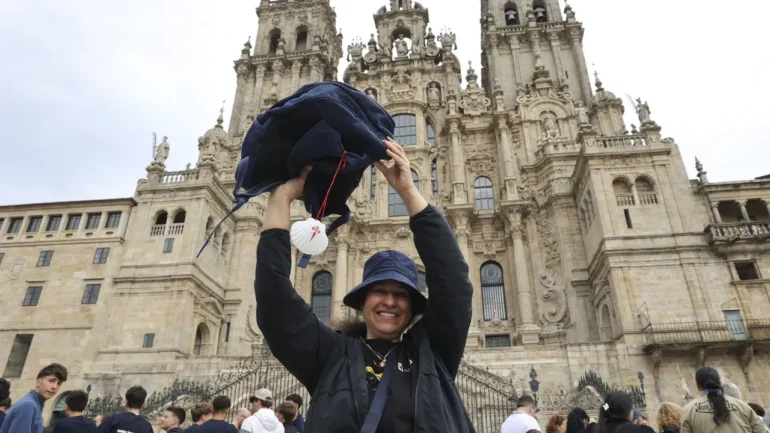
It is precisely that international image that is re-emerging in Galiza, with pilgrims coming from Hungary, Argentina, Italy and Portugal partilhando an experience linked to the Caminho.
Four countries.
Four cultures.
And a common destiny: Santiago de Compostela.
Portugal, increasingly linked to Santiago
For the Portuguese public, this story has a special meaning.
Portugal and Santiago maintain a secular relationship. Leaf, or Portuguese Road It is one of the large international entrance gates to the Jacobean pilgrimage and thousands of walkers cross the border between Portugal and Galiza every year in the direction of Compostela.
But the Portuguese presence in the Jacobean universe cannot be understood just through a single point.
Pilgrims seek more and more different experiences, coastal variants, sea routes and less crowded itineraries.
And it is precisely there that areas like Walls and Noia We try to recover and disseminate its own historical connection with pilgrims to Santiago.
Um Caminho that speaks more and more languages
The simultaneous presence of Hungarian, Argentine, Italian and Portuguese pilgrims is also a small portrait of the transformation experienced on the Road in recent decades.
For centuries, Santiago received travelers from different parts of Europe.
Here, this international dimension becomes global.
It is possible to start a stage by conversing in Portuguese, find an Italian a few kilometers later, share a table with a Hungarian pilgrim and finish the day hearing a story told by Argentina.
It is not necessary to speak perfectly in the same language.
No Caminho, there are some words that practically everyone ends up understanding.
Hostel. Credential. Santiago. Good Way.
From Europe to South America
The presence of pilgrims from Argentina reinforces precisely that global dimension.
Going to Galiza from South America requires much more than putting a backpack on the coast. It involves crossing the Atlantic before starting to walk.
For many international pilgrims, traveling to Spain represents an important investment in time, organization and money.
And, despite disso, we continue to check.
This is probably one of the best indicators of international strength that the Caminho de Santiago can reach.
Italy and Hungary: a new pilgrim Europe
Italy also has a long tradition of pilgrimage.
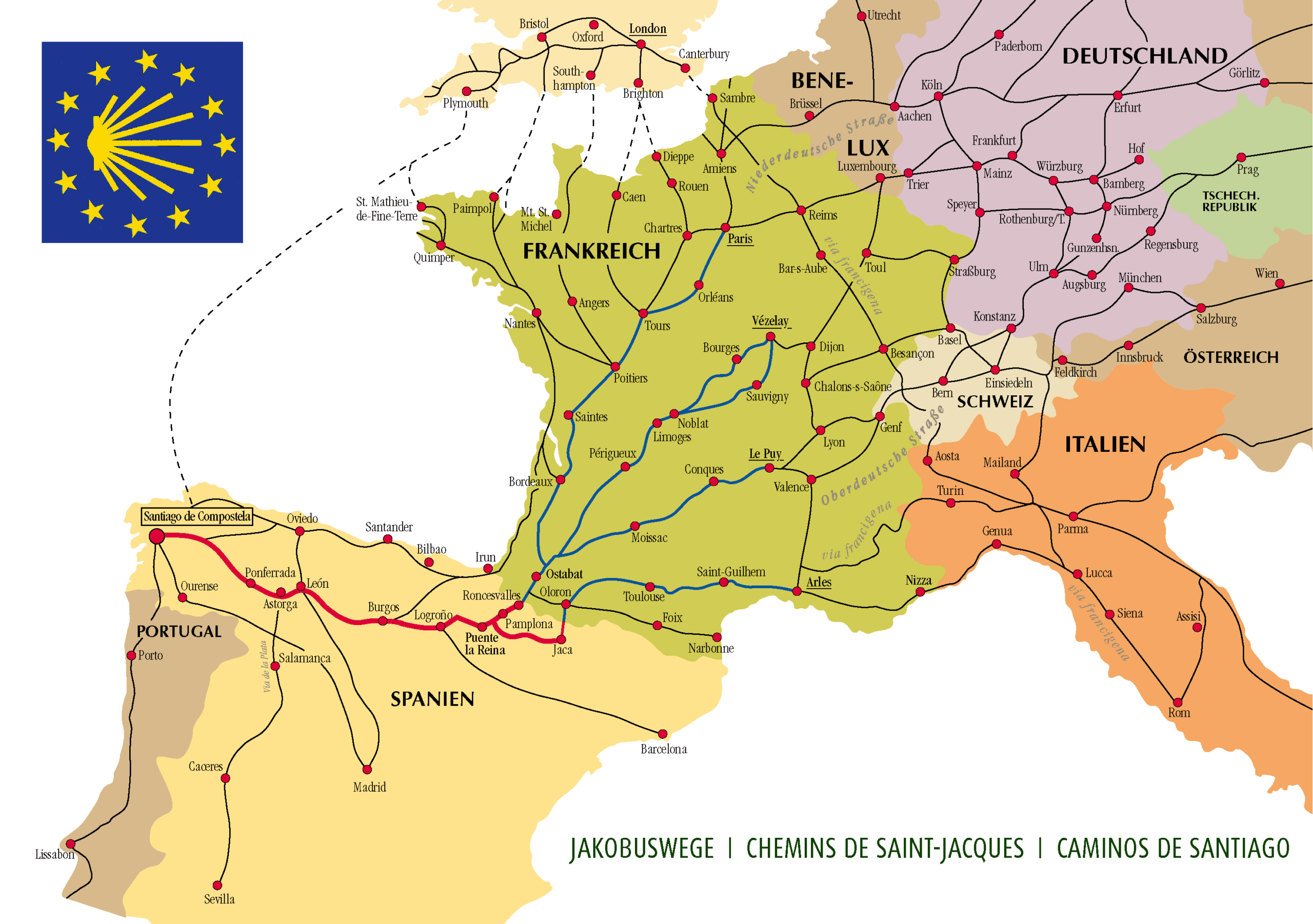
Rome and Santiago formed for centuries two great spiritual destinations of medieval Europe, linked by a road culture that remains alive today.
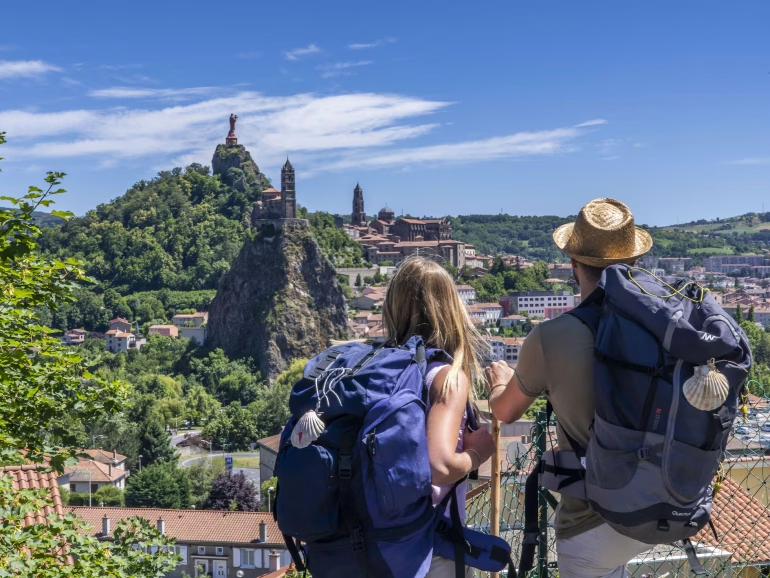
Hungary, in turn, is also integrated into the extensive European network of Jacobean itineraries that allows us to understand the Camino not only as a Spanish road, but as an enormous map of roads that crosses the continent.
The pilgrims who visit Galiza are, in a certain way, a contemporary version of the traveling Europe.
The true language of the Road
Perhaps this is one of the reasons why Caminho continues to grow internationally.
It does not require that everyone think in the same way.
We don't know that we walk for the same reasons.
Make sure you seek spirituality.
Let's look for adventure.
Others come after an important change in life.
Some of us simply want to discover if it is possible to walk for several days together or that it is necessary to carry it in a backpack.
But during some stages these differences disappear.
A Portuguese can help a Hungarian.
An Italian can divide a table with an Argentinian.
And someone who a few hours before was completely confused could end up becoming a companion on the road.
Four bands, a yellow mushroom
The phenomenon that these pilgrims represent is very much in addition to a curious photograph.
It shows where you made a pilgrimage that was born more than a thousand years ago.
Hungary.
Argentina.
Italy.
Portugal.
Countries separated by thousands of kilometers that end up united by an extraordinarily simple thing:
A yellow mushroom pointing in the same direction.
The end of this story continues Santiago.
Bom Caminho.