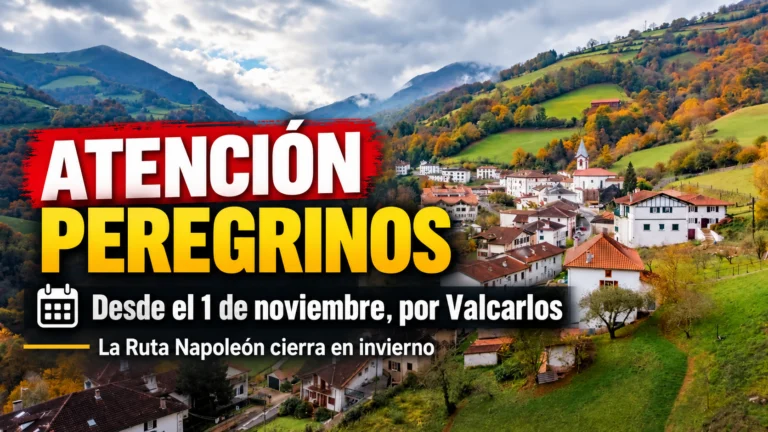
Organizing how to get to the starting point is one of the most important steps before starting the Camino de Santiago. Many routes start in small towns, with few daily transports, so planning schedules and connections can avoid problems on the first day.
Here you have a practical guide, with specific information to organize the trip.
French Way
Usual start: Roncesvalles or Saint-Jean-Pied-de-Port
Most pilgrims arrive in Pamplona first.
- Pamplona → Roncesvalles
There are usually buses daily, usually 1 or 2 a day, especially in the morning or early afternoon in season. The journey takes approximately 1 hour.
There are also taxis shared between pilgrims, something very common. - Pamplona → Saint-Jean-Pied-de-Port
In season there are direct buses. The trip takes between 2 and 2.5 hours.
Tip: if you arrive late in Pamplona, it is best to sleep there and leave the next day.
Portuguese Way
Usual start: Tui or Porto
- Vigo → Tui
Buses every few hours during the day. The journey takes about 40 minutes. There are also cheap taxis if you share. - Port
The airport is connected by metro to the center. From there you can start walking directly or take the train to other points along the Camino.
Tip: in Tui it is advisable to arrive before 7:00 p.m. if you want to secure accommodation.
North Road
Usual start: Irun
Irun has a train and bus station.
- From Bilbao There are frequent trains or buses (between 2 and 3 hours travel time).
- From San Sebastian, buses and trains almost every hour; The journey takes about 30-40 minutes.
Tip: many pilgrims arrive the day before and start early because the first stage is demanding.
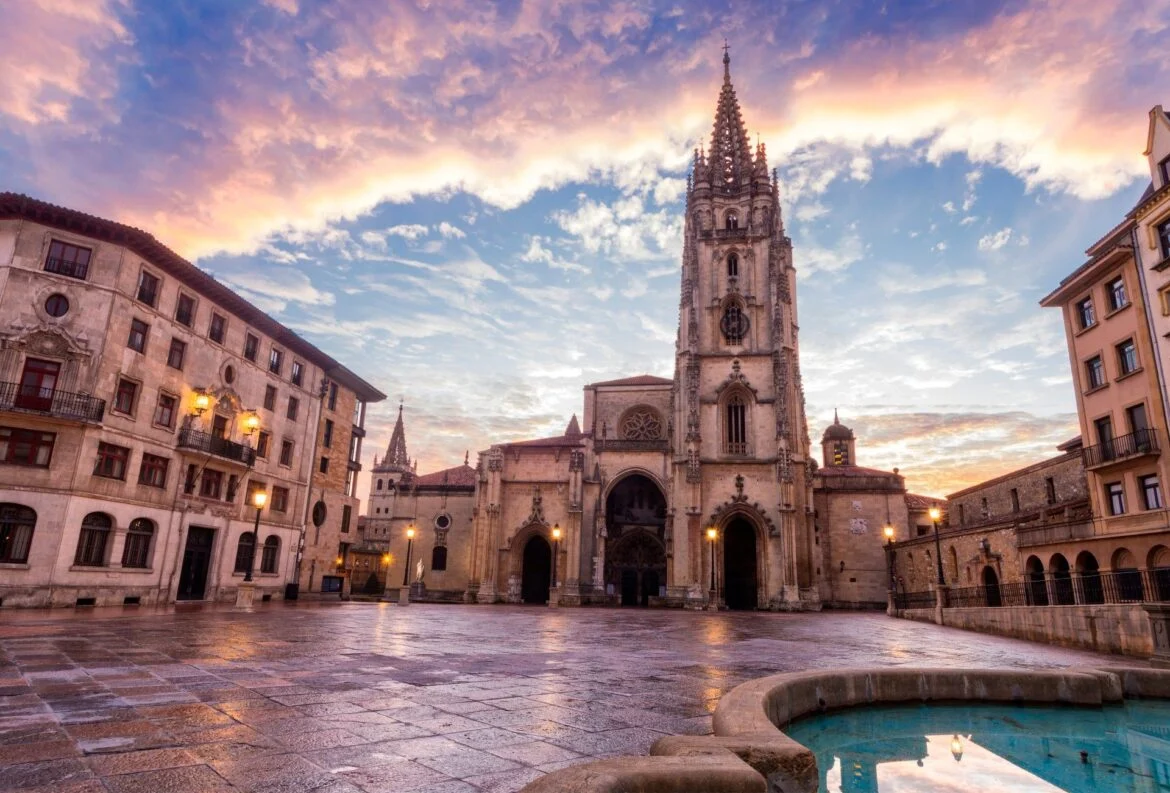
Primitive Path
Usual start: Oviedo
Oviedo is well connected:
- Buses from Madrid, León or Galicia throughout the day.
- Asturias Airport about 45 minutes by bus.
Tip: The departure from the cathedral is usually done early to avoid the heat on the initial climbs.
English Way
Usual start: Ferrol or A Coruña
- Ferrol: trains and buses from A Coruña every few hours.
- To Coruña: airport with domestic flights and train station.
Tip: in Ferrol many pilgrims start around 7-8 in the morning to comfortably reach Neda or Pontedeume.
Silver Way
Usual start: Seville
Very easy to organize:
- AVE and trains from many cities.
- Frequent buses and international airport.
Tip: Starting early is important, especially in spring and summer, because of the heat.
Winter Road
Usual start: Ponferrada
- Trains from León several times a day.
- Frequent buses from Galicia and Castilla y León.
Tip: some stages have fewer services, it is advisable to check accommodation before leaving.
Road to Fisterra and Muxía
Home: Santiago
- City buses or taxis allow you to easily reach the departure point in the center.
- Many pilgrims begin directly the day after arriving in Santiago.
Tip: leaving early helps you better enjoy the first stage to Negreira.
Key tips that many pilgrims learn late
- Always arrive the day before the start.
- Check transportation schedules a week before and the day before.
- Save local taxi numbers in case a bus fails.
- Carry some cash when arriving in small towns.
- Start the first stage without rushing: the Camino is not a race.
The journey begins long before walking. It starts when you prepare your backpack, when you choose the starting point and when you take the first step towards Santiago.