History, symbolism and spiritual relevance of the true end of the Camino
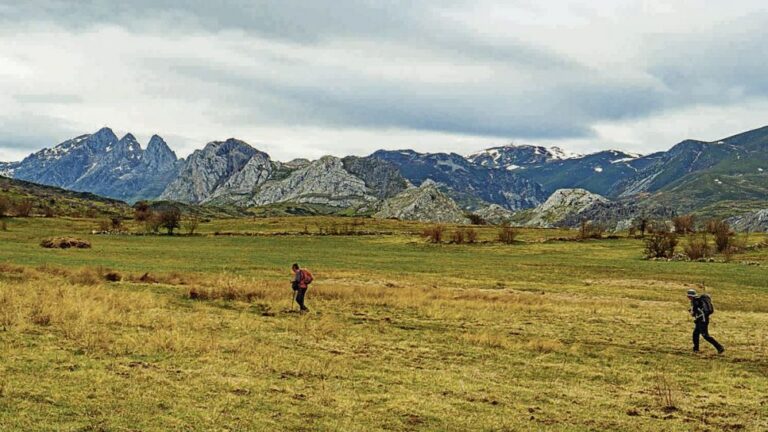
For many pilgrims, arriving in Santiago de Compostela is not the end of the journey. On the contrary: it is time to continue walking. He Fisterra-Muxía Road represents the deepest epilogue of the Camino de Santiago, an extension full of history, spirituality and landscapes that lead the pilgrim to the Atlantic, where for centuries it was believed that the earth ended.
Unlike other roads, this route is the only one that part of Santiago and it doesn't reach her. It is a Way of exit, of reflection, of farewell and of inner transformation.
Ancient origins: before Christianity it was already a sacred path
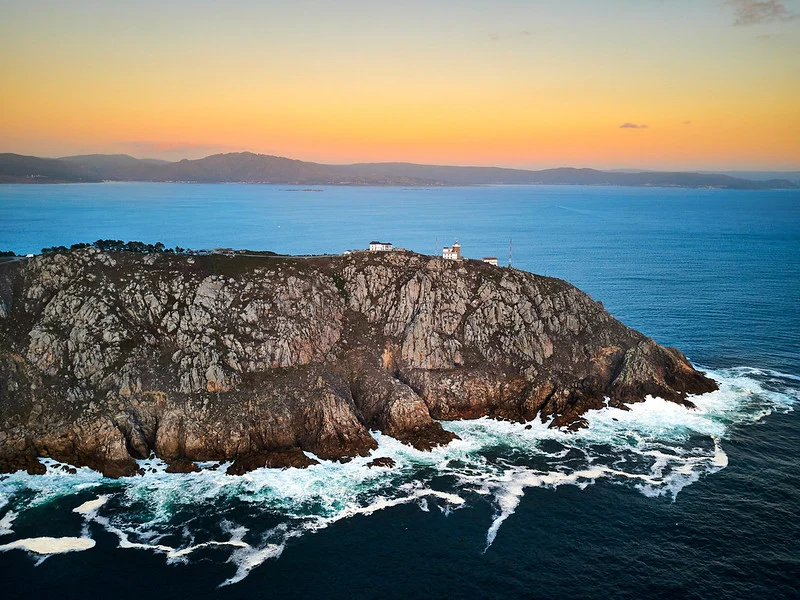
Long before the Jacobean pilgrimage existed, western Galicia was already considered a sacred territory. Fisterra, known as Finis Terrae, was a ritual enclave for pre-Roman and Roman peoples, who came to the cape to worship the setting sun. The sunset over the ocean symbolized the end of life, the closing of cycles and spiritual rebirth.
With the Christianization of the territory, these ancient rites were integrated into the Jacobean tradition. Medieval pilgrims, after venerating the tomb of the Apostle, continued to Fisterra to complete their spiritual journey.
The symbolism of fire, the sea and transformation
For centuries, the Fisterra–Muxía Trail was linked to purification rituals. Burning clothes, bathing in the ocean or leaving personal belongings were gestures loaded with meaning. Although today these practices are prohibited for environmental reasons, the symbolism remains: the pilgrim reaches the sea to leave behind one life stage and begin another.
The Atlantic here is not a simple landscape, it is a spiritual element. The sound of the sea, the constant wind and the immensity of the horizon make this section one of the most emotional of the entire Camino.
Muxía: faith, legend and seafaring devotion
If Fisterra represents the physical end, Muxia embodies the spiritual and legendary dimension. The Santuario da Virxe da Barca, located in front of an untamed sea, is linked to the tradition that says that the Virgin Mary arrived in a stone boat to encourage the Apostle Santiago in his evangelizing mission.
The sacred stones that surround the sanctuary, such as the Pedra de Abalar or the Pedra dos Cadrís, are part of popular culture and ancient beliefs linked to fertility, health and spiritual balance.
The Costa da Morte: beauty, respect and memory
The Camino runs through the impressive Coast of Death, a coastline as beautiful as it is feared. Its name remembers the countless shipwrecks that marked the history of the area and the deep relationship between human beings and the sea. Walking along this coast is walking through a territory where nature imposes respect and silence.
Current relevance: an increasingly loved Camino
In recent decades, the Fisterra–Muxía Camino has gained enormous popularity among pilgrims seeking a more intimate, less crowded and deeply reflective experience. There is no rush, no official goals or mandatory stamps: just walk, think and feel.
For many, this Camino is not an addition, but the true end of the Camino de Santiago. An ending without crowds, without noise and without speeches, where each pilgrim writes his own closing in front of the ocean.
Because there are Paths that do not end in a cathedral, but in the sound of the sea... and those are the ones that are never forgotten.