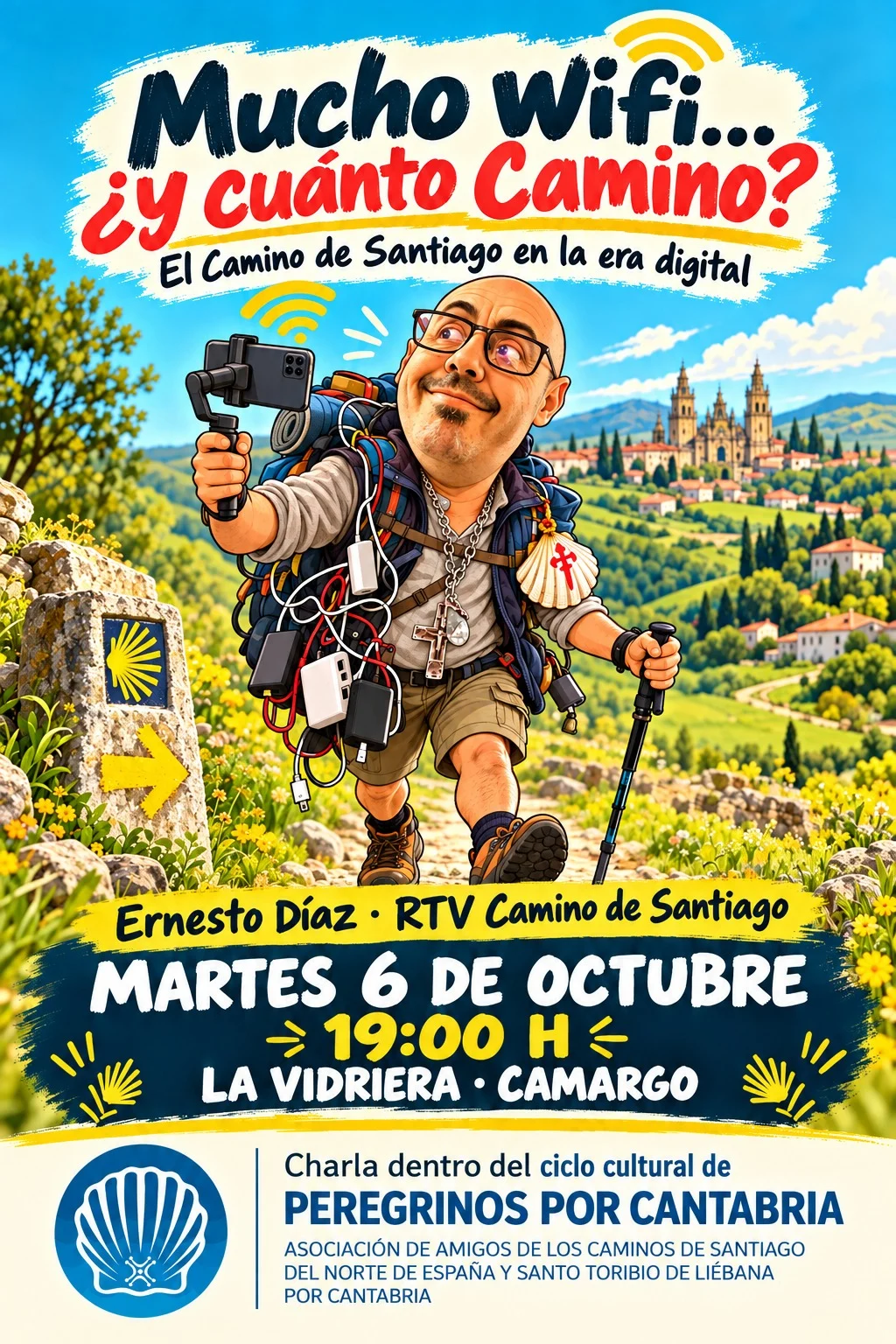
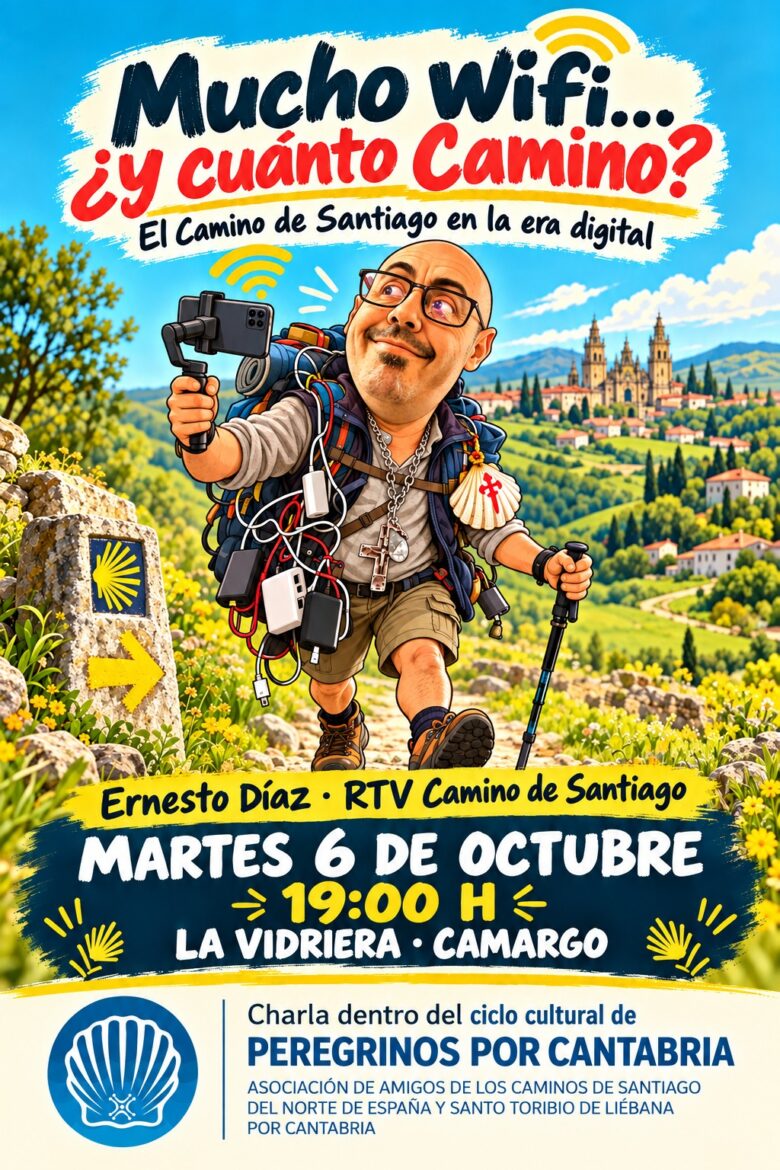
Next Tuesday, October 6, at 7:00 p.m., the La Vidriera Cultural Center in Maliaño will host the conference “A lot of wifi… and how much Camino?”, a talk by Ernesto Díaz, from RTV Camino de Santiago, within the cultural cycle of Pilgrims through Cantabria.
The Camino de Santiago has changed a lot in recent years.
Today a pilgrim can consult maps, reserve accommodation, translate a conversation, record videos, make live broadcasts and publish each stage practically in real time.
But that transformation also raises an increasingly interesting question:
Are we living the Way or are we too busy teaching it?
That will be the starting point of the conference that Ernesto Díaz will offer next Tuesday, October 6 at the La Vidriera de Maliaño Cultural Center, in Camargo.
The appointment will begin at 7:00 p.m. and is part of the cultural cycle organized by Pilgrims for Cantabria.
A close and humorous talk
The conference is not intended to be a technical class on mobile phones, applications or social networks.
The objective will be to talk about the current Camino from a close, critical and also fun perspective.
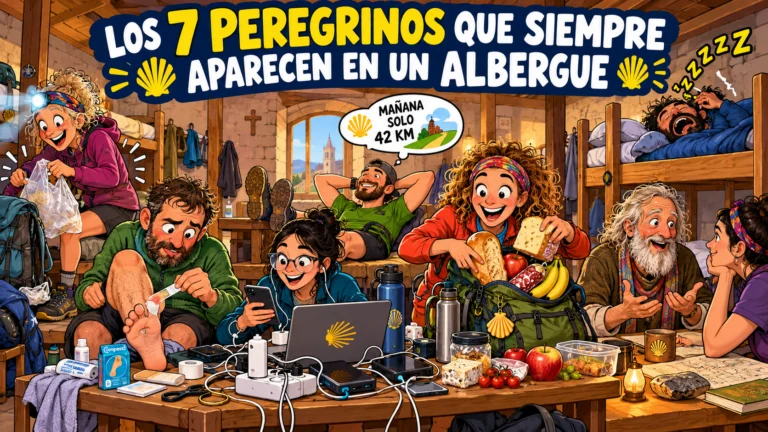
Pilgrims looking for plugs rather than a bed.
Backpacks loaded with external batteries.
People who arrive at a spectacular landscape and before looking at it check if they have coverage.
Videos, photographs, Instagram stories, TikTok and constant messages.
Situations that today are part of the pilgrimage and that just a few years ago were unthinkable.
Technology yes, but without losing the Path
During the talk, the positive side of digitalization will also be addressed.
A telephone can help you find your way, locate accommodation, check the weather or ask for help in an emergency.
Social networks have also allowed the Camino de Santiago to reach millions of people around the world.
The point will not be to reject technology.
It will be learning to use it without allowing it to end up occupying the center of the experience.
Because a photograph can keep a memory.
But there are also times when putting away the phone can help us live better.
From landscape to screen
One of the central issues will be the relationship between the Camino and social networks.
Instagram, TikTok, Facebook and YouTube have changed the way we travel.
Before, many experiences were between the pilgrim and the people they met during the journey.
They can now be shared immediately with hundreds or thousands of people.
That has obvious advantages.
But it can also create constant pressure to document everything.
The question will be simple:
How much time do we dedicate to living the Camino and how much time to showing it?
Hospitality in mobile times
The Camino has always been a space for conversation and encounter.
Share table.
Ask.
Hear.
Meeting people we will probably never see again.
But a table full of phones can end up being very different.
The talk will also reflect on that paradox: we have never been so connected and, yet, sometimes it is more difficult to talk to the person in front of us.
A cultural event in Maliaño
The choice of La Vidriera fits especially well with this type of meeting.
The Maliaño cultural center is one of the reference municipal spaces in Camargo and regularly hosts cultural activities, conferences, cinema, workshops and exhibitions. Musical Billboard
The conference is especially aimed at residents of Camargo and Cantabria, pilgrims, associations and people interested in how new technologies are transforming our way of traveling and relating.
It is not necessary to have completed the Camino to feel identified.
Because we all carry a cell phone in our pocket.
And almost all of us know how difficult it is, sometimes, to stop looking at it.
CONFERENCE DATA
Lots of wifi… and how much do I walk?
The Camino de Santiago in the digital age
Speaker: Ernesto Díaz – RTV Camino de Santiago
Day: Tuesday October 6
Hour: 7:00 p.m.
Place: La Vidriera Cultural Center
Address: Avenida de Cantabria, 28 – Maliaño, Camargo
Organize: Pilgrims through Cantabria
And the idea with which the talk will end will be simple:
The cell phone is very good, but the Camino is done with your feet.