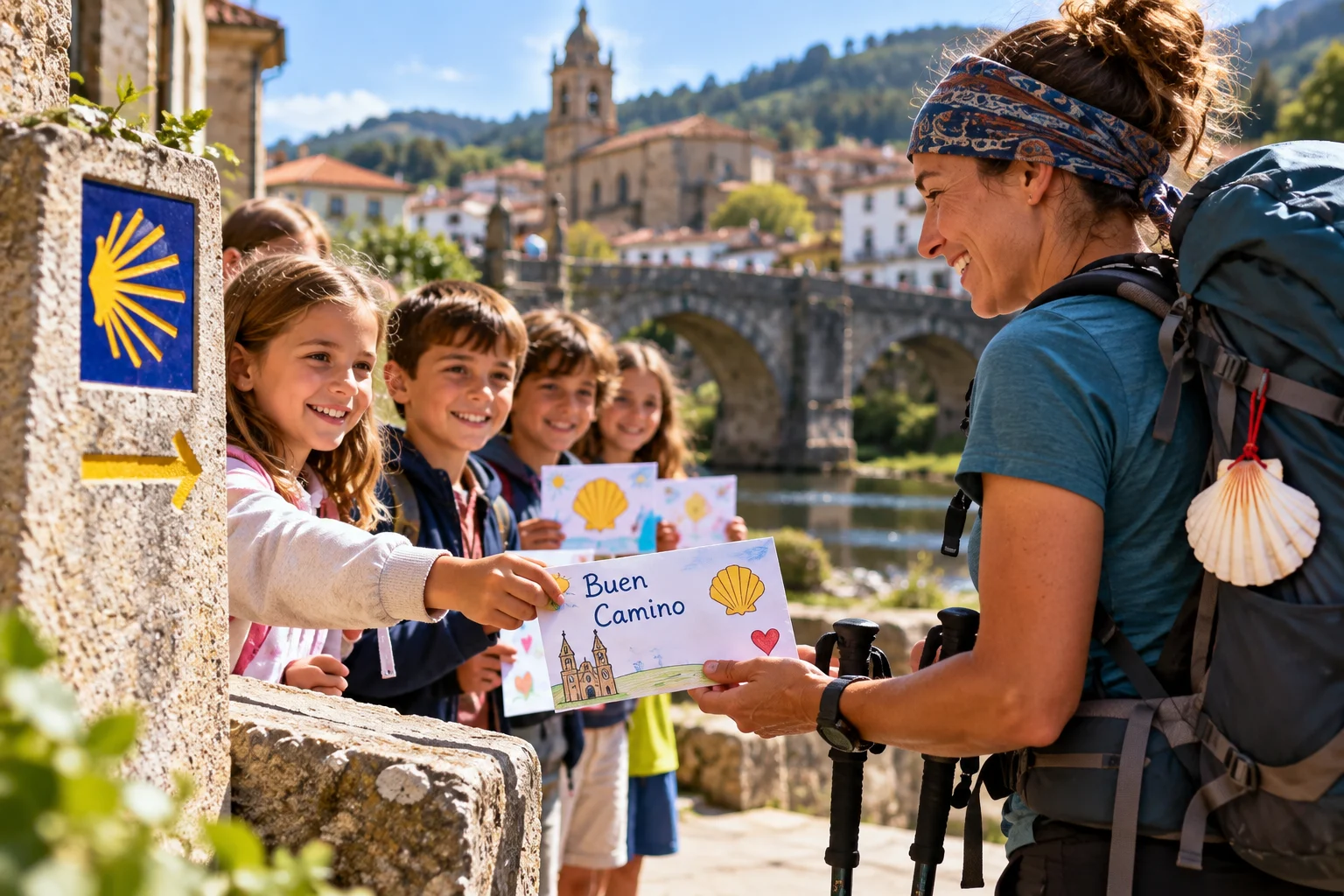
A Grado, in Asturie, the Primitive Way enters even in the classroom. A scholastic project has transformed the passaggio dei pellegrini into an educational occasion: gli alunni scrivono lettere che vengono consegnate a chi percorre il Cammino, creating a dialogue simple and human after school and pellegrinaggio.
The Camino di Santiago may be insegnato in many ways.
With a map
With a lesson of history.
With a visit to a monument.
Oppure with a lettera.
A Grado, a locality across the Cammino Primitivo in Asturie, students are living the Jacobean phenomenon in the most direct way: writing messaggi destinati ai pellegrini che traversano il territory.
The initiative transforms the Way into any kind of vicino e quotidiano, making capire ai ù giovani che quelle persone con zaino, canes e conchiglia no sono semplicemente turisti che passano.
Ognuno di loro porta con se una storia.
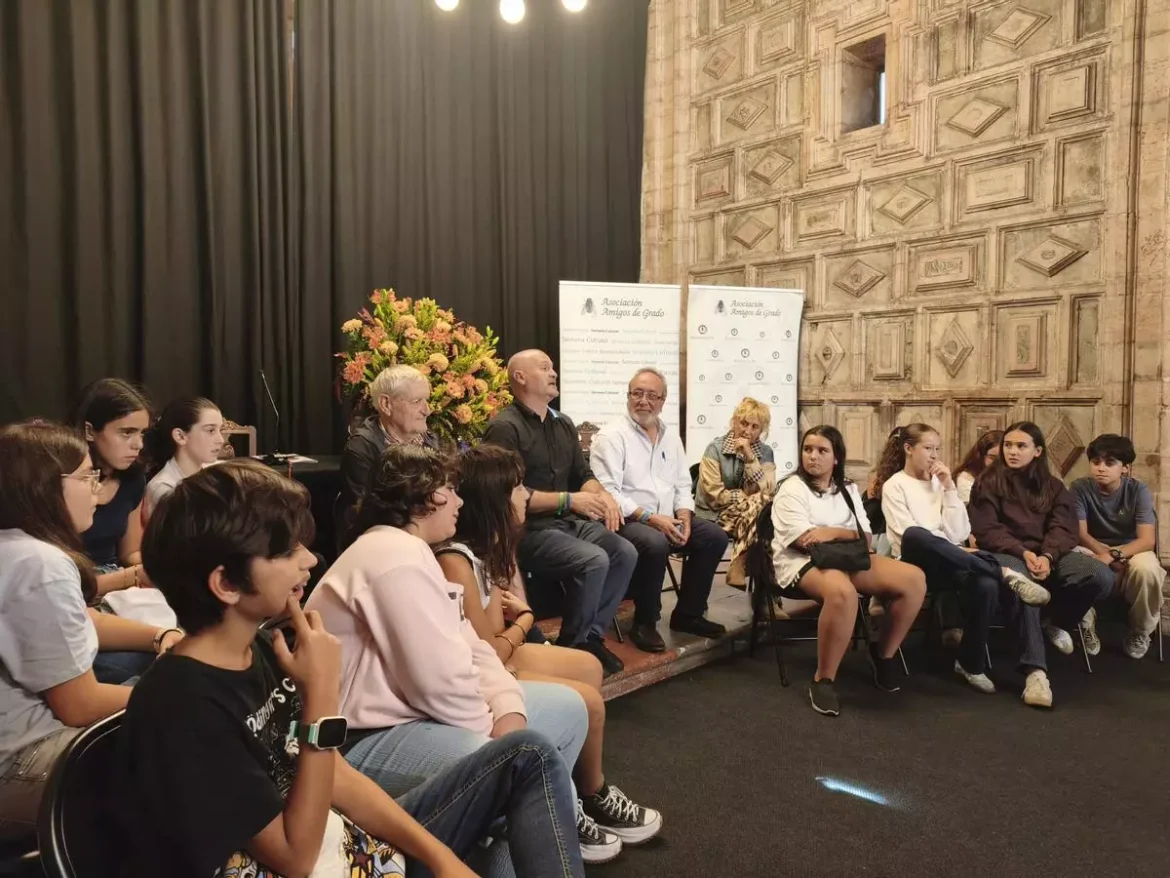
A letter that crosses the Cammino
L'idea è simple, ma proprio per quest ha una forza particularicolare.
Gli alunni preparen letters rivolte ai pellegrini e, atraverso questa correspondenza, come in contact with people coming from different places and cultures.
It is not an astratta lesion.
It is a form of relationship.
I children may fare domande, raccontare il luogo in cui vivono, interessarsi alle motivazioni che hanno portato qualcuno de verso verse Santiago e scoprire che dietro ogni pellegrinaggio esistono experienze very diverse.
If you receive the letter, invece, the gesture can give you a surprise piccola during the tappa.
On the way, several times incontri last only a few minutes, a message written by a child can be transformed into one of the richest moments of the day.
Grado, a natural school of the Camino Primitivo
The Asturian locality of Grado occupies a privileged position for a project of this type.
The Primitive Way passes directly across the territory.
Chi part of Oviedo verse Santiago raggiunge Grado in the first part of the itinerary and continues on the verse Salas, Tineo and the mountains of the Asturian west.
This means that the Cammino is not for students and real people.
I see it again.
The steps across the street, into the shops, with indications and pernottano around the area.
The Jacobean journey is part of the paesaggio and the daily life of the country.
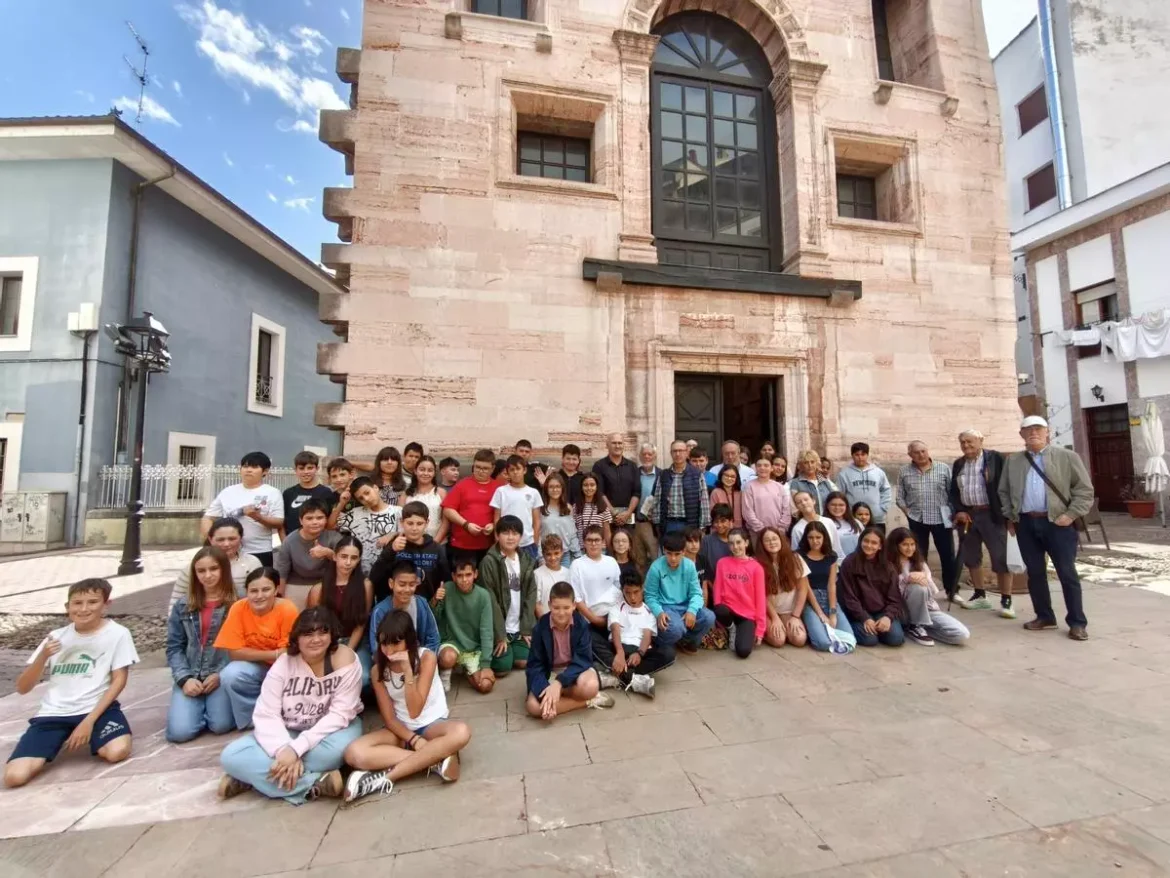
I will stop the Cammino talking with chi it percorres
One of the most interesting aspects of the project is that it allows you to watch the capire on the way across the person.
A pellegrino may come from Italy, from Germany, from Stati Uniti, from Portogallo or from Korea.
Può avere vent'anni or settanta.
You may walk for religious, cultural, sporting or personal reasons.
You will find this diversity transforms the Camino into a truly fine world.
For a child, enjoy the response of someone who is walking through the verse of Santiago because it is very meaningful to read a page of a book.
Dietro quella risposta c'è una persona reale, con una backpack sulle spalle e molti chilometri ancora davanti.
A path that enters the school
Il valore dell'iniziativa va oltre la simple correspondenza.
The Camino di Santiago can be used as an educational instrument to talk about geography, history, heritage, language, European culture and coexistence.
Also to face difficult questions and ask them with a manual.
I force it.
The peace
Solidarity.
L'ospitalità.
Il rispetto per chi comer da fuori.
I have valued that part of the story of the Dry Road and that it is possible to understand it even further by its piccoli.
Give pellegrino to the baby and give baby to the pellegrino
The most beautiful thing about this type of initiative is that the learning does not come in one direction.
Gli students imrano dai pellegrini.
Ma also i pelegrini ricevono qualcosa dai bambini.
A naive lady.
A design
One sentence.
An omen for a good journey.
A volte sono proprio questi piccoli managed to interrupt the routine of a long tappa.
Dopo giorni trascorsi controllando distance, dislivelli and chilometri, a simple lettera può remember that the Cammino è soprattutto un contra tro persone.
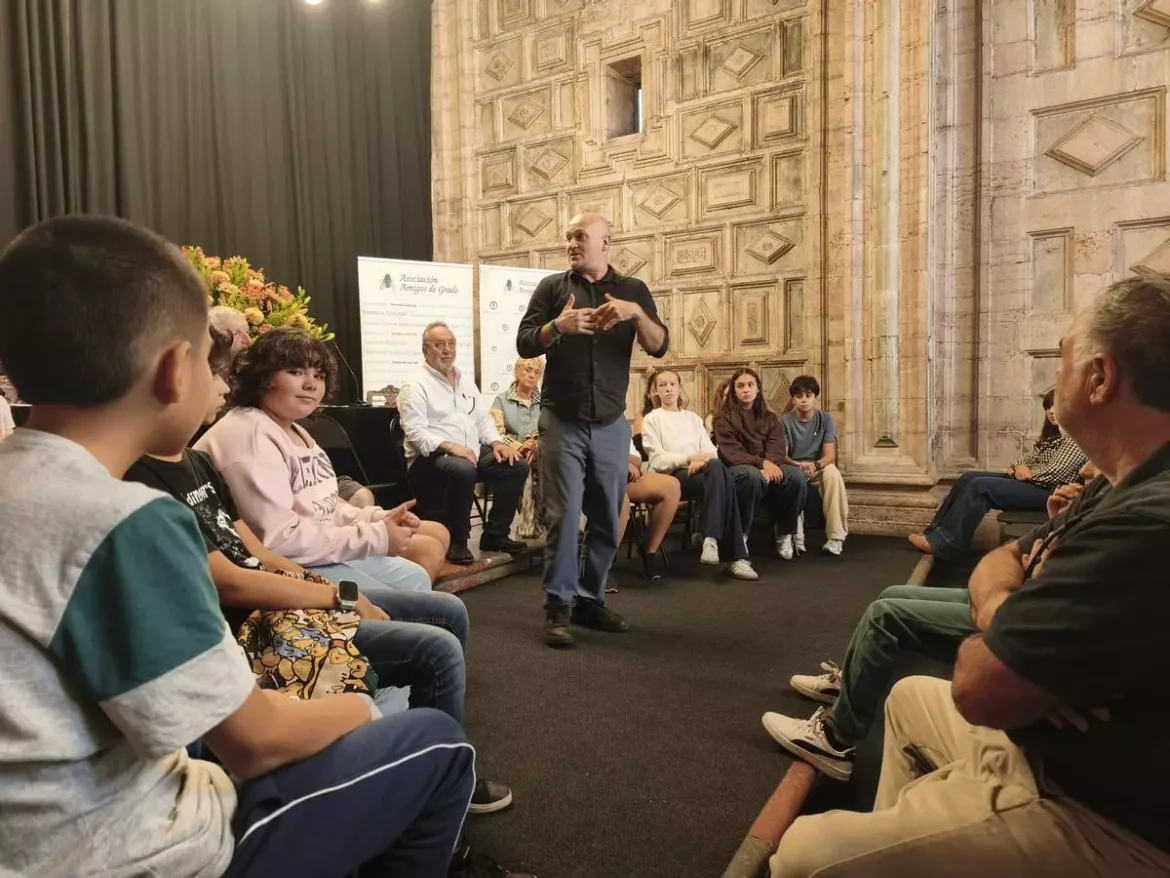
The future of the Cammino passes also by children
The Jacobee associations specifically discuss how they protect the future of the Cammino di Santiago.
If I talk about heritage, signage, shelters, security or overcrowding.
Ma esiste also un'altra fundamental question.
Will Chi continue to understand the cure of the Cammino after twenty or thirty years?
Projects such as Grado allow the children to see the end of the picture that the road is not only a single line designed on a map.
It is part of the history of the parrot territory.
È heritage.
È memory.
It is something that anyone else can feel part of.
A piccola lettera, a great idea
In a time of messaggi istantanei, notify and schermi, what is particularly beautiful in the image of a child who writes a letter by hand for a person who is walking verse Santiago.
He probably won't know what the rice will look like.
Non sa da dove arriva.
Non sa perché has decided to fare il Cammino.
And forse yourself that this is beautiful.
Due to people who do not know us, come join us for any minute on a road that crosses Europe from the last thousand years.
Una seduta in un'aula.
L'altra carries a backpack.
Tra le due, una lettera.
Once again, it's enough to see something that the Camino de Santiago means.