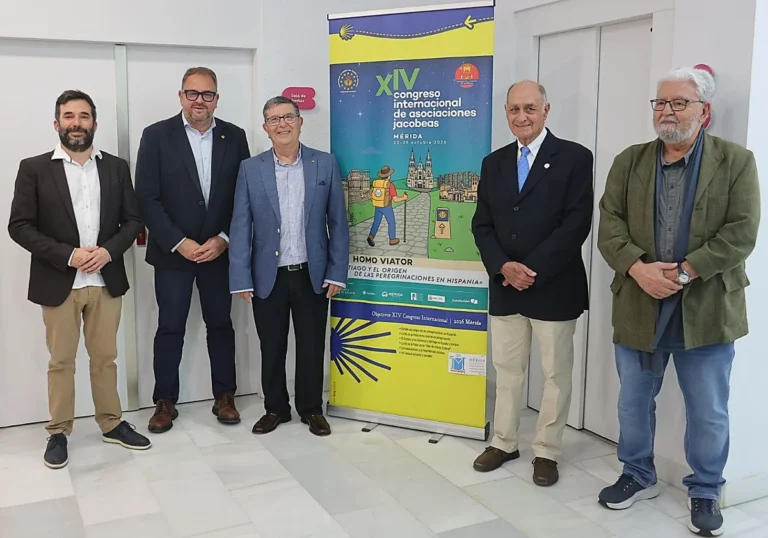
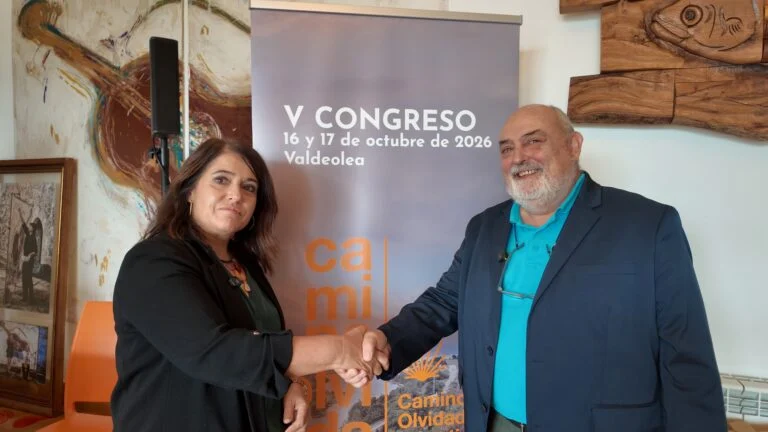
The first meeting dedicated to the Camino de Santiago in Portugal will be held on April 17 and 18, consolidating itself as a key event for the analysis, promotion and development of the Jacobean routes in Portuguese territory. This meeting will bring together experts, institutions, pilgrim associations and professionals from the tourism sector with the aim of strengthening international cooperation around the phenomenon of the Camino.
In recent years, Portugal has positioned itself as one of the emerging destinations within the Jacobean universe, thanks to the sustained growth of routes such as Central Portuguese Way and the Portuguese Coastal Way. This meeting aims to serve as a platform to exchange experiences, debate sustainability strategies and enhance the country's visibility within the global pilgrimage map.

A strategic boost for the Portuguese Way
During the conference, key topics will be addressed such as the management of pilgrim flows, the digitalization of services, the conservation of cultural and natural heritage, as well as the improvement of infrastructure. In addition, the economic impact of the Camino on local communities will be analyzed, highlighting its role as a driver of rural development and territorial revitalization.
The event will feature the participation of institutional representatives, experts in cultural tourism and associations linked to the Camino de Santiago, who will share good practices and management models applicable to different routes. Networking between professionals will also be encouraged, with the aim of generating synergies and future joint projects.
Portugal reinforces its role on the international Jacobean map
One of the highlights will be the reflection on the internationalization of the Camino and its growing appeal to pilgrims from all over the world. In this sense, Portugal seeks to reinforce its role as a gateway to Santiago, offering authentic, safe and sustainable experiences.
The meeting represents an important step in the consolidation of Portugal as a relevant actor within the Jacobean ecosystem, aligning itself with current trends in experiential and cultural tourism. Likewise, it reinforces the need for cooperation between countries to guarantee the preservation and evolution of one of the most important pilgrimage routes in the world.
With initiatives like this, the Camino de Santiago continues to adapt to new times without losing its essence, combining tradition, spirituality and tourism development.