



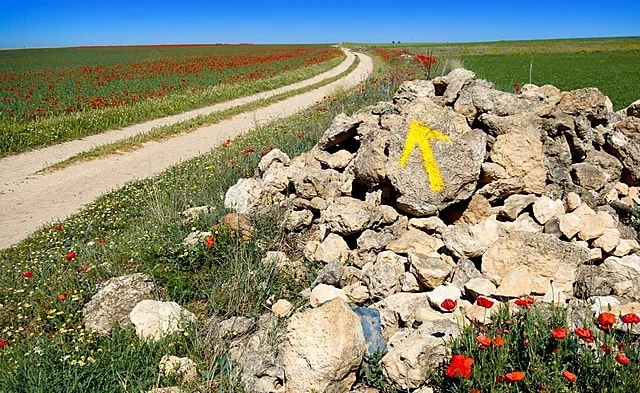
The lesser-known Jacobean routes cross unique landscapes of Castilla-La Mancha
When talking about the Camino de Santiago, most pilgrims automatically think of Galicia, León, Navarra or the French Way. However, there is a much less known reality that increasingly surprises travelers and rural tourism lovers: some of the most authentic and unknown Jacobean routes cross Castilla-La Mancha.
Between medieval towns, historic roads, mills, castles and infinite landscapes, this autonomous community keeps some of the best preserved secrets of the Jacobean universe. A territory where the Camino still preserves tranquility, authenticity and a very special connection with nature and history.
Every year the number of national and international pilgrims who discover these alternative routes increases, looking for a different experience, far from the crowds and more connected to the original spirit of the Camino de Santiago.
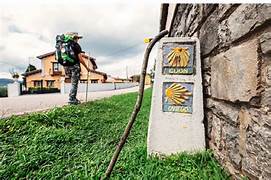
Castilla-La Mancha is also part of the Camino
Although many are unaware of it, Castile-La Mancha It has several historical Jacobean routes that cross provinces such as Albacete, Cuenca, Toledo, Guadalajara and Ciudad Real.
Among the most important are:
- The Wool Route
- The Camino de Levante
- The Southeast Path
- The Manchego Way
All of them are part of a historical pilgrimage network used for centuries by travelers and walkers heading to Santiago de Compostela.
The most striking thing is that many of these routes still maintain that “authentic” Camino atmosphere that some pilgrims claim to have lost on more crowded itineraries.
Here silence still exists.
Small towns continue to surprise.
And conversations with neighbors and pilgrims come naturally.
The Wool Route surprises more and more
One of the itineraries that has aroused the most interest in recent years is the Wool Route.
This old historic path connects Alicante with Burgos following old transhumance routes used by shearers and merchants. As it passes through Castilla-La Mancha it passes through spectacular places full of heritage, nature and cultural tourism.
In the province of Albacete, pilgrims discover enclaves such as Alpera and its cave paintings declared a World Heritage Site by UNESCO.
Further on appears Alcalá del Júcar, considered one of the most beautiful towns in Spain thanks to its houses embedded in the rock and its impressive medieval castle.
The tour continues to Cuenca, one of the most spectacular World Heritage cities in the country, where the famous Hanging Houses become a mandatory stop for many pilgrims and photography lovers.
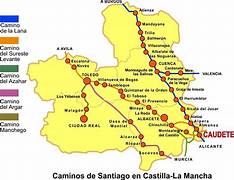
The Camino de Levante crosses the essence of La Mancha
Another of the most impressive routes is the Camino de Levante, which starts from Valencia and crosses Castilla-La Mancha towards Zamora, where it connects with the Vía de la Plata.
It is a long, quiet route marked by the landscapes of La Mancha.
Windmills, endless fields and historic towns accompany the pilgrim for hundreds of kilometers in an experience that mixes adventure, culture and spirituality.
The route passes through emblematic places such as Almansa, Chinchilla de Montearagón, Albacete, San Clemente, Mota del Cuervo, El Toboso or Tembleque.
Precisely in El Toboso, a land universally linked to Dulcinea and Don Quixote, many pilgrims feel that the Camino completely blends with the literature and history of Spain.
Toledo once again becomes the protagonist
The city of Toledo appears as one of the great highlights of these Jacobean routes.
The city known as the Imperial City not only attracts tourists for its monumental heritage, but also for its growing importance within spiritual and cultural tourism linked to the Camino de Santiago.
Many pilgrims consider entering Toledo one of the most exciting moments of the journey through Castilla-La Mancha.
Its medieval streets, churches, synagogues and walls offer a unique atmosphere that mixes cultures, religions and history.
The region is increasingly committed to promoting these routes as an alternative for sustainable tourism, rural tourism and authentic experiences related to nature and historical heritage.
The Camino Manchego gains popularity
In recent years, interest in the Camino Manchego has also been growing, a route of about 150 kilometers that connects Ciudad Real and Toledo, later linking with the Camino del Sureste.
The route passes through historical places related to the Battle of Alarcos, the footprints of Santa Teresa de Jesús or San Juan de la Cruz and some of the most representative landscapes of La Mancha.
Many travelers especially highlight the tranquility of the environment and the hospitality of the small municipalities through which the Camino passes.
Unlike other more crowded routes, here it is still possible to walk for hours feeling a very intimate connection with the landscape.
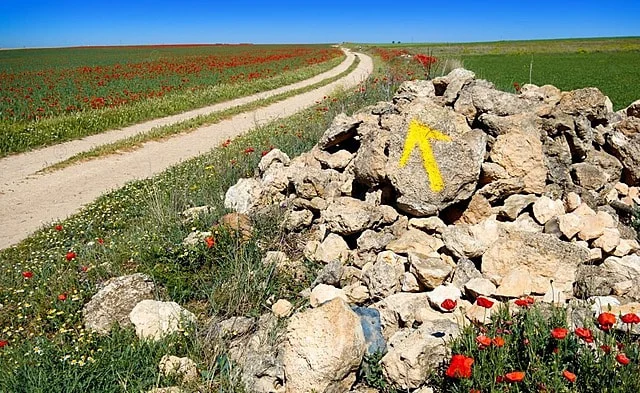
Nature and pilgrimage tourism continues to grow
The rise of active tourism and experiential tourism is helping to rediscover these lesser-known routes of the Camino de Santiago.
More and more people are looking for experiences related to:
- nature,
- hiking,
- welfare,
- rural getaways,
- historical heritage,
- and digital disconnection.
Castilla-La Mancha brings together precisely many of these elements.
Its paths offer open landscapes, historic towns, traditional gastronomy and a feeling of tranquility highly valued by new pilgrims.
Furthermore, the international growth of the Camino de Santiago continues to drive interest in alternative routes away from the most touristy routes.
The real treasure is in the lesser known paths
Many pilgrims who travel through Castilla-La Mancha agree on something: here the Camino still retains a very special essence.
There are no large crowds.
There is no rush.
And many times the silence of the landscape ends up becoming a fundamental part of the experience.
Perhaps that is why these routes are beginning to gain so much strength among those seeking a more humane and authentic Camino.
Because in the end, beyond reaching Santiago de Compostela, the real trip usually occurs in small encounters, in unexpected towns and on those roads that still remain far from mass tourism.
And Castilla-La Mancha keeps many of those roads.

















