



Practical advice, real experiences and the animals that most accompany pilgrims
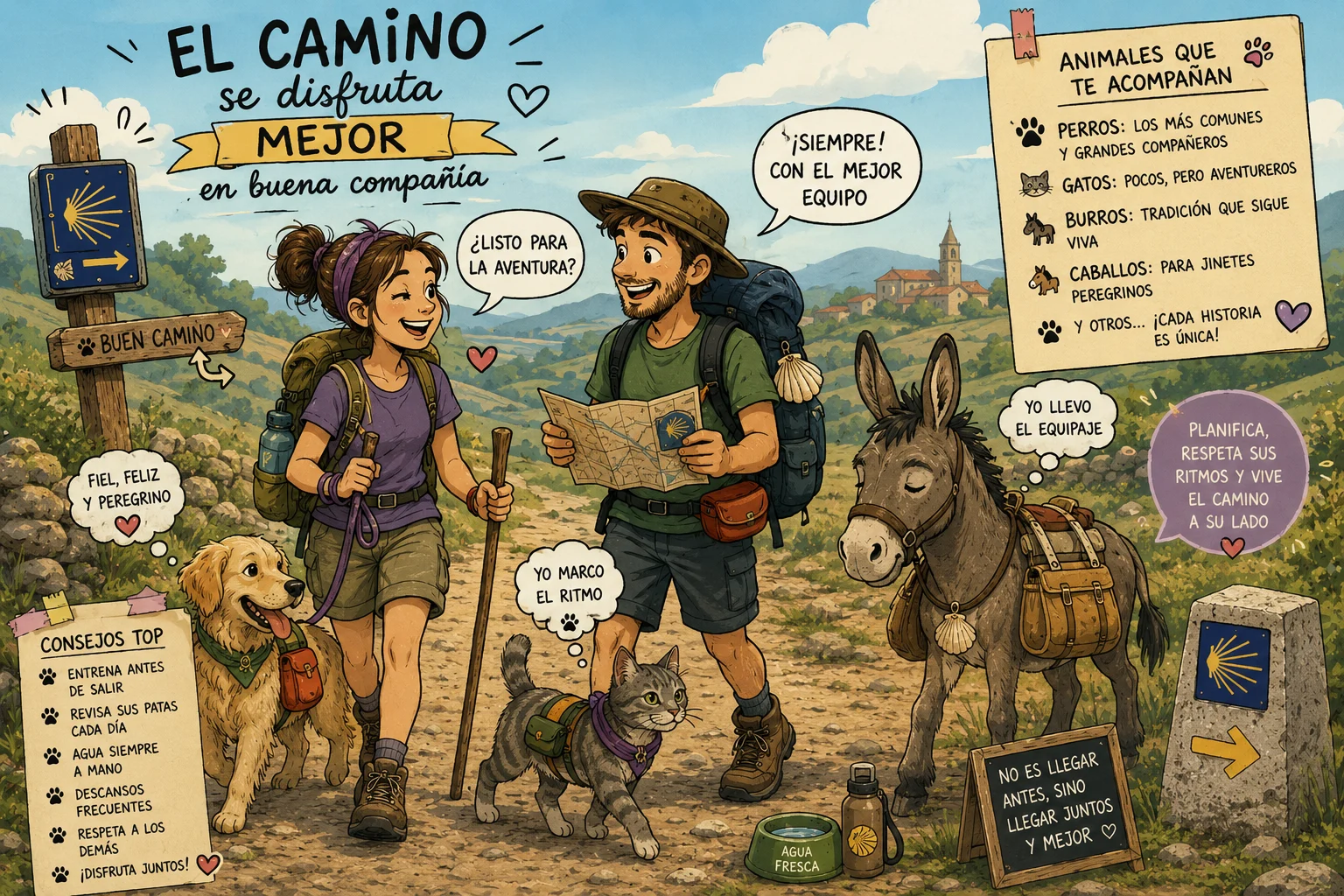
Doing the Camino de Santiago is already an unforgettable experience. But for many pilgrims, sharing every sunrise, every trail and every arrival at a shelter with an animal makes the adventure even more special. Every year hundreds of people set out to travel the Jacobean routes with their dogs, while others choose to do so with horses or even donkeys, recovering a tradition that for centuries was part of the historical pilgrimage routes.
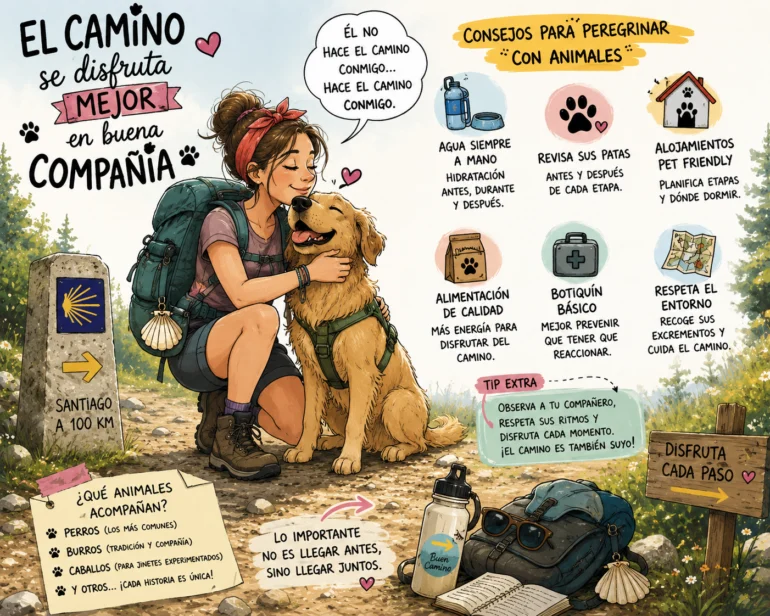
However, traveling with animals requires different preparation. It is not enough to have the desire to walk. The well-being of your travel companion must be a priority from day one.
The dogs are, without a doubt, the main protagonists. From small mixed breeds to German shepherds, Labradors or border collies, it is common to find them walking the Camino Frances, the Camino del Norte or the Portuguese Way. Many pilgrims claim that the company of a dog helps combat loneliness, provides security and creates a daily routine that makes the long stages more bearable.
One of the most common mistakes is to think that the animal can face the same distances as a person without prior preparation. Experts recommend doing progressive training for several weeks before starting the pilgrimage. If the dog is not used to walking twenty or thirty kilometers a day, problems with the pads, exhaustion or muscle injuries are likely to appear.
Another fundamental aspect is hydration. During the summer months, especially in areas of Castilla y León or in some stages of the Camino de la Plata, temperatures can easily exceed thirty degrees. Carrying a portable waterer and offering water frequently is essential. Many pilgrims take advantage of fountains and rest areas to refresh their companions before continuing their march.
Food also deserves special attention. Some walkers choose to slightly increase the amount of daily food to compensate for the physical effort. Others carry small rewards or energy snacks that help maintain vitality during the day.
Accommodations are another key point. Although there are more and more hostels, rural hotels and tourist houses that accept pets, it is advisable to plan the stages in advance. Nothing is more frustrating than arriving at the end of a long day and discovering that the accommodation you have chosen does not allow animals.
In addition to dogs, some pilgrims complete the Camino on horseback. This modality allows you to travel long distances enjoying the landscape from another perspective. There are also cases of people completing the route with donkeys, an image reminiscent of ancient medieval travelers. These animals are often used to transport luggage and offer a more leisurely and traditional experience.
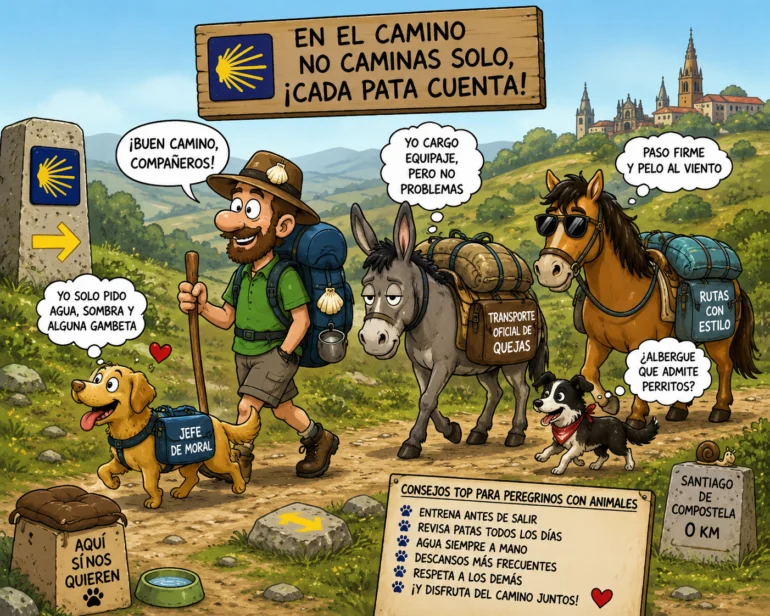
Health should be checked daily. It is advisable to check the condition of the legs, remove any spikes or small stones and observe any signs of excessive fatigue. A small problem detected in time can prevent an injury that forces you to abandon the pilgrimage.
It is also important to respect the rest of the pilgrims. Always keeping the animal under control, collecting excrement and avoiding disturbances contributes to maintaining the good environment that characterizes the Camino de Santiago.
Many walkers say that the animals become true stars of the route. It is not uncommon for other pilgrims to remember the dog that accompanied a person more than the owner himself. They end up appearing in photographs, starring in conversations in shelters and generating friendships between people from different countries.
Because in the end, beyond the kilometers, the yellow arrows or the arrival in Santiago, the Camino is also about sharing experiences. And for those who travel it with an animal, each stage becomes an adventure full of complicity, trust and moments that remain forever in memory.

















