



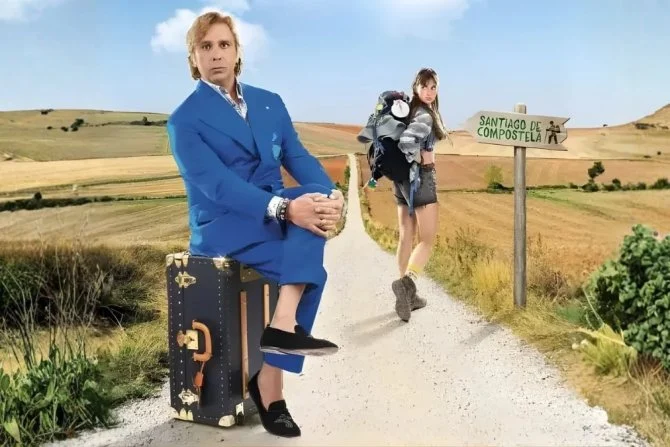
When the French Way became a movie… and conquered Italy
There are stories that, without warning, make their way like a flower that is born between two stones. On any given day—perhaps one of those in which the French Way dawns with low mist and the smell of wet earth—a film team arrived in Triacastela with cameras, cables and that mixture of nerves and enthusiasm that is only seen when something big is going to be told.
And boy did they tell it.
The film, an Italian comedy filmed among hostels, trails and that century-old chestnut tree that seems to know all the pilgrims' secrets, has exploded at the Italian box office as a bright surprise. Nobody expected such a resounding success... although perhaps the Camino did. He always knows when something has a soul.
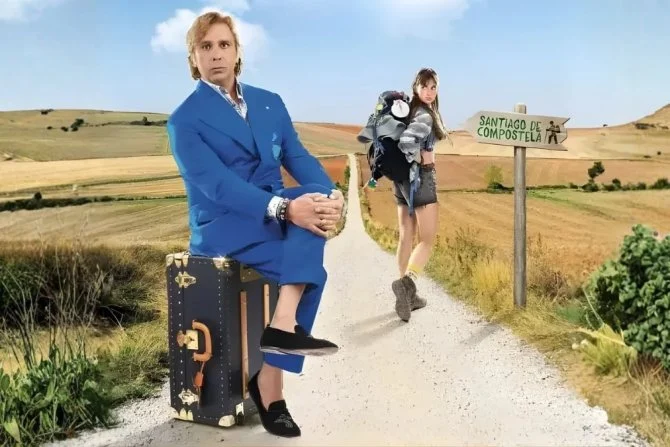
The story revolves around an heir to a furniture emporium—a man so accustomed to luxury that the word “backpack” sounded almost like a private joke to him—who, through a twist of life, ends up walking hundreds of kilometers. Worn boots, real blisters, unexpected conversations... and a reunion with his daughter who acts as an emotional compass on this journey that begins as physical and ends as intimate.
I remember an invented anecdote, but it could have been real: a woman from Triacastela told me (imaginary) that during filming she saw the protagonist sit on the side of the road, take off his boots and look at the landscape as if it were the first time he understood what it was like to take a deep breath. “That's where the Camino caught him,” he said, laughing. “It entered him inside.”
And perhaps that is the key to success. The Italian public—so emotional, so given to embracing pulsating stories—has been seduced by humor, yes, but also by that quiet nostalgia that the Camino has. That feeling that we all, sooner or later, need a place to meet again.
The rooms have been filled, laughter has jumped from seat to seat and many people are discovering for the first time that there is an ancient path in Spain where one can lose oneself to find oneself.
In Triacastela they still remember the hustle and bustle of filming. Neighbors looked out their doors, pilgrims mingled with actors, and children watched how the magic of cinema turned their village into a stage. And now, seeing the success, there's a little pride that creeps into every conversation.
Perhaps the film has achieved something greater than a box office record: it has made thousands of people, without having set foot on the Camino, feel that they have already walked a distance.
In the end
Because the Camino, when it allows itself to be filmed, does not act: it breathes.
And whoever looks at it—whether in person or from an armchair—discovers that each stone keeps a heartbeat,
that every dawn is a blank page,
and that sometimes a single well-told story is enough
to ignite the desire to walk.

















