



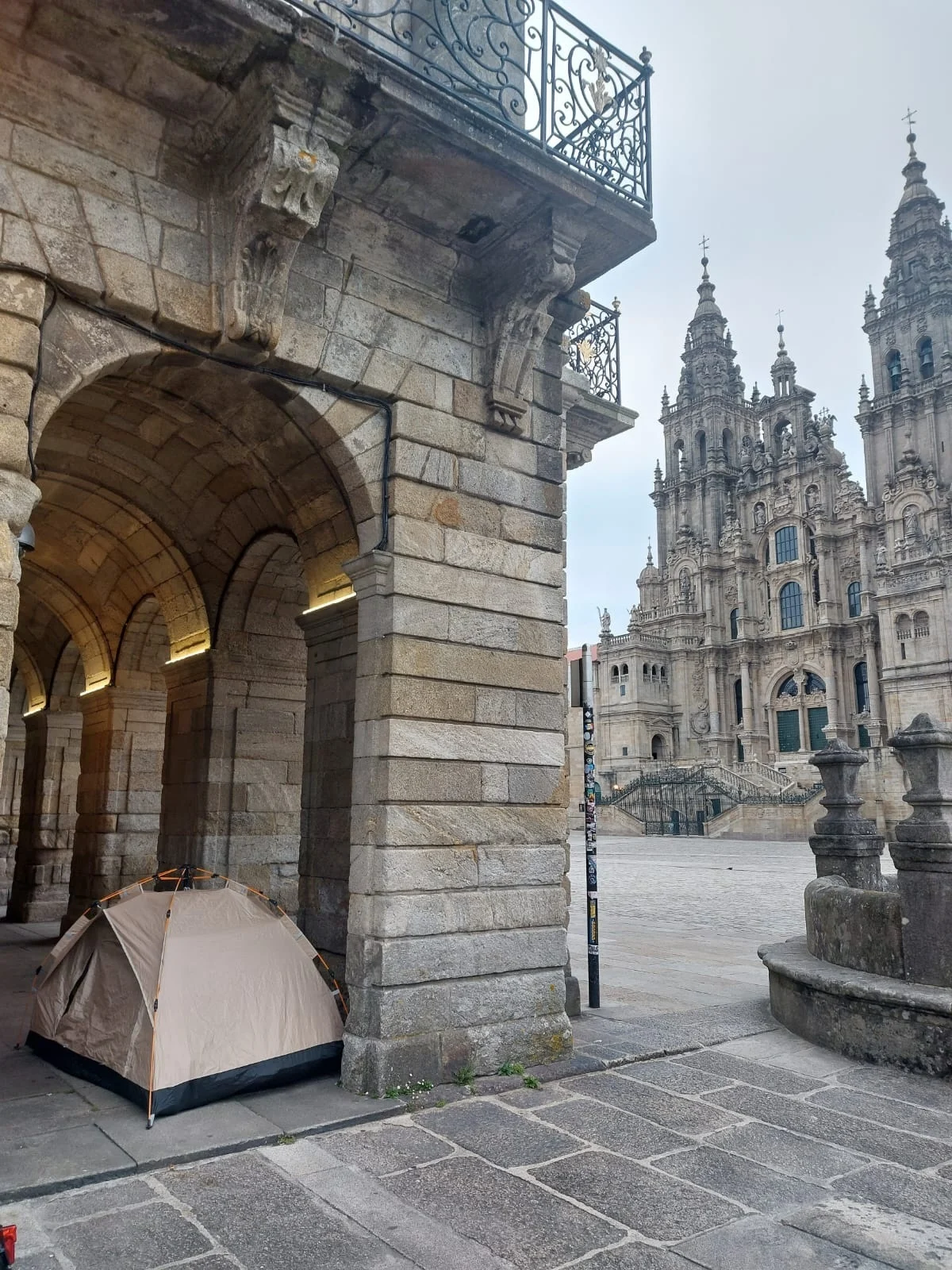
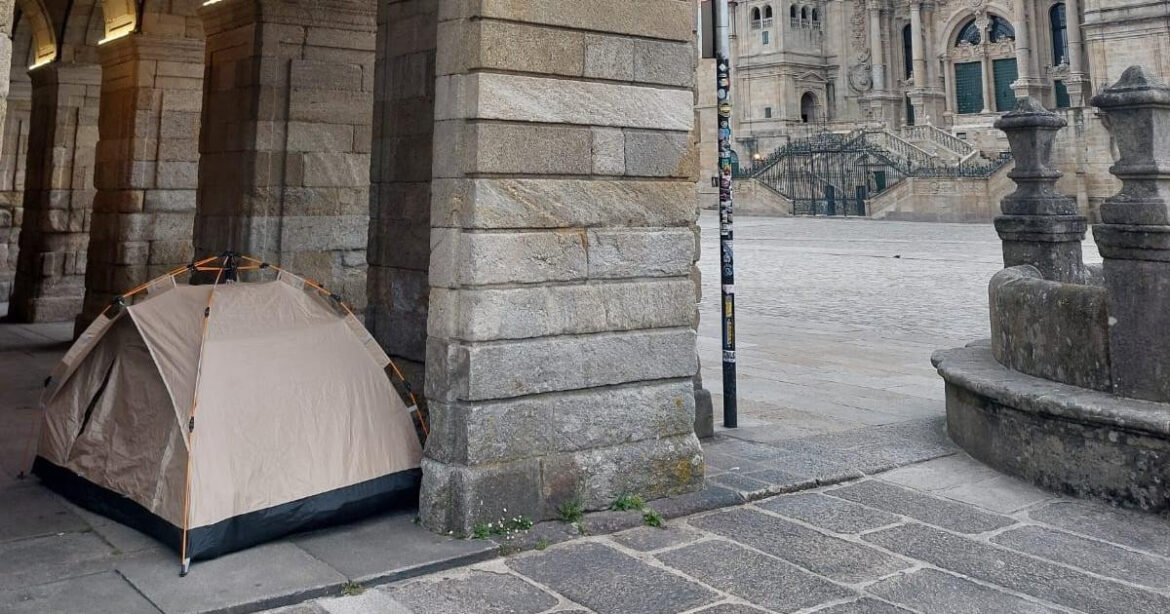
The image surprised those who crossed the road early in the morning. Obradoiro Square, the most emblematic place in Santiago de Compostela and final point for thousands of pilgrims from all over the world. Under the arcades of the Pazo de Raxoi, in front of the Cathedral, a tent broke the usual image of one of the most photographed spaces in Spain.
The Local Police of Santiago went to the place, who proceeded to identify the pilgrim and inform him that camping in that area is prohibited. The intervention took place normally and without incident, with the walker leaving the place after collecting all his belongings.
Although it may seem like an anecdotal fact, the episode has once again put on the table a debate that gains strength every summer in the Galician capital: where does the freedom of the pilgrim end and where does the obligation to protect one of the most important monumental complexes in the world begin?
An end of the Camino that cannot become a campsite
Praza do Obradoiro is not just any square. It is the heart of the Camino de Santiago. This is where the emotions of those who have traveled hundreds or even thousands of kilometers on foot, by bicycle or on horseback flow. It is the scene of hugs, tears, photographs, family gatherings and the place where thousands of people celebrate having fulfilled one of the great challenges of their lives.
Precisely because of this historical and heritage importance, municipal regulations expressly prohibit installing tents or spending the night in this space. It is not only an aesthetic issue, but also one of heritage conservation, security and citizen coexistence.
Santiago has a wide network of public and private hostels, guesthouses, hotels and other accommodations prepared to serve pilgrims throughout the year, so the authorities remind that there are legal alternatives to rest after arriving in the city.
Behavior that does not represent the spirit of the Camino
Every year hundreds of thousands of pilgrims come to Santiago from more than 180 countries. The vast majority demonstrate exemplary behavior, respecting the rules, taking care of the heritage and thanking the hospitality of the towns through which they pass.
However, the constant increase in pilgrims also brings with it some uncivil behaviors that generate concern among neighbors and administrations.
In recent years, there have been cases of people sleeping in historic gardens, using monuments as improvised clotheslines, washing clothes in ornamental fountains, leaving garbage in public spaces or camping in unauthorized places.
They are very specific situations, but visible enough to generate an important debate about the need to make the growth of the Camino compatible with the protection of heritage.
The police acted quickly
Police action was quick and discreet. The agents informed the pilgrim that he could not remain camped under the arcades of the Pazo de Raxoi and asked him to dismantle the tent.
It was not necessary to resort to coercive measures, since the walker collaborated at all times and left the place voluntarily.
However, the story did not end there.
The pilgrim returned the next day
According to municipal sources, the same pilgrim returned to Obradoiro the next day and set up his tent again in practically the same place.
The Local Police had to intervene again to proceed with a second eviction, a circumstance that could lead to the opening of a disciplinary file for repeat offenses.
This fact has drawn special attention, since it is not common for the same person to repeat behavior of this type after having been previously warned.
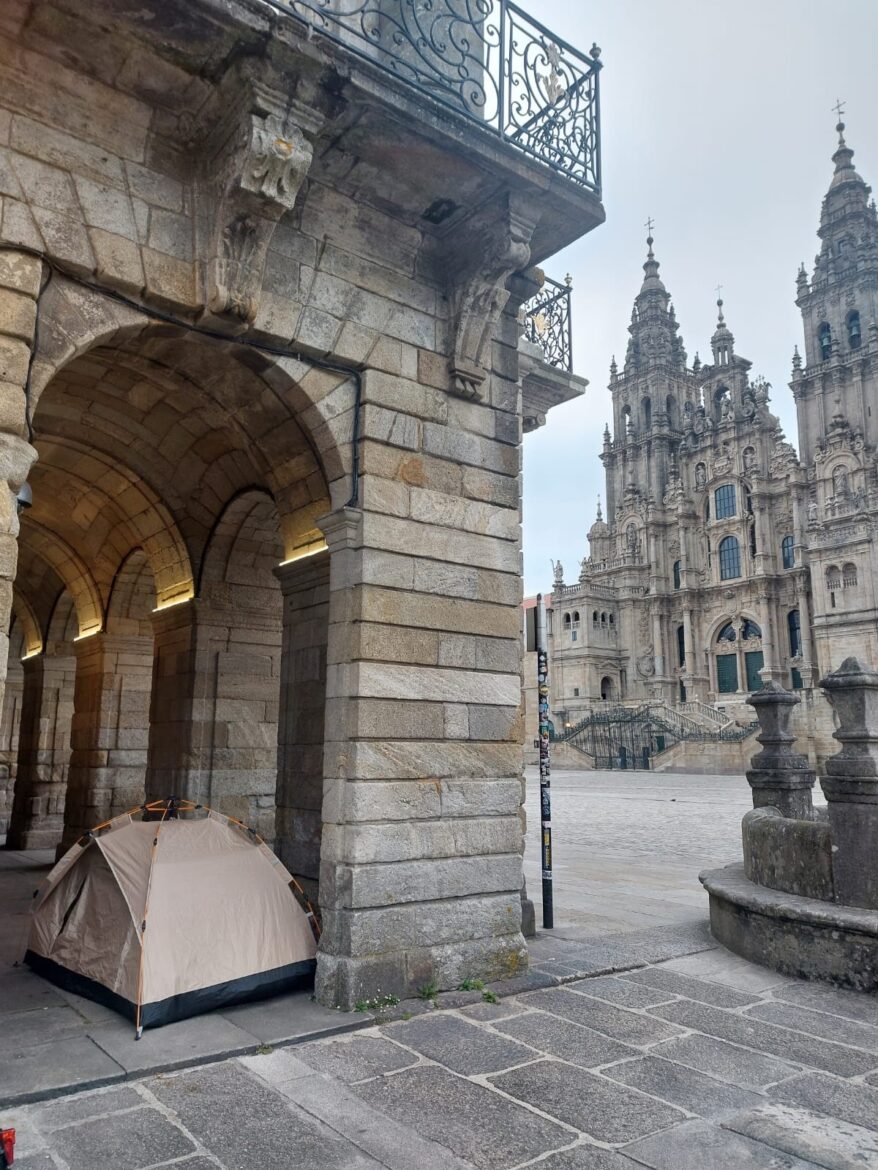
FORWARDED / HANDOUT by RAMÓN CASTRO
Photograph sent to the media exclusively to illustrate the news to which the image refers, and citing the origin of the image in the signature
30/6/2026
A debate that grows with the increase in pilgrims
The Camino de Santiago is experiencing one of the most popular moments in its history. Year after year the number of walkers increases and also the pressure on cities like Santiago de Compostela.
Many experts consider it necessary to reinforce the information that pilgrims receive before arriving in the Galician capital, remembering basic aspects of coexistence, respect for heritage and proper use of public spaces.
After all, the Camino does not end when entering Praza do Obradoiro. It continues in the way each pilgrim behaves during their last hours in the city.
The true spirit of the Good Way
Those who really know the Camino know that its essence does not consist solely of walking kilometers.
It also means respecting the towns you pass through, taking care of the shelters, thanking the hospitaleros for their work, keeping the trails clean and protecting those places that millions of people want to visit.
The Obradoiro symbolizes more than a thousand years of history, culture and pilgrimage. Preserving it is a shared responsibility between neighbors, institutions and pilgrims.
Because the best memory that a walker can leave in Santiago is not a tent... but the example of having walked the Camino with respect until the last step.

















