



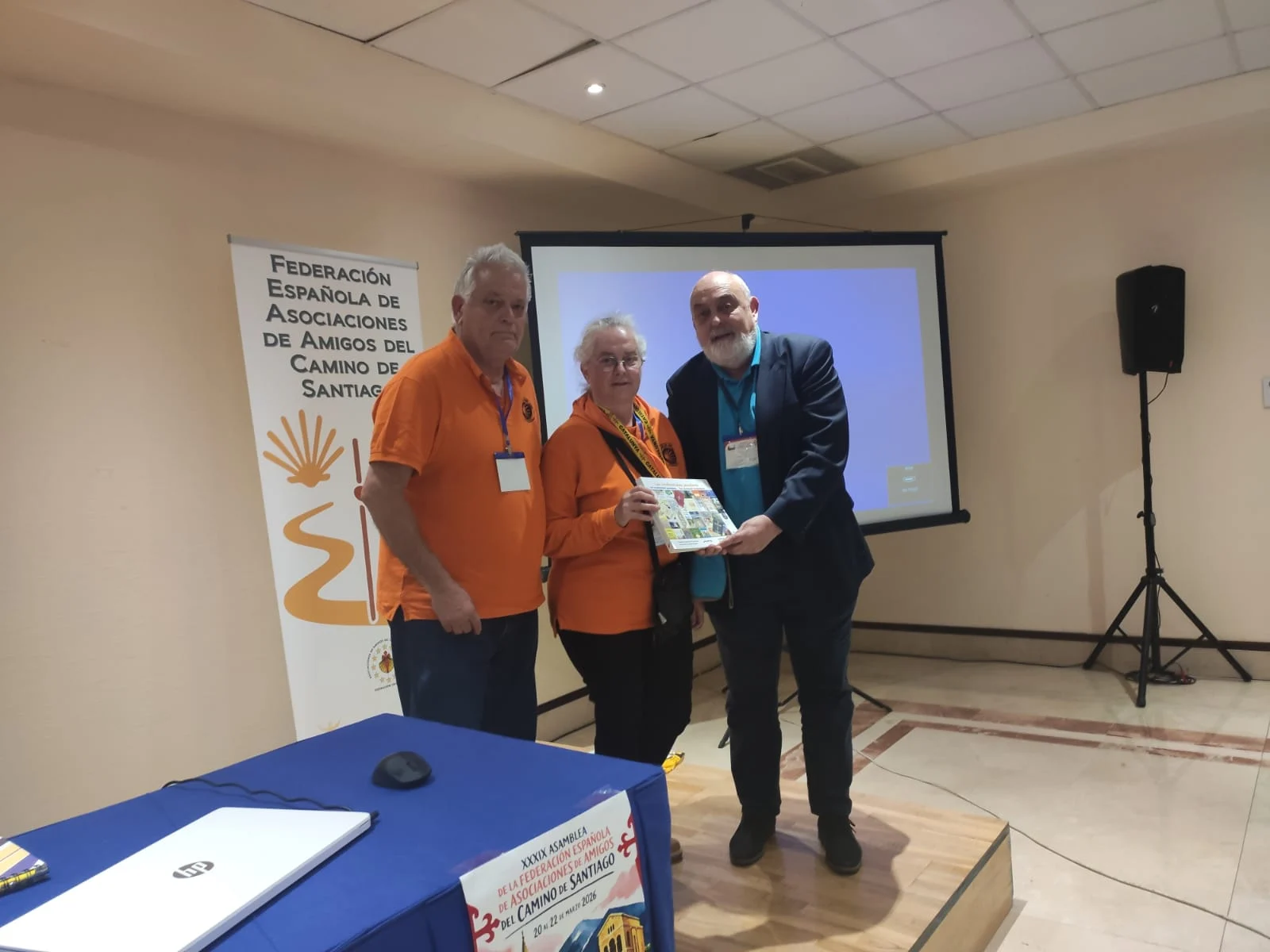
The city of Oviedo was the scene yesterday of an outstanding day within the National Assembly of the Spanish Federation of Associations of Friends of the Camino de Santiago, a meeting that brought together representatives from all over the country around the present and future of the Jacobean phenomenon.
A key meeting of the Jacobean movement
Held in the Príncipe Felipe Auditorium, the main day of the assembly brought together dozens of associations, consolidating itself as one of the main spaces for coordination and debate of the Camino de Santiago in Spain. During the day, issues related to the conservation of the routes, welcoming pilgrims and the dissemination of cultural heritage were addressed.
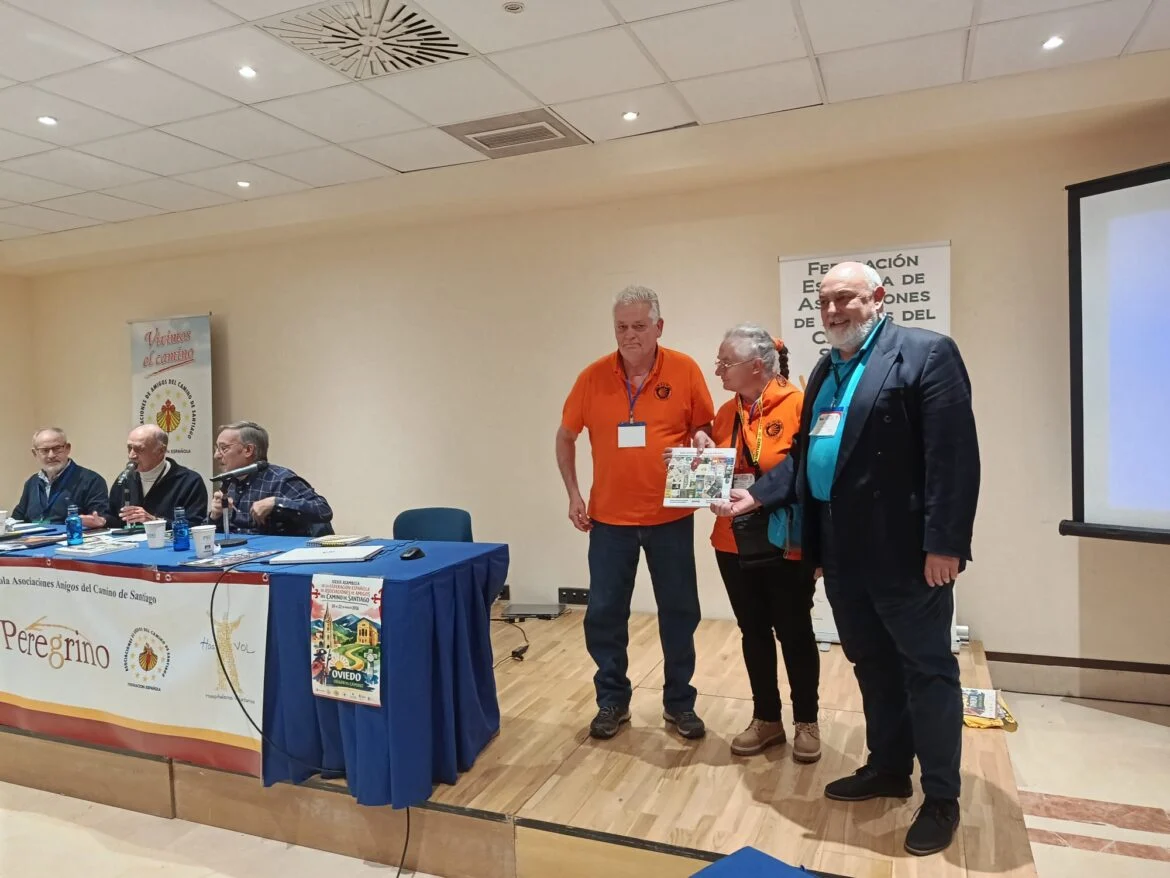
Valeriano Teja presents a work on Jacobean credentials
One of the most notable moments of the day was the intervention of Valeriano Teja Oruña, president of the association Pilgrims through Cantabria, who presented his new work focused on Jacobean credentials.
The work, dedicated to the study and compilation of these fundamental documents for pilgrims, highlights the historical and symbolic evolution of the credentials as an identifying element of the Camino de Santiago. During his speech, Teja highlighted their role as “living testimony of the pilgrimage” and as a link between tradition and personal experience.
Recognition of the work of the northern peninsula
The participation of Teja also reinforces the presence of the northern peninsula in the Jacobean area, especially in relation to the promotion of the North Road, one of the routes that has gained greater relevance in recent years.
His intervention was followed with interest by the attendees, generating a space for dialogue around the importance of conserving and disseminating material and immaterial elements of the Camino.
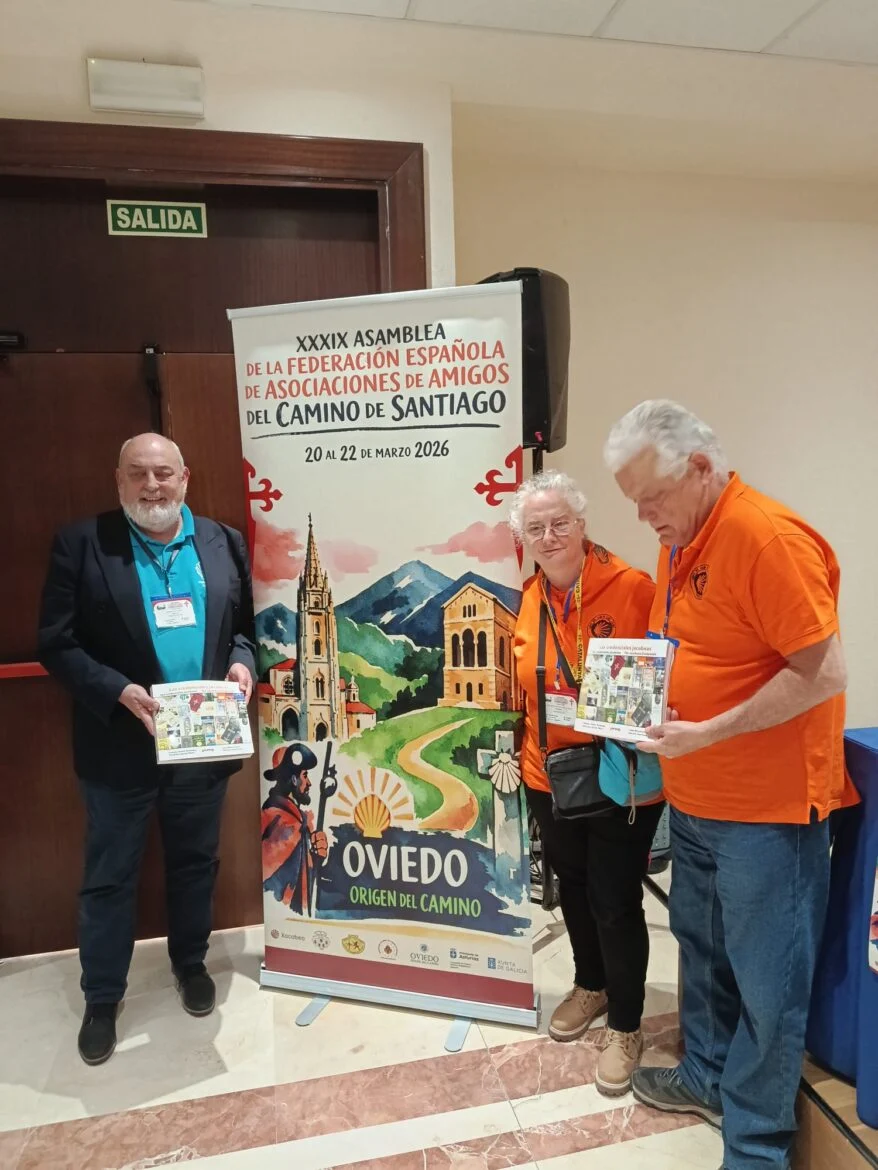
A day to strengthen the Camino de Santiago
The assembly held in Oviedo once again highlighted the vitality of Jacobean associations in Spain. Events like this allow us to share experiences, coordinate efforts and continue building the future of the Camino through collaboration between territories.
The presentation of Valeriano Teja's book thus adds to a day marked by the exchange of knowledge and the common commitment to the pilgrim tradition.

















