



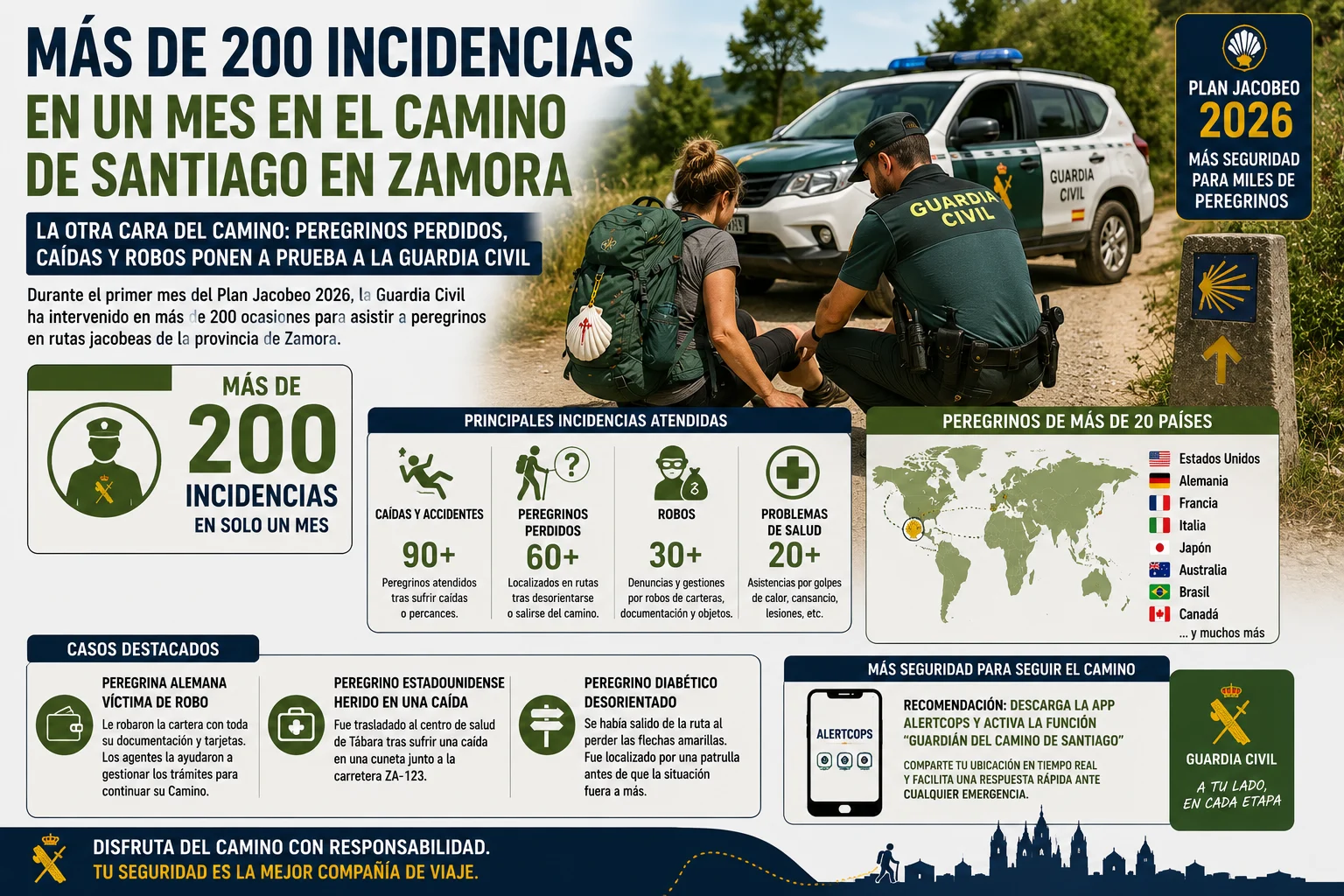
Lost pilgrims, falls and robberies put the Civil Guard in Zamora to the test
The Camino de Santiago is synonymous with adventure, improvement and encounter, but it also has a less known side. During the first month of operation of the Jacobean Plan 2026, the Civil Guard has had to intervene in more than 200 occasions to assist pilgrims who suffered accidents, thefts, health problems or simply got lost while traveling the Jacobean routes as they passed through Zamora.
The actions have been carried out mainly by the Mobile Pilgrim Assistance Office (OMAP), created to reinforce security and assistance in one of the provinces through which important sections of the Camino de Santiago run. During this period, walkers from more than twenty different countries have been assisted, from the United States, Germany and France to Japan, Australia, Brazil and Canada.
Thefts, falls and disoriented pilgrims
Among the most striking cases is that of a German pilgrim who suffered the theft of her wallet with all her documentation and bank cards. The agents had to help her manage the necessary paperwork so she could continue her pilgrimage.
Several accidents were also recorded. An American pilgrim was transferred to the Tábara health center after suffering a fall in a ditch next to the ZA-123 highway. Another walker had to be treated after an accident near Puente Quintos while on his way to Santiago de Compostela.
The agents also located several pilgrims who had become disoriented and involuntarily abandoned the marked route. One of them, also a diabetic, had lost the yellow arrows after leaving the Calzadilla de Tera shelter and was found by a patrol before the situation became complicated.
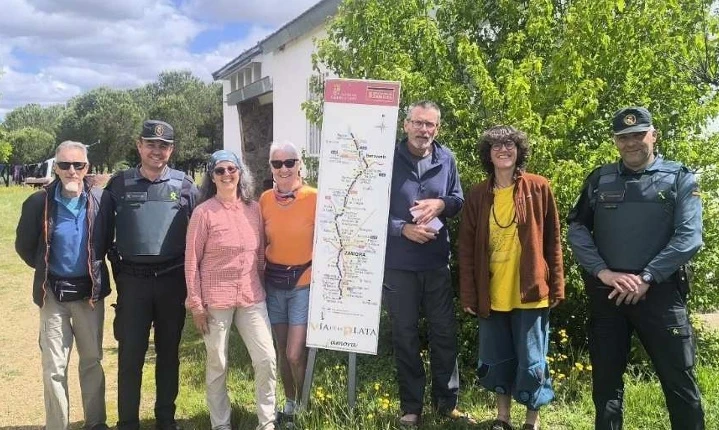
The safest path thanks to the Jacobeo Plan
The Civil Guard maintains an extensive surveillance device on the Camino de Santiago within the Jacobean Security Plan 2026, which reinforces the police presence on routes, shelters and strategic points of passage for pilgrims. The objective is to guarantee a safe experience for the thousands of walkers who travel the different Jacobean itineraries every year.
In addition to in-person assistance, agents recommend the use of the application AlertCops and the specific function «Guardian of the Camino de Santiago», designed to share real-time location and facilitate rapid response in the event of an emergency.
A reality that many pilgrims are unaware of
Although the vast majority of pilgrimages pass without incident, the data show that behind each stage there is important security and assistance work. Falls, heat stroke, physical problems, bicycle breakdowns, theft or simple mistakes are part of the situations that emergency teams face each season.
Thanks to this device, hundreds of pilgrims have been able to continue their journey to Santiago de Compostela after suffering incidents that could have prematurely ended their adventure. Because behind each yellow arrow there is also a silent operation that works to ensure that the Camino remains one of the safest pilgrimage routes in the world.

















