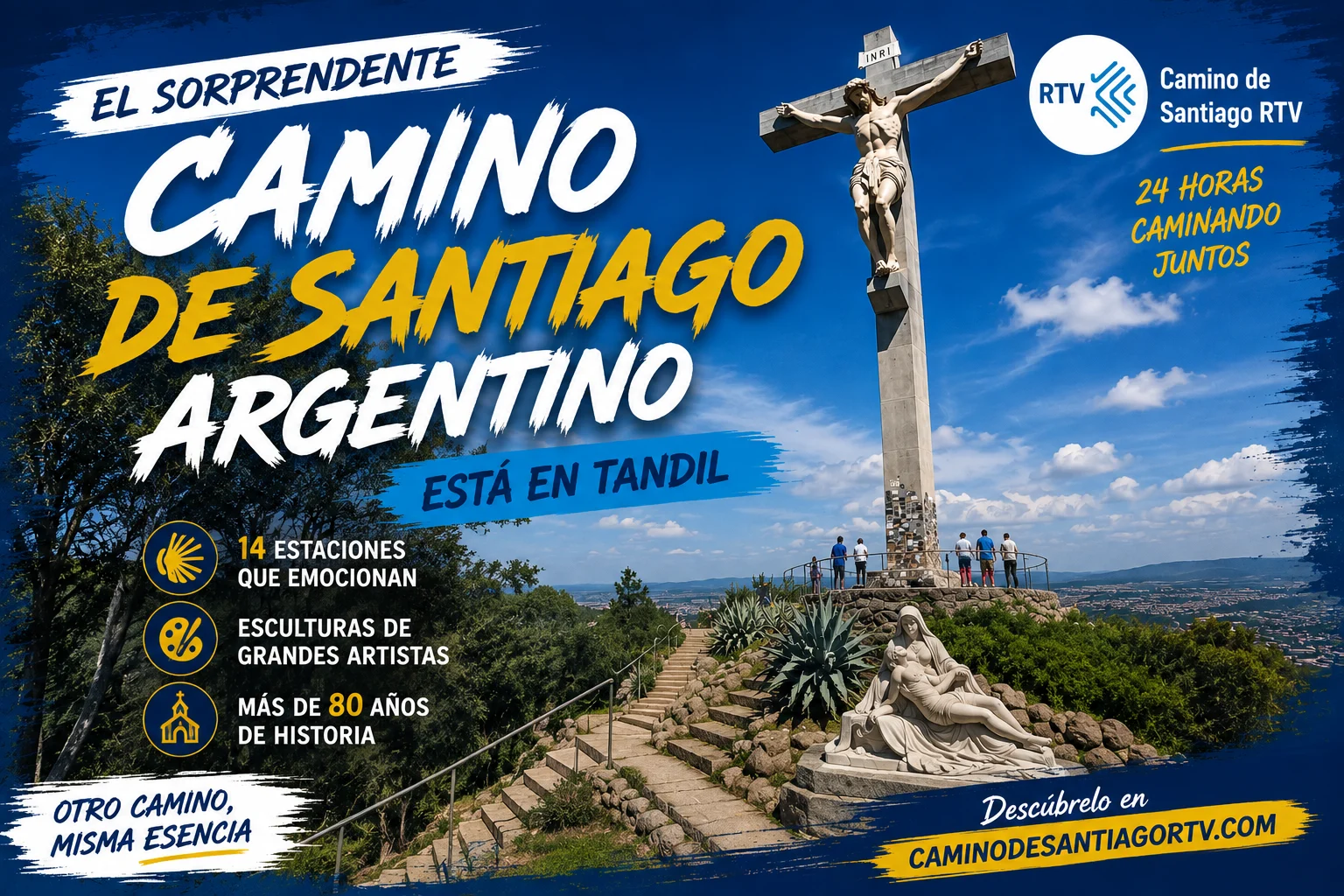
Between mountains, stone paths, art and spirituality, the Argentine city of Tandil preserves a monumental route that some compare to a kind of “Argentine Camino de Santiago”. This is Mount Calvary, a historic itinerary with 14 stations, sculptures by great artists and more than eight decades of history.
It is not in Galicia, it does not lead to the tomb of the Apostle and it is not part of the Jacobean routes either. However, thousands of kilometers from Compostela there is a place where walking once again becomes an experience in which nature, heritage and spirituality mix.
It is in Tandil, in the province of Buenos Aires (Argentina), and his real name is Mount Calvary.
The complex is located a few minutes from the city center and offers a pedestrian route of approximately one kilometer through 14 stations that represent the Via Crucis. Access is free and the complex also includes the chapel of Santa Gemma Galgani and a reproduction of the Lourdes Grotto.
14 seasons between nature and sculptures
The comparison with the Camino de Santiago arises, above all, from the experience of advancing on foot.
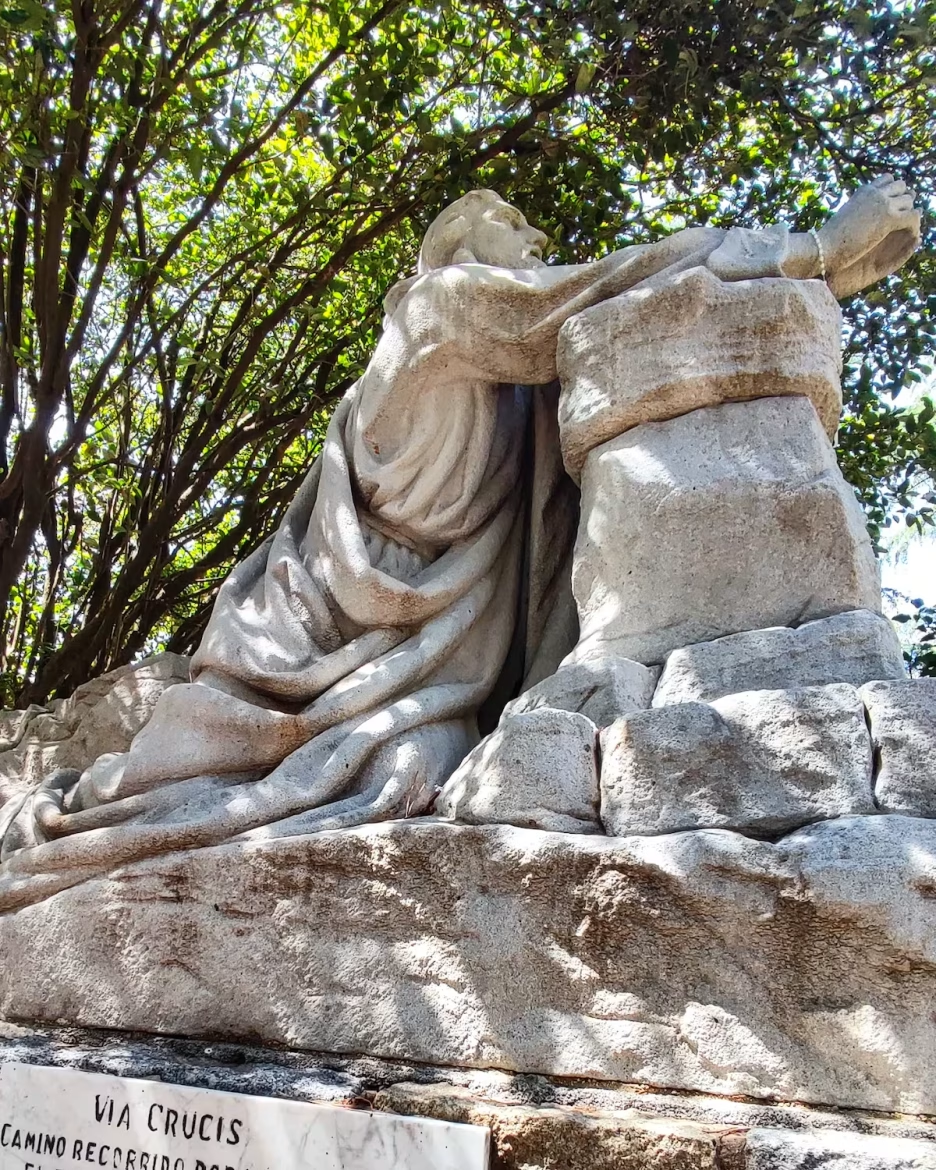
Visitors walk paths among olive trees, eucalyptus and pine trees while discovering the different sculptural groups that represent episodes of Jesus' path to the crucifixion.
Among them are the falls, the encounter with Mary, the help of the Cyrenean, the crucifixion or the Holy Sepulchre.
But Mount Calvary is also an extraordinary open-air museum.
Artists such as José Berna, Humberto Cerantonio, Ricardo Musso, Antonio Sforza, Roberto Capurro and José Fioravanti, one of the great names of Argentine sculpture of the 20th century.
A story that began in 1938
The origin of the project dates back to 1938, when Monsignor Fortunato Devoto imagined the construction of a great Via Crucis in the mountains of Tandil.
The land was later donated by Pedro Redolatti and the architectural project ended up in the hands of Alejandro Bustillo, who carried out the design free of charge.
One of its most spectacular elements was a staircase of 96 steps, built of stone and oriented towards the Plazoleta de la Cruz.
Devoto died before being able to see the finished work.
Finally, the Monte Calvario was inaugurated on January 10, 1943, in an event that brought together a crowd estimated then at around 40,000 people.
A monumental cross on Tandil
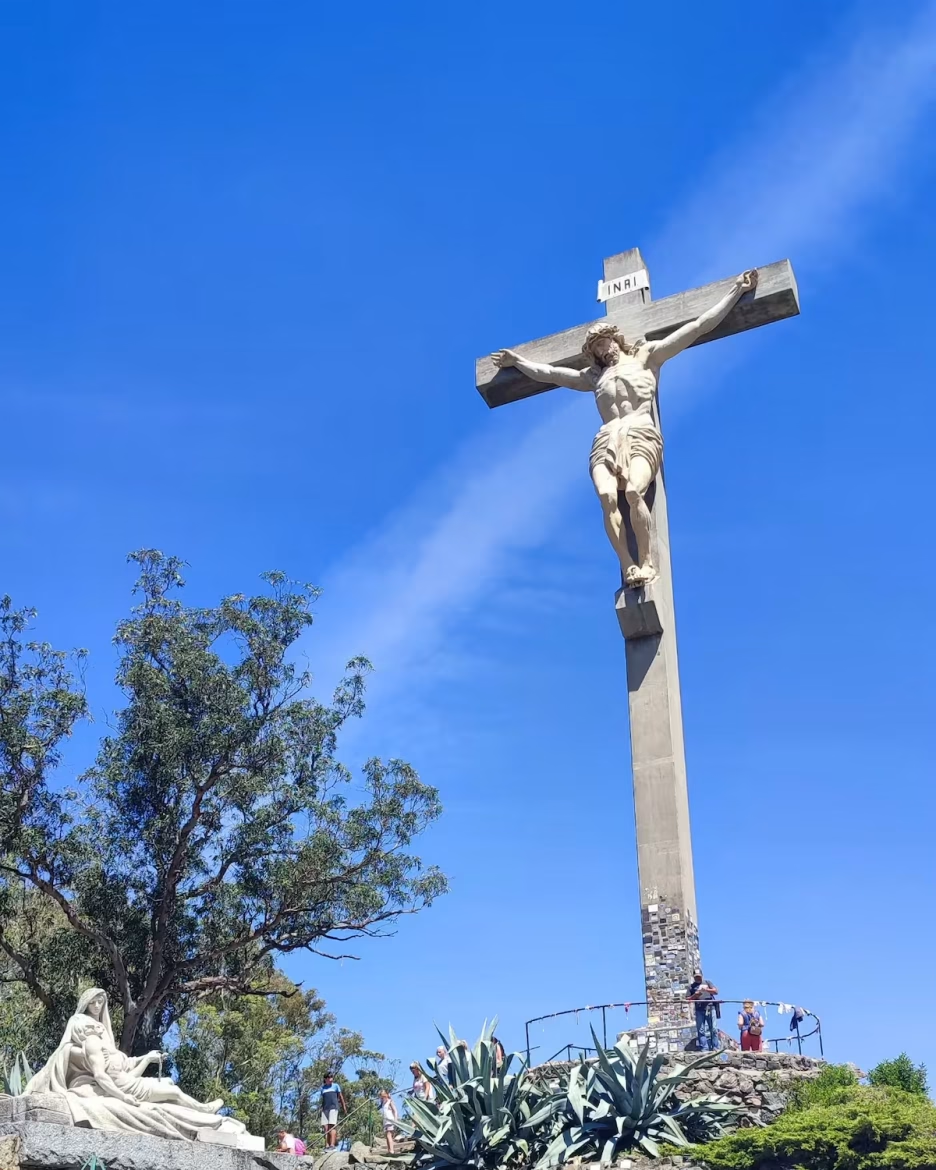
The large cross is another of the symbols of the place.
The original reached 17 meters high and had been built using a century-old larch. The deterioration caused by weather conditions later forced it to be replaced and in 1949 a new, even taller, cement structure was built.
Over the decades, the complex has ended up becoming one of the great tourist and religious symbols of Tandil.
Currently there is also an initiative to get it declared National Historical Monument, seeking to reinforce the conservation of a heritage permanently exposed to rain, wind and humidity.
From Santiago to Argentina: when walking means something more
The comparison with Santiago must be understood with caution. Mount Calvary It is not a Jacobean route.
But it does share something that millions of pilgrims know perfectly well: the use of the path as a space to stop, reflect and move forward.
Perhaps that is why it is so interesting to discover it from Europe.
Thousands of kilometers from Santiago de Compostela, another route shows that walking can still be much more than moving from one place to another.
It can become history, art, nature and personal search.
And that feeling will be familiar to any pilgrim.
Buen Camino from Spain to Argentina.