Few pilgrims know that the paths to Fátima and Santiago de Compostela intersect and ate partilham kilometers, mushrooms and pilgrimage routes
FATIMA / SANTIAGO DE COMPOSTELA – At first glance, Fatima and Santiago de Compostela They seem to represent two completely different pilgrimages. One leads to the great Portuguese Marian shrine; The other ends in front of the tumulus traditionally attributed to the Apostle Santiago.
But there is a surprising connection between the two.
In Portugal, there are journeys we have Caminhos de Fátima and Caminho de Santiago use the same layout. At some points, the pilgrim can find indications related to the two destinations and walk on a road that, depending on the chosen direction, either leads to Fátima or to Santiago.
It is one of the most interesting curiosities of the pilgrimage on the Iberian Peninsula.
Two directions, two great sanctuaries
Imagine walking down a road and trying to make a decision.
For one side, Fatima.
For or else, Santiago de Compostela.
It is not just a symbolic image.
O Tejo Road, which connects Lisbon to Fátima, part of the route with the Caminho de Santiago. Turismo de Portugal explains that in the initial framework, along with the Parque das Nações, there is also a signpost for Santiago.
Thus, Lisbon can function as a starting point for two pilgrimage experiences deeply linked to Portuguese and European religious history.
There is a stretch in which the paths coincide completely
And there is something even more curious.
or chamado Caminho do Norte to Fátima coincides with Caminho de Santiago It is not plotted in Portuguese territory, according to official Portuguese tourist information. Therefore, the signal can make reference to your two pilgrimages.
The route passes through places fundamental to Portuguese Jacobean history, including Valença, Ponte de Lima, São Pedro de Rates, Porto and Coimbra, before continuing in the direction of Fátima. The Valença–Fátima route currently shown on the Caminhos de Fátima is close to 364 kilometers, divided into 17 daysThat's how a great spiritual spinal column existed crossing Portugal.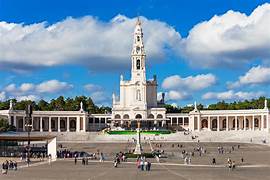
Santiago also comes to Lisbon
Many international pilgrims prove that Caminho Português de Santiago começa no Porto.
Not necessarily.
The Caminho Central is signaled from Lisbon It continues through historical cities such as Santarém, Tomar, Coimbra and Porto before advancing to the north of Portugal and later entering Galiza.
At the beginning of the rota in Lisbon something particularly symbolic happens: pilgrims from Santiago and pilgrims from Fátima can find each other traveling the same paths.
Some walks to the north.
Others procuram the Sanctuary of Fátima.
For some time, however, everyone is simply a pilgrim.
Fátima: a very recent pilgrimage
There is a huge historical difference between the two destinations.
The pilgrimage to Santiago has medieval roots and turns into one of the great pilgrimages of European Christianity.
Fátima belongs to a very recent story, related to the Marian appearances of 1917.
Despite this difference in terms, the two phenomena will end up sharing something essential: walking as a spiritual experience.
Who walks these paths does not necessarily seek only religion.
There are people who walk to keep a promise, others seek silence, others go through a difficult time and some simply wish to experience Portugal in a different way.
The official Portuguese tourist promotion presents the Caminhos de Fátima as routes pursued by faith, spirituality or through walking as a way of meeting people.
Yellow and pilgrim mushrooms in different directions
There is a particularly curious dinner in these Portuguese broken dishes.
A pilgrim can walk following these famous yellow mushrooms from Caminho de Santiago as he finds another pilgrim who practically follows the same road, but with Fátima as his destination.
This means that, in certain places, it is important to pay attention to the signal and especially the direction.
Or pilgrim from Santiago to the north.
The pilgrim to Fátima may be taking precisely the opposite route.
Duas pilgrimages.
One same street.
Portugal is a true land of pilgrims
The connection between Fátima and Santiago also demonstrates that Portugal has a pilgrim tradition much greater than we often imagine.
The country is crossed by various religious itineraries.
Além do Caminho Português de Santiago, an official network two Paths of Fatima It currently includes itineraries such as the Caminho do Tejo, Caminho da Nazaré, Rota Carmelita, Caminho dos Candeeiros, Caminho do Centenário and different routes of the Médio Tejo.
Some crossroads.
Others we passed through small villages, fields, mountains and old rural roads.
We all recover a very old idea: visit the sanctuary walking face part of your own pilgrimage.
Is it possible to unite Fátima and Santiago?
Sim.
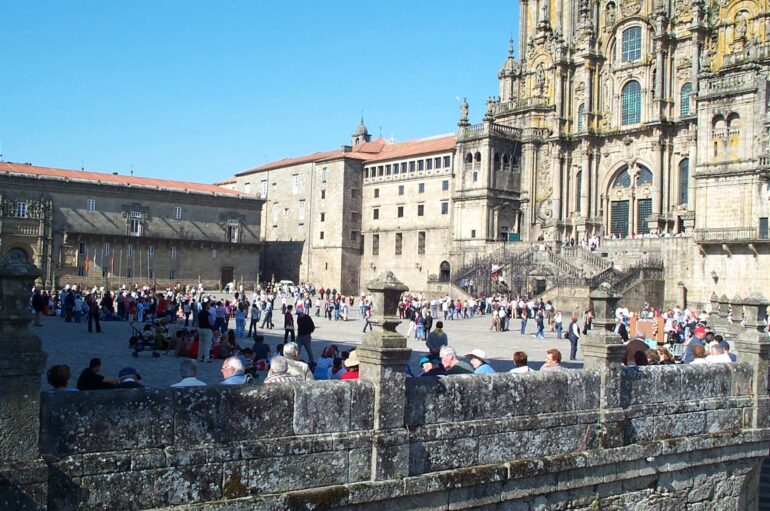
A pilgrim who wants to transform into an experience a great Iberian adventure can combine the existing itineraries and continue from the region of Fátima until he fully incorporates himself. Caminho Português de Santiago, advancing later through Coimbra, Porto, Valença, Tui and finally Santiago de Compostela.
It is not just about linking two points on a map.
It would be a journey between two of the greatest contemporary symbols of pilgrimage on the Iberian Peninsula.
From Our Lady of Fátima to the Apostle Santiago.
From Portugal to Galiza.
From one sanctuary to another.
Two destinations, same question
Perhaps this is precisely what makes this story special.
Fátima and Santiago were born in completely different historical moments.
Possuem different traditions.
Pilgrims are bound for different reasons.
But both continue doing something extraordinary in the 21st century:
convince thousands of people to abandon the speed of the modern world for a few days and simply walk.
On some roads in Portugal, these two worlds meet.
Maybe the pilgrim who walks to his side is going to Santiago.
Maybe he's going to Fatima.
But for some kilometers, both partilham exactly the same Caminho