










Nearly 3,000 pilgrims are arriving in Santiago de Compostela every day, with September recording a 14% increase compared with last year. The growing popularity of autumn pilgrimage is changing the traditional calendar of the Camino.
The summer holidays may be over, but the Camino de Santiago is showing little sign of slowing down. In fact, September 2026 is recording a higher average number of daily arrivals in Santiago de Compostela than August, traditionally one of the busiest months of the pilgrimage season.
According to figures released by the Pilgrim Reception Office, almost 3,000 Compostelas were issued each day between September 1 and 24, representing a 14% increase compared with the same period in 2025.
August recorded 84,861 Compostelas, equivalent to approximately 2,737 per day. September’s daily average is currently higher, although the final monthly comparison will only be possible once all September figures are available.
The figures point to an increasingly important change in the way people experience the Camino: September is no longer simply an alternative to the summer season. It is becoming one of the central months of the pilgrimage calendar.
Why are more pilgrims choosing September?
For years, July and August were the obvious choices for many people planning their first Camino de Santiago. School holidays, annual leave and longer daylight hours made summer an attractive time to walk.
However, rising temperatures and large numbers of visitors are encouraging more pilgrims to reconsider when they travel.
The Pilgrim Reception Office has confirmed that spring and autumn are becoming increasingly popular. Many walkers are deliberately choosing these periods to avoid the heat and congestion traditionally associated with July and August.
September can offer a different walking experience. Temperatures are often more comfortable than during the hottest summer weeks, particularly on exposed sections of the Camino Francés or other routes crossing inland Spain.
Nevertheless, conditions vary considerably between regions, and autumn does not eliminate risks associated with heat, rain or sudden changes in the weather.
For international pilgrims who can travel outside the traditional summer holiday period, September has become an increasingly attractive option.
International pilgrims lead the September surge
The international dimension of the Camino is particularly visible this month.
According to the figures reported for September, 63% of pilgrims receiving a Compostela came from outside Spain.
The United States was the leading international country of origin, followed by Italy, Germany, the United Kingdom and Portugal.
This strong international presence reflects the Camino’s growing global appeal and the different holiday calendars of people travelling from abroad.
Many visitors from North America, for example, can plan extended European trips outside the peak summer months. For them, September offers an opportunity to combine the pilgrimage with visits to Galicia and other regions of Spain.
The figures also underline an important point for the tourism sector: demand for the Camino is no longer concentrated exclusively in the traditional summer season.
The Camino Francés remains the most popular route
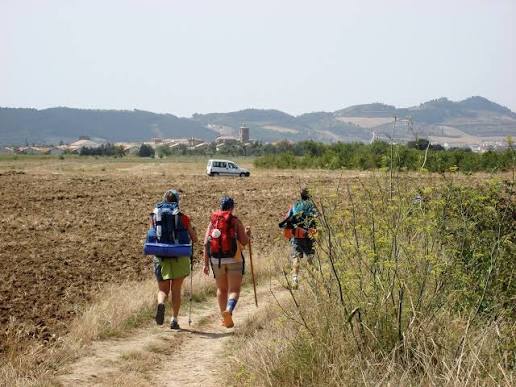
Despite the increasing popularity of alternative routes, the Camino Francés continues to dominate arrivals in Santiago.
Approximately 42% of pilgrims registered during September followed the French Way, while around 31% began their pilgrimage in Sarria.
The Galician town remains particularly popular because its location allows walkers to complete the minimum walking distance required to obtain the Compostela, provided they fulfil the other conditions established by the Pilgrim Reception Office.
For many first-time pilgrims, Sarria offers a manageable introduction to the Camino, with established infrastructure, numerous accommodation options and a well-signposted route.
However, its popularity also creates pressure during particularly busy periods.
Sarria shows that September is not necessarily quieter
One of the most striking episodes of September occurred during the weekend of September 19–20.
Accommodation in Sarria became so difficult to find that the local council opened a sports pavilion to provide overnight shelter for approximately 50 to 60 pilgrims who had been unable to secure a bed.
It was reportedly the first time during 2026 that the municipality had needed to introduce this emergency arrangement.
The incident illustrates a growing contradiction.
Some pilgrims choose September precisely because they expect fewer people than in August, yet certain sections of the Camino can still experience considerable congestion.
This does not mean the entire pilgrimage network is overcrowded.
According to tourism figures cited in the local reporting, the average occupancy of Galicia’s public hostel network during August was 36.5%. That contrasts sharply with the difficulties experienced in particular locations and on specific dates.
The challenge is therefore not simply the total number of pilgrims, but also how they are distributed across routes, towns and individual stages.
Is the Camino becoming a year-round destination?
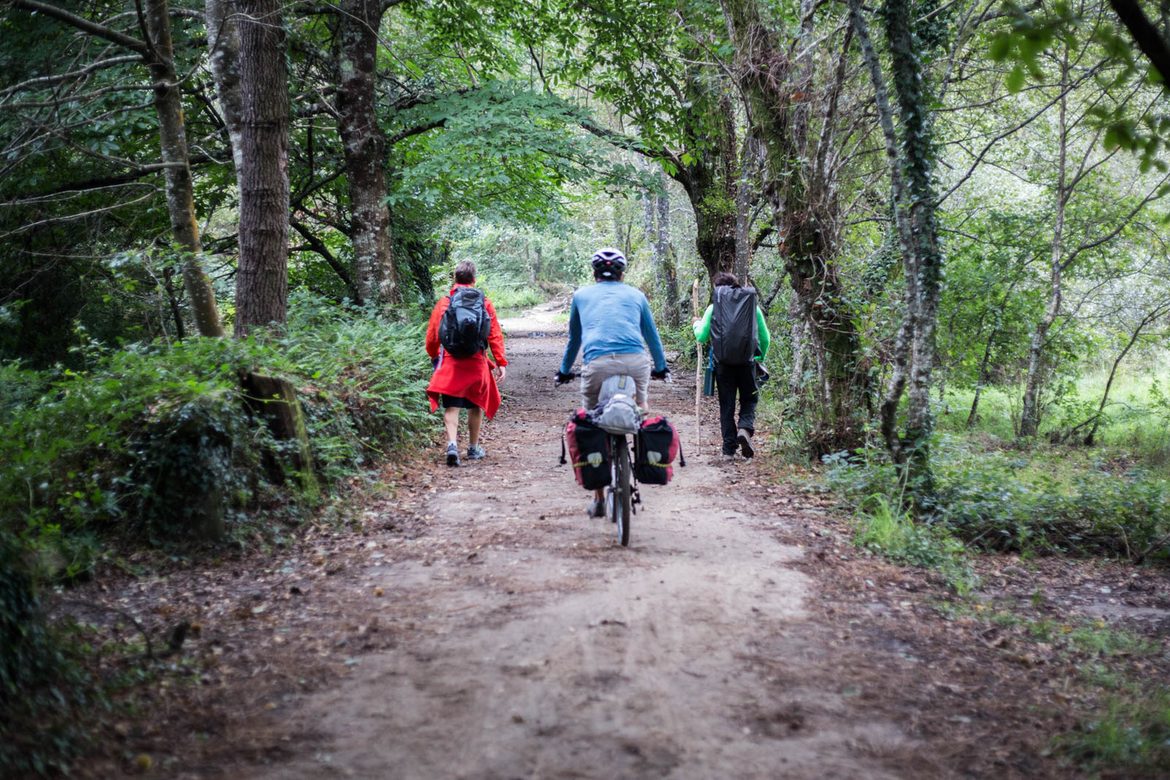
The latest figures suggest that the traditional boundaries between high season and quieter months are becoming less clear.
Spring and autumn are attracting increasing numbers of pilgrims, while established summer routes remain popular.
This gradual extension of the pilgrimage season could offer economic opportunities for smaller communities.
More visitors outside July and August may help accommodation providers, restaurants, local shops and transport services maintain activity over a longer part of the year.
However, the shift also raises questions about infrastructure, staffing and the ability of smaller towns to respond to changing demand.
A village accustomed to receiving its busiest crowds in August may now need to prepare for equally demanding periods in September.
For pilgrims, greater seasonal choice is welcome, but it also makes advance planning increasingly important.
More than 700,000 people detected on the Camino in 2026
Official Compostela figures provide an important picture of pilgrimage activity, but they do not include everyone using the Camino’s extensive network of routes.
Some people walk only selected stages. Others complete their pilgrimage without requesting the certificate.
To understand these movements more accurately, the Galician government has been testing a system of sensors at different points along the routes.
According to figures reported in late September, these measurements have detected more than 700,000 people using the Camino during 2026.
That figure should not be confused with the number of Compostelas issued: the two systems measure different aspects of activity, and sensor-based estimates are not necessarily equivalent to unique pilgrims completing a full route.
Nevertheless, the initiative highlights the increasing importance of understanding how people move along different sections of the Camino.
A changing Camino ahead of the 2027 Holy Year
The timing is especially significant because Santiago de Compostela is preparing for the 2027 Holy Year, when the feast of Saint James falls on a Sunday.
Holy Years traditionally attract additional attention to Santiago and its pilgrimage routes, making the organisation of accommodation, transport, public services and visitor flows particularly important.
September 2026 already demonstrates that planning cannot focus exclusively on July and August.
With more international visitors and strong demand in early autumn, the Camino is developing a broader and more complex seasonal pattern.
That also creates an opportunity to encourage travellers to explore other historical routes, including the Northern Way, Primitive Way, Portuguese Way, English Way and Via de la Plata.
The aim should not simply be to attract ever-larger numbers to the same places, but to ensure that the benefits of pilgrimage can reach a wider network of communities.
September is changing the way people walk to Santiago
For centuries, pilgrims have adapted their journeys to the seasons, the weather and the practical demands of travelling across Europe.
Today’s walkers are doing something similar.
Many are discovering that the Camino does not have to be a summer holiday and that the experience can be equally meaningful in spring or autumn.
Yet the latest statistics also contain an important reminder: choosing September no longer guarantees empty trails or abundant accommodation.
The Camino de Santiago is changing, and the way pilgrims plan their journeys is changing with it.
September may offer an escape from the worst summer heat, but not necessarily from the crowds.
And with the 2027 Holy Year approaching, that distinction is becoming increasingly important.