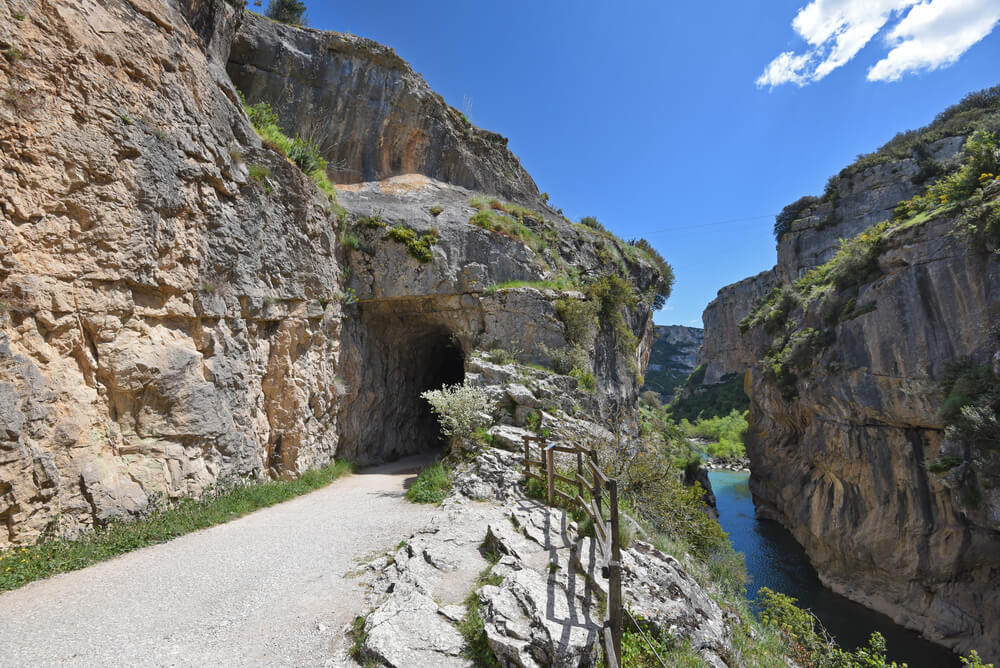
A traditional place where pilgrims, history and mystery are found in a spectacular landscape
Hidden among the impressive falésias da Lumbier GorgeIn Navarra, one finds one of the most fascinating stories linked to the Caminho de Santiago. With currently only vestiges of the ancient construction remaining, the famous Ponte do Diabo continues to attract visitors, walkers, history lovers and pilgrims fascinated by its extraordinary sight.
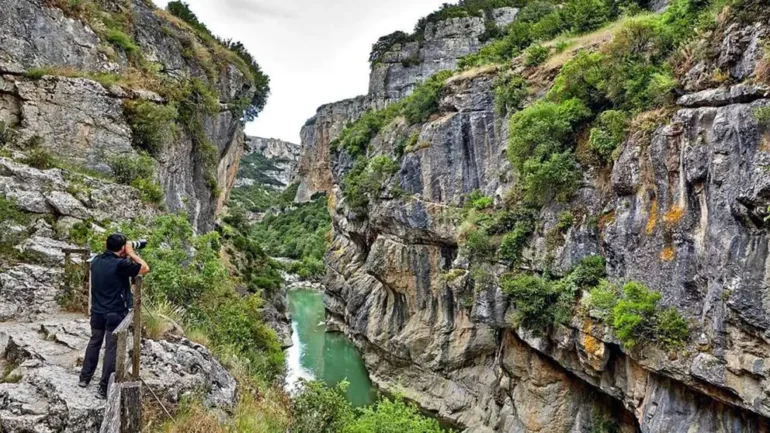
Located near the town of Lumbier, about 35 kilometers from Pamplona, standing next to the Irati River, among the most spectacular natural landscapes in northern Spain. The enormous rocky walls, abundant fauna and impressive viewpoints will transform this area into the two most sought-after nature destinations in Navarra.
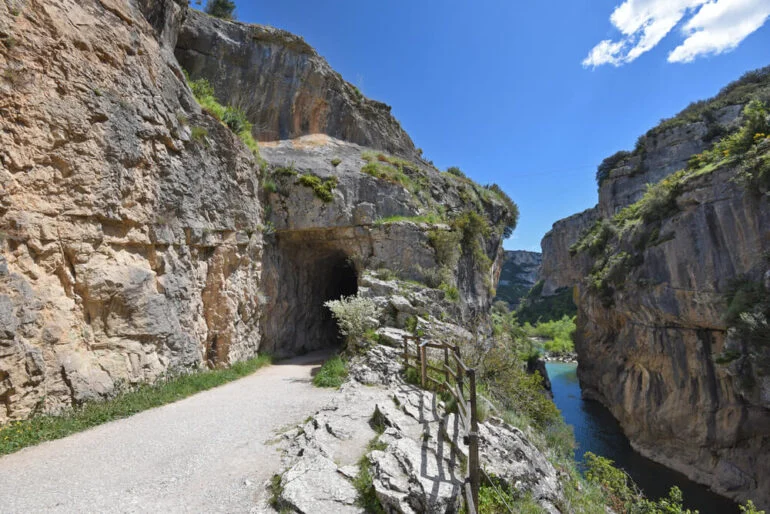
The remains of the bridge may seem modest at first glance, but they hide traces of history. Historical studies indicate that the structure was built during the 16th century to facilitate river crossing. With nearly 30 meters of compression and more than 15 meters of height, it allowed for many years the passage of travelers, merchants, flocks and pilgrims heading to Santiago de Compostela.
Before construction, crossing the Irati River could be a difficult task. The frequent waves and strong currents make it difficult for pilgrims coming from the Caminho Aragonês to pass. To get around is an essential infrastructure for the mobility of the period and for the safety of travelers.
However, what turned you into becoming truly famous was because you had your name.
According to popular tradition, a young servant named Cliastela urgently needed to cross the river to get healing water for her seriously ill lady. Without finding any way to pass to another margin, a mysterious knight emerged from her who, in reality, was Diabo himself disguised.
The foreign offer was made to build a bridge for a single night in the truck of the soul of the young. Desperate to save her senhora, Cliastela aceitou o acordo. All night long, a legion of demons worked without rest carrying huge blocks of stone and raising the bridge before dawn.
When Diabo returned to claim the reward, the young man found a clever way to free himself from the pact. Aiming for a near future, he affirmed that the combined period has already ended. Diabo lost his bet and, second in line, disappeared in anger along with his assistants.
From that moment on, the crossing became known as Ponte de Jesus, but soon it continued to the Ponte do Diabo, a name that was tied to our days.
In addition to its legacy, it has played an important role in the history of the region. During the Spanish War of Independence, in 1812, Napoleonic troops destroyed the structure to hinder military movements. Since then, the ruins remain as silent evidence of the past.
Archaeological investigations carried out in the area also reveal vestiges of Roman occupation and other structures related to ancient broken communications, reinforcing the historical importance of this territory long before the emergence of modern roads.
Today, visitors can take the trails that cross Foz de Lumbier, enjoying a unique combination of nature, heritage, cultural tourism and Jacobean history. The local area is an ideal destination for walking, photography, bird watching and discovering some of the most beautiful landscapes of Navarra.
Embora Ponte do Diabo does not transport pilgrims across the river, it continues to play an essential role: linking visitors to the stories, legends and traditions that have shaped the Camino de Santiago for two centuries.
For many travelers, contemplating these ruins is a reminder that the road is not just a physical journey. It is also a journey through history, culture, faith and imagination. These few places represent the same spirit as the mysterious Ponte do Diabo de Navarra.
#CaminhoDeSantiago #Navarra #PonteDoDiabo #Pilgrims #CulturalTurism #RuralTurism #Natureza #História #Espanha #SantiagoDeCompostela #Viagens