



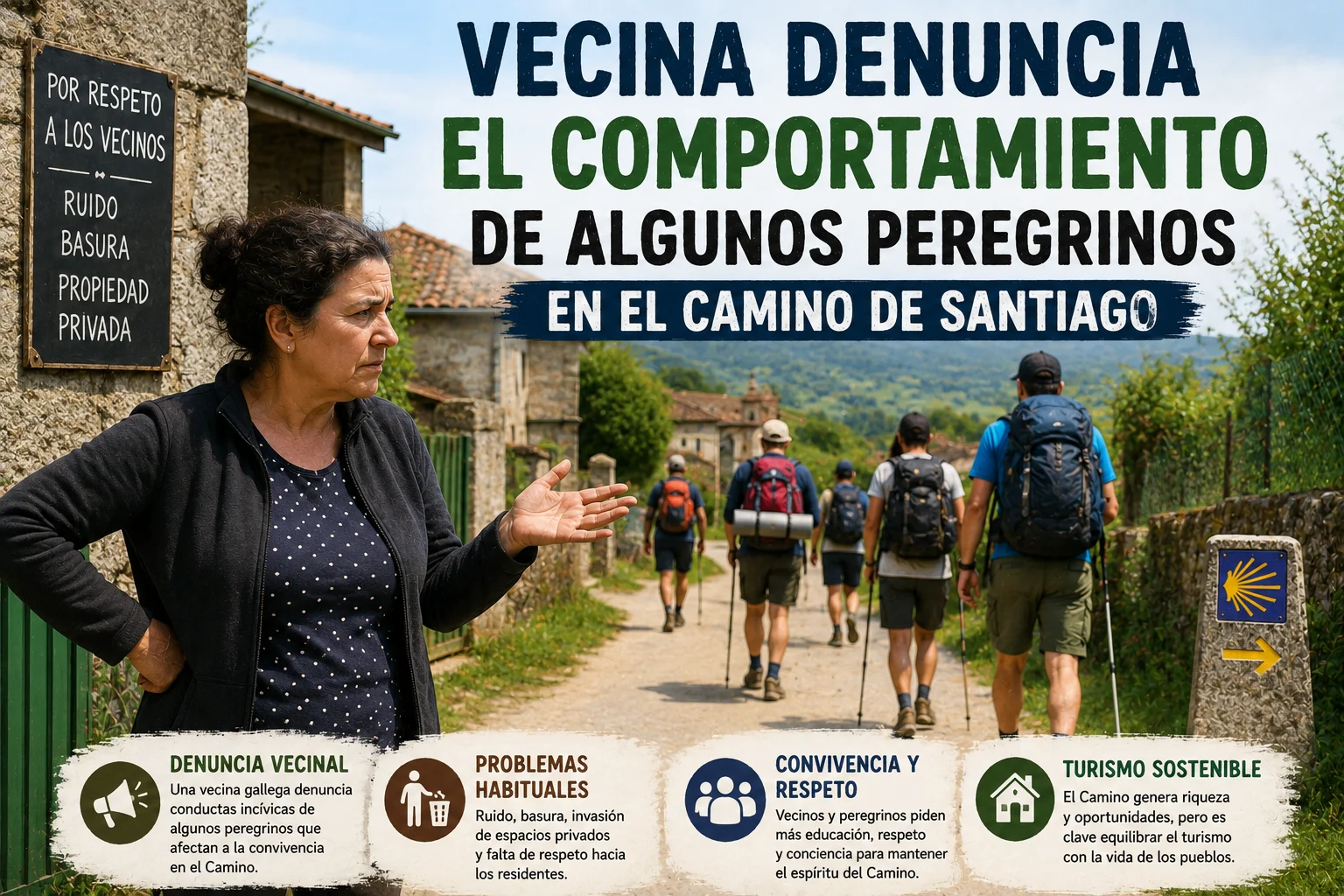
The debate on coexistence, tourism and respect returns to the center of Jacobean news
The Camino de Santiago is much more than a pilgrimage route. It is a coexistence experience where thousands of people from different countries, cultures and ages share trails, towns, lodges and landscapes. However, the constant growth in the number of walkers is also generating situations that open new debates about responsible tourism and respect for those who live along the Jacobean routes.
The public complaint made by a Galician neighbor has revived a conversation that appears from time to time in many towns along the Camino. The woman expressed her discomfort at certain behaviors observed among some pilgrims, especially related to the invasion of private spaces, the noise in certain areas and behaviors that she considers not very respectful of the neighbors who reside throughout the year in the towns crossed by the Jacobean routes.
His testimony has provoked numerous reactions on social networks and among the pilgrims themselves. While some consider that these are isolated cases that do not represent the spirit of the Camino, others recognize that the increase in tourism and the influx of walkers has generated new situations that require reflection.
The phenomenon is not exclusive to Galicia. At different points of the French Way, North Road, Camino Portugués and other historic routes, neighbors and associations have sometimes expressed similar concerns. The tourist success of the Camino de Santiago has brought enormous economic benefits for hundreds of municipalities, but it has also brought with it challenges related to daily coexistence.
Hotels, hostels, restaurants, cafes, shops and businesses linked to rural tourism depend largely on the arrival of pilgrims. Thanks to them, many localities have recovered economic activity, employment and development opportunities that seemed unthinkable just a few decades ago.
However, those who live permanently in these towns remember that the Camino is not only a tourist product. It is also your home. For this reason, more and more voices insist on the need to promote a sustainable tourism model based on mutual respect between visitors and residents.
The vast majority of pilgrims maintain exemplary behavior. It is precisely they who contribute to the good international image of the Camino de Santiago. People who say hello when crossing a town, shop in small local businesses, respect the natural environment and show interest in the history and traditions of each place.
But as with any mass phenomenon, there are exceptions. Some neighbors report situations related to abandoned garbage, late-night noise, improper use of private property or inconsiderate behavior in residential areas.
The growth of the Camino in recent years has been spectacular. Thousands of people from Europe, America, Asia and Oceania choose each season to live the Jacobean experience. This internationalization has turned the route into one of the great world references for cultural tourism, hiking, nature and transformative experiences.
Precisely for this reason, many Jacobean associations consider that it is necessary to reinforce the education and awareness of pilgrims before starting the journey. Knowing the basic rules of coexistence, respecting private property, taking care of the historical heritage and keeping the roads clean are fundamental aspects to preserve the essence of the pilgrimage.
The controversy has also served to remind us that the true spirit of the Camino was always based on values such as hospitality, humility, solidarity and respect. Values that have allowed coexistence between travelers and local communities for centuries.
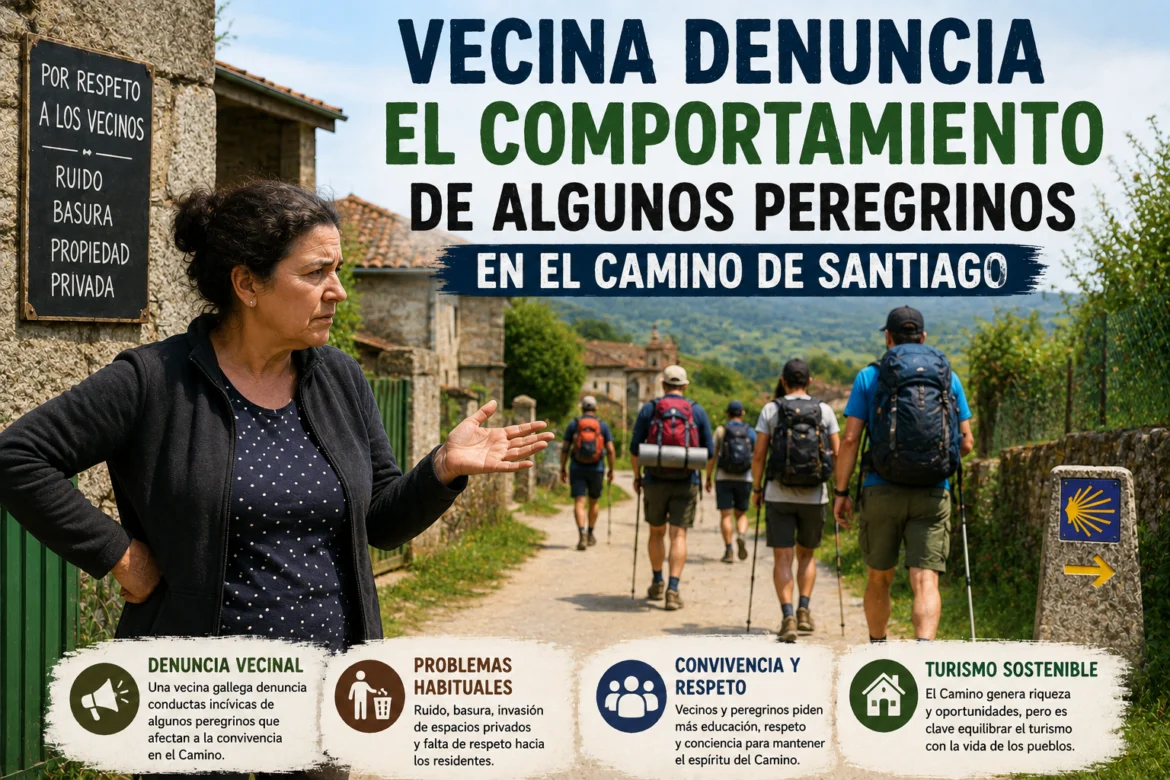
Many hospitaleros remember that the Camino works thanks to a delicate balance. Pilgrims need the towns, their services and their welcome. But towns also need those who arrive to understand that they are entering spaces where there are people living, working and developing their daily lives.
Beyond the specific controversy, the debate can be positive if it serves to improve coexistence and strengthen the relationship between residents and walkers. The future of the Camino de Santiago will depend largely on maintaining that balance between tourism growth, economic development, sustainability and respect for local communities.
Because the success of the Camino is not measured only by the number of pilgrims who arrive in Santiago de Compostela. It is also measured by the ability to preserve intact what made it special from its origins: the encounter between people.
And perhaps that is the main lesson that this controversy leaves. Remember that behind every town there are neighbors, behind every house there is a family and behind every pilgrim there is a story. When both realities respect each other, the Camino remains one of the most extraordinary human experiences in the world.
#CaminoDeSantiago #Pilgrims #SustainableTourism #Galicia #RuralTourism #Hiking #Travel #Heritage #Coexistence #SantiagoDeCompostela #CaminoFrench

















