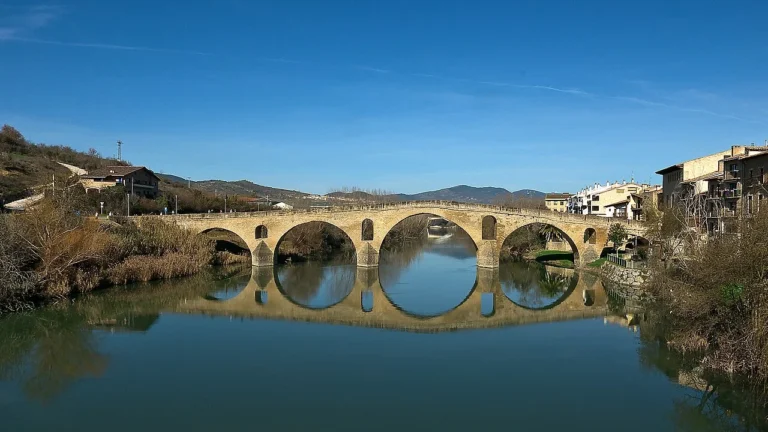

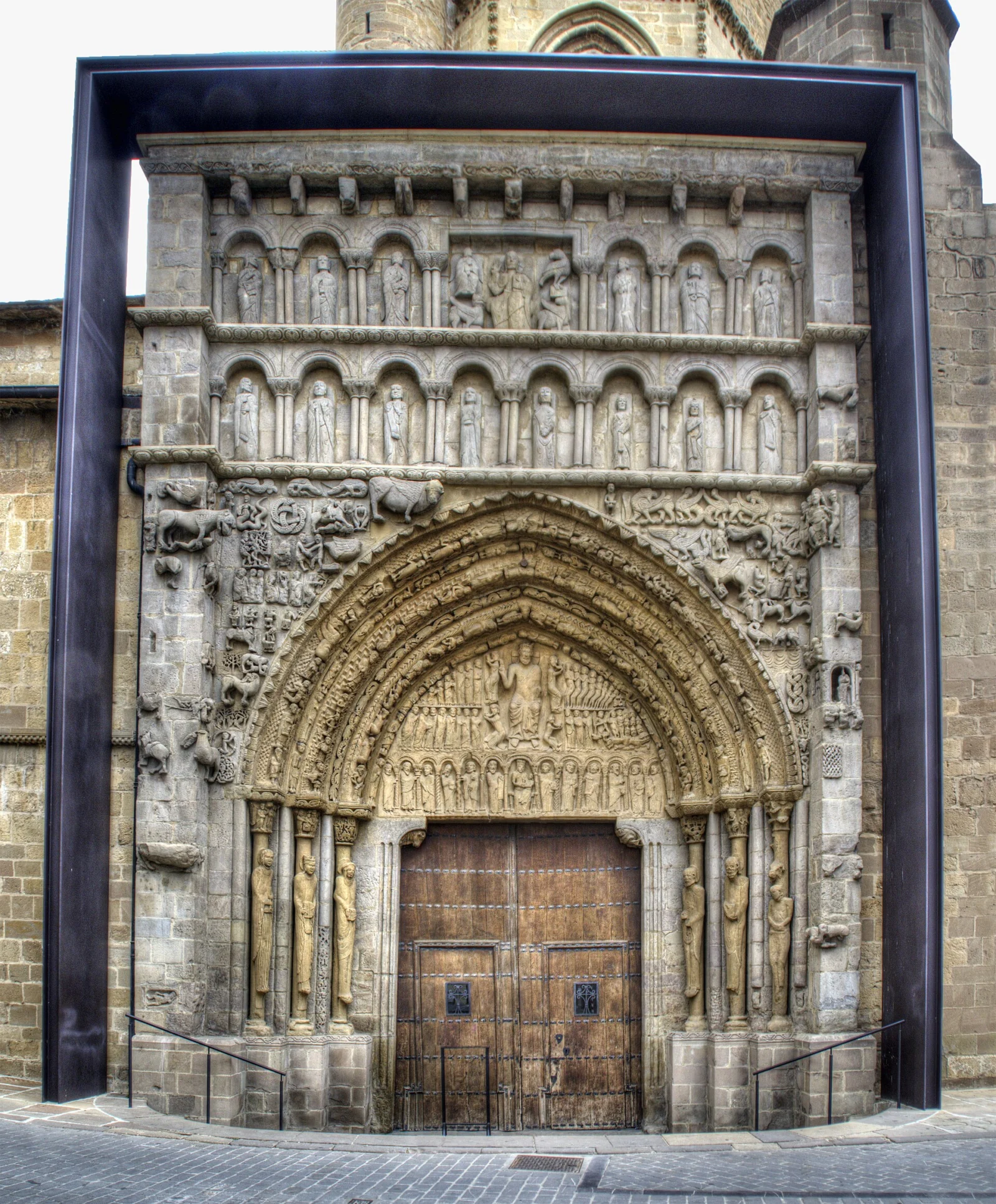
Whoever enters Sangüesa through the bridge over the Aragón River has an appointment with the Romanesque a few steps from the Rúa Mayor. On the cover of Santa María la Real, an angel weighs the souls and a figure of the Virgin holds a book in which the name of the sculptor is read. The church of Santiago, a few streets away, offers another image to the walker: that of the apostle dressed as a pilgrim.
The two churches allow you to explore on foot part of the history of Sangüesa, one of the Navarrese stops on the Aragonese Way. The itinerary that comes from Somport and Jaca passes through this city before continuing to Puente la Reina. It is worth setting aside some time to stop at both entrances and watch how the language of the stone changes from one to the other.
Santa María la Real, a cover to look at from the bottom up
The history of the temple dates back to 1131. That year, according to the City Council, Alfonso I the Battler donated his palace and chapel to the order of Saint John of Jerusalem to build the first parish of the new town. The Romanesque façade dates back to the end of the 12th century, and the building also preserves elements that show the transition to Gothic.
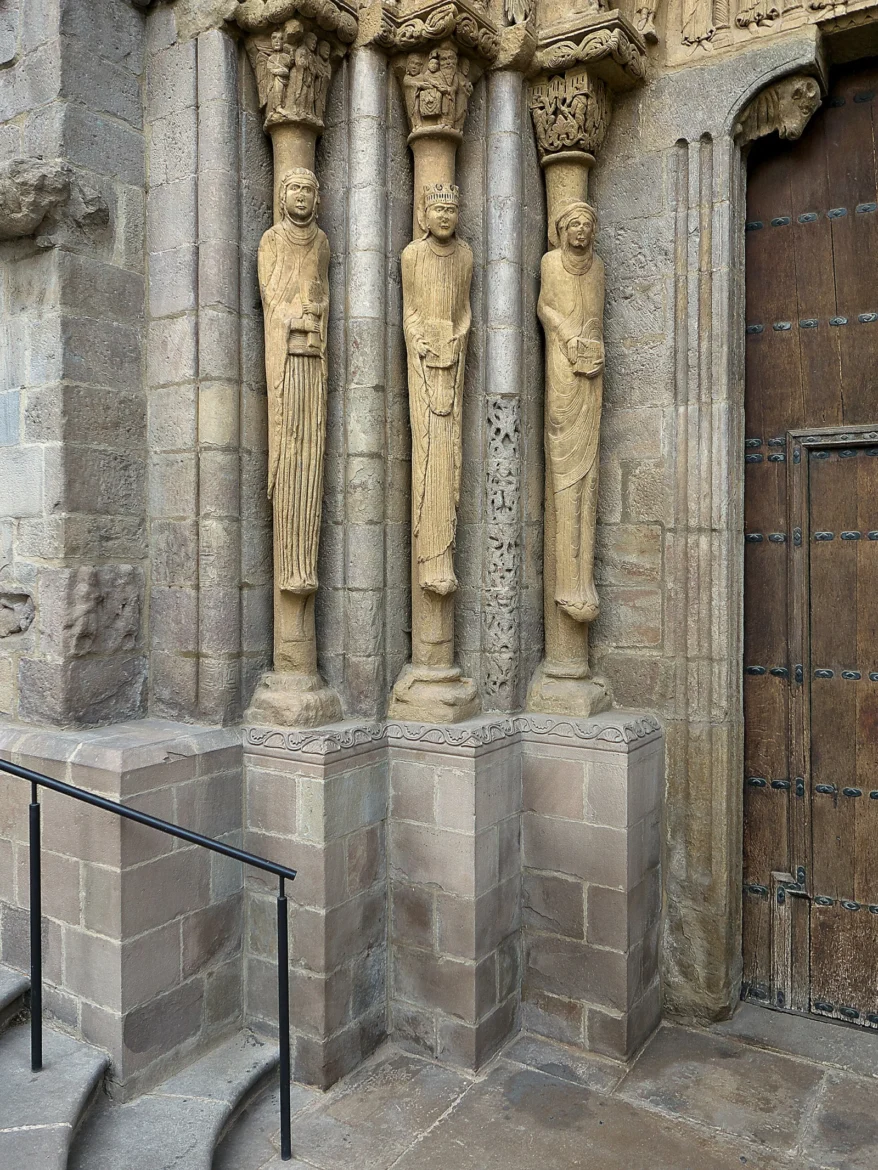
The first detail that deserves a pause is on the jambs, the sides of the door. On the left, between Mary Magdalene and Mary, mother of James and John, the Virgin holds the book that bears the inscription Leodegarius congratulated me. It is the Latin signature of Leodegario. The Chair of Navarro Heritage and Art identifies several workshops in the complex and attributes a good part of the figures in the lower area to the one who directed this sculptor.
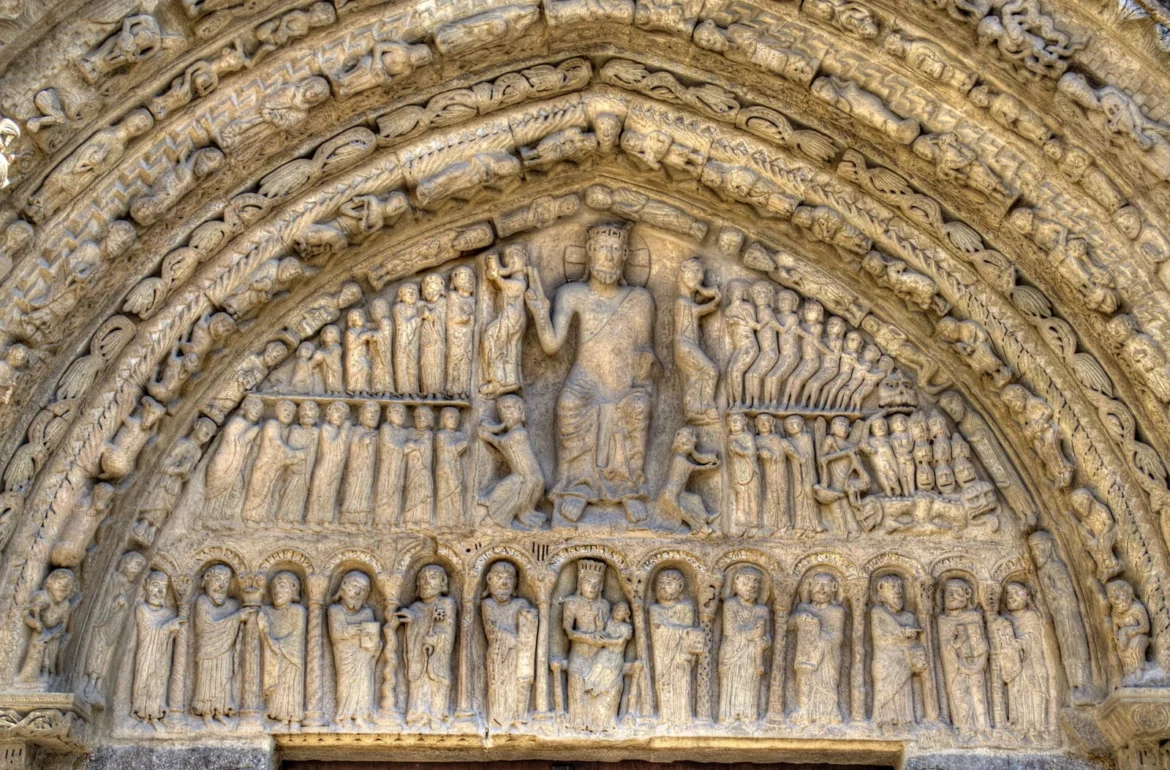
It is advisable to then look up at the tympanum, the space sculpted above the lintel. There is the Final Judgment: Christ presides over the scene and Saint Michael weighs the souls. On its sides, the fates of the saved and the condemned are distinguished by the gestures of the figures. Higher up Christ appears again, surrounded by the symbols of the evangelists and accompanied by the apostles. Looking at both areas separately helps to read the composition.
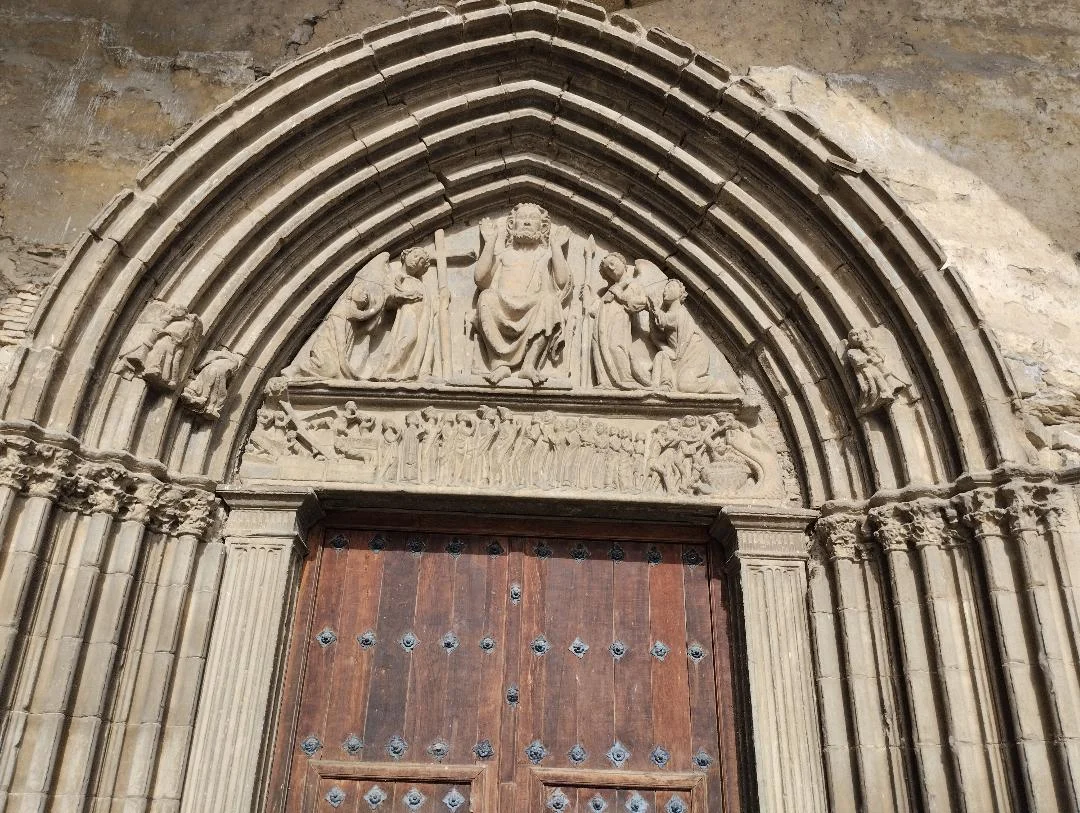
In the church of Santiago, the apostle carries a staff
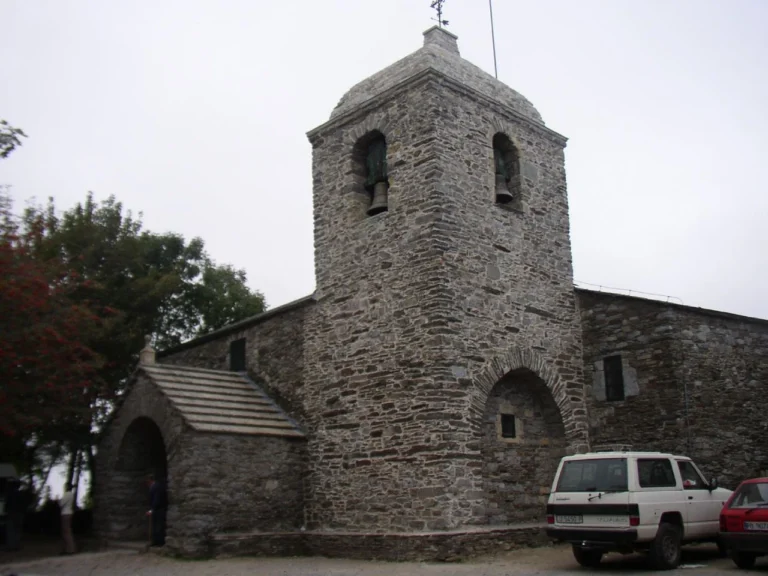
The church of Santiago, built between the 12th and 13th centuries, preserves traces of the Romanesque and Gothic. From the street, its square tower stands out, topped with battlements. In the tympanum of the entrance, Santiago appears in pilgrim attire and two walkers kneeling at his sides, according to the Cervantes Virtual Center. The figure of the apostle dates back to the medieval factory and still preserves remains of polychrome.
Inside the temple is kept another image of Santiago the pilgrim, this time Gothic, with a book and a partially mutilated staff. They found it in 1964 under the floor of a chapel. Whoever looks at the two images will see how the same figure was represented in different times with attributes that are still recognized on the Camino, such as the staff or the scallop.
A stop on foot between the bridge and Rúa Mayor
For those who do the Aragonese Way, the external visit fits into a short walk through the historic center. Santa María is next to the bridge. From there, the Rúa Mayor allows you to enter the city and continue to the church of Santiago. If you want to follow the Jacobean route of the area, RTV brings together on video six stages between Somport and Puente la Reina. If you want to see the interior of the churches, check the schedules with the tourist office, especially if your stage starts early or you arrive in the late afternoon.
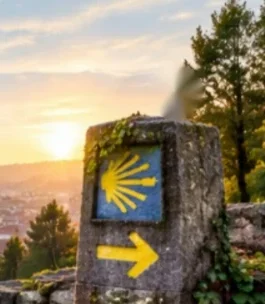
In Sangüesa, it is enough to stop in front of two doors to recognize two different scenes: the souls before Saint Michael and, a few streets away, Santiago with the staff of those who continue walking towards Compostela.
Sources: Sangüesa Town Hall, Santa María la Real · Sangüesa Town Hall, Santiago Church · University of Navarra, Leodegario and his workshop · Cervantes Virtual Center · The Debate, original article.
Images: Photo: José Luis Filpo Cabana · CC BY 3.0 · Wikimedia Commons | Photo: Ángel M. Felicísimo from Mérida, Spain · CC BY-SA 2.0 · Wikimedia Commons | Photo: Lozano Manzanedo · CC BY-SA 4.0 · Wikimedia Commons.
Cover photo: Ángel M. Felicísimo from Mérida, Spain · CC BY 2.0 · Wikimedia Commons