The work mixes urban art, Jacobean symbolism and a curious cycling reference
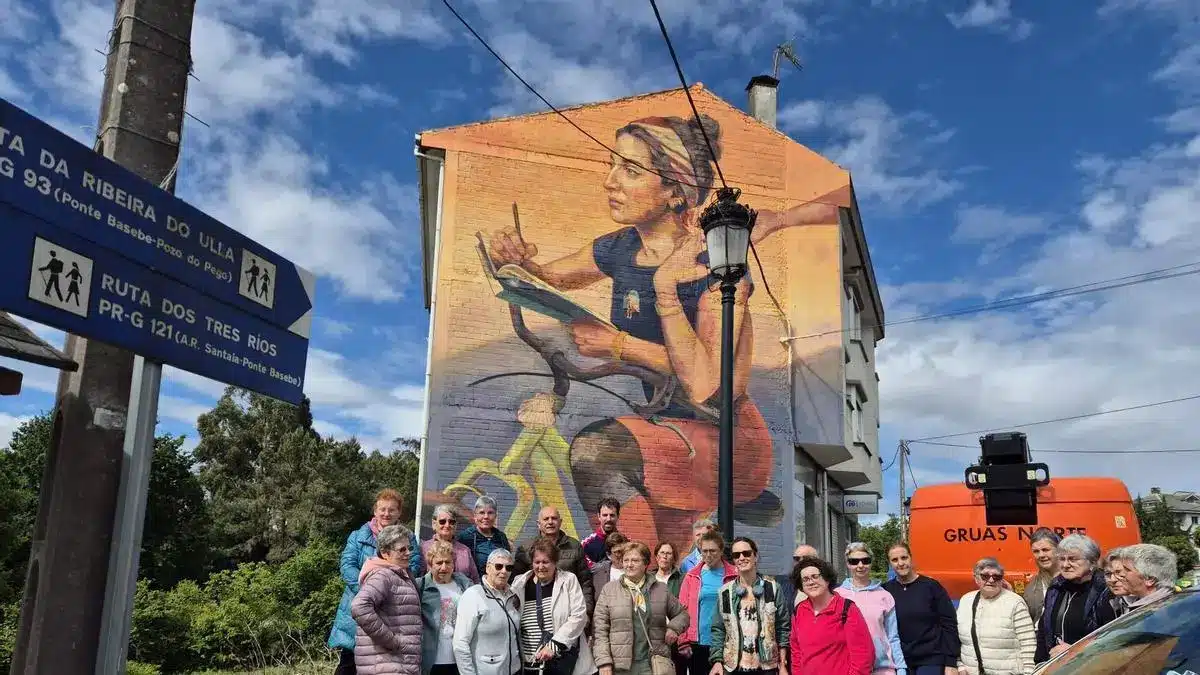
The Camino de Santiago continues to be filled with art. This time it was the Galician municipality of Touro that has attracted the attention of pilgrims and visitors with a new mural dedicated to the Camino, a work that has not taken long to generate comments for one of its most curious details.
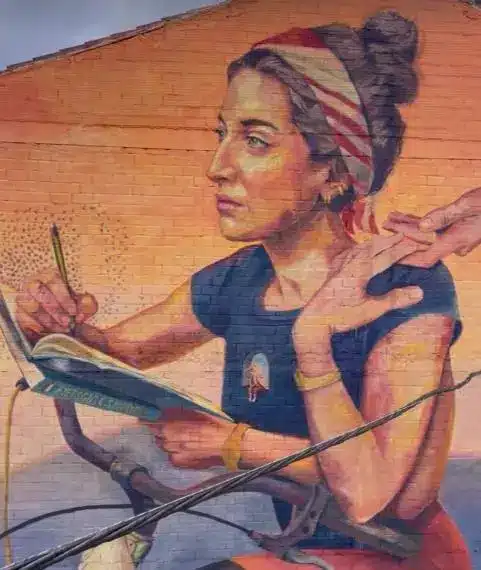
The mural, signed by the international artist María Peña “Mapeco”, represents a female pilgrim traveling the Camino on a bicycle. But what is surprising the most is not only the main image, but the number of symbols hidden within the composition.
A scallop integrated into the bicycle
One of the most commented elements is the incorporation of a shell of Santiago inside the pilgrim's own bicycle. A visual nod that directly connects contemporary art with traditional Jacobean symbology.
The work also includes references to the cycling tradition linked to the Camino and a flock of starlings crossing the sky as a metaphor for freedom, movement and personal transformation.
The Camino is also lived on wheels
Although it is often associated only with walking, more and more people are doing the Camino de Santiago by bicycle. The so-called “I ride a bike” has grown significantly in recent years, especially among international pilgrims and travelers seeking to combine sport, nature and cultural tourism.
Touro's mural reflects precisely this evolution of the modern Camino, where tradition and new forms of pilgrimage increasingly coexist.
Urban art and Camino: a booming combination
Touro's case is not isolated. Urban art has become one of the new visual attractions of the Camino de Santiago. Large murals, artistic graffiti and Jacobean muralism projects are transforming towns and cities along the different routes.
In places like Logroño, Astorga, Ponferrada or Sahagún there are already authentic mural routes related to the Camino, mixing history, spirituality and contemporary culture.
Touro is committed to cultural tourism
The Council highlights that this intervention seeks to reinforce the identity of the municipality within the Camino de Santiago and create new points of cultural interest for those who pass through the area.
The artist defines the mural as a representation of “meditation in motion,” leaving many elements open to interpretation so that each visitor can find their own meaning.
A new stop for pilgrims
The mural is already becoming one of those points where many pilgrims stop for a few minutes, not only to rest or take a photo, but to observe the small details hidden in the work.
Because the Camino de Santiago continues to demonstrate something important:
👉 doesn't stop reinventing itself
And now, in addition to churches, medieval bridges and yellow arrows... it also adds contemporary urban art.