A unique proposal unites pilgrimage, tourism and astronomy on the Jacobean routes
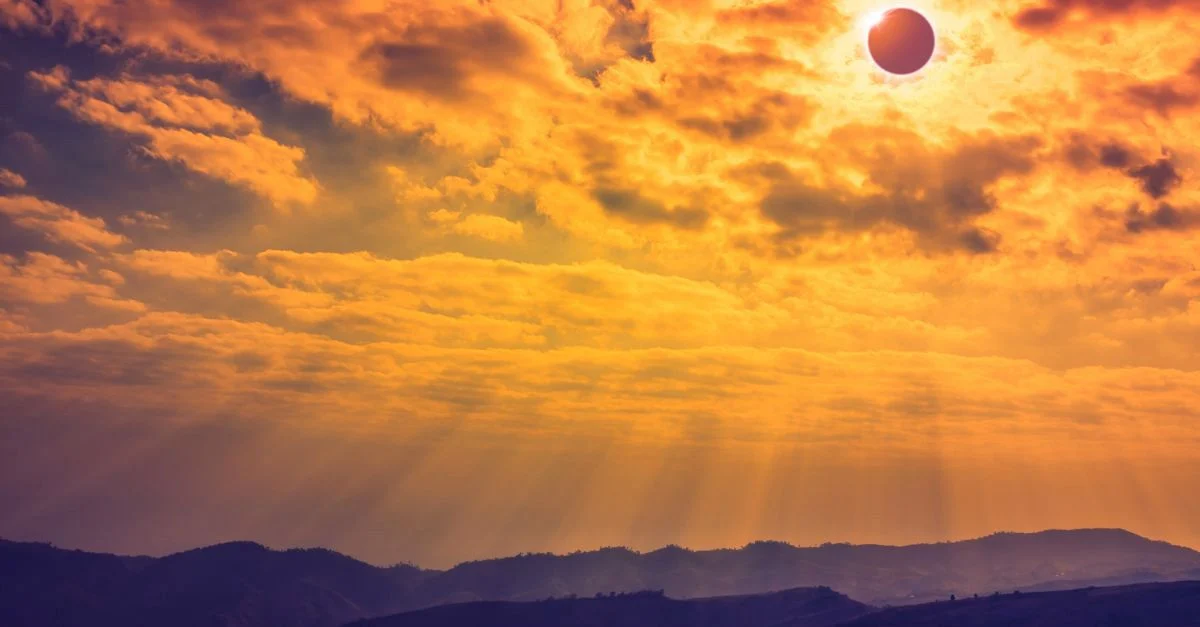
The Camino de Santiago reinvents itself again with an innovative proposal that combines tourism, spirituality and science. The “The Path under the Eclipse” initiative presents an exclusive guide designed so that pilgrims and travelers can experience one of the most impressive astronomical phenomena of the century: the total solar eclipse of August 12, 2026.
This historic event, which will darken much of northern Spain, has generated enormous interest among pilgrims, travelers and astronomy fans. The coincidence with the Jacobean routes makes the Camino one of the most privileged settings in the world to enjoy this natural spectacle.
The objective of this guide is to offer a unique experience, combining the traditional route of the Camino de Santiago with the observation of a unique phenomenon, positioning these routes as a key destination for astrotourism.
Times of the total solar eclipse on the Camino de Santiago
The total solar eclipse on August 12, 2026 will be visible in much of northern Spain, especially in the areas where the Camino de Santiago runs. The approximate schedules in these regions will be as follows:
- Start of the partial eclipse: around 7:30 p.m.
- Start of the total phase: between 8:25 p.m. and 8:30 p.m.
- Peak moment of the eclipse: around 8:30 p.m.
- End of totality: around 8:32 p.m.
- End of the partial eclipse: around 9:15 p.m.
The phenomenon will occur at sunset, which will increase its spectacularity, since the sun will be low on the horizon, creating a unique visual combination between the eclipse and the landscapes of the Camino.
The best places on the Camino de Santiago to see the eclipse
One of the great attractions of this guide is the selection of the best points along the Camino to enjoy the eclipse in optimal conditions. Among the most recommended places on the French Way, Sarria, Portomarín, Palas de Rei, Arzúa, Monte do Gozo and the open areas of Santiago de Compostela stand out, all of them with good views of the horizon and low visual interference.
The key will be to choose high places, with a clear horizon to the west, since the eclipse will occur just before sunset.
The best places on the Camino del Norte to see the eclipse
The Camino del Norte is positioned as one of the best options to experience the total eclipse of 2026 thanks to its open landscapes, its proximity to the sea and its spectacular views of the horizon. These are some of the most recommended points:
- Santander, especially in areas like El Sardinero or Cabo Mayor, with open views of the ocean
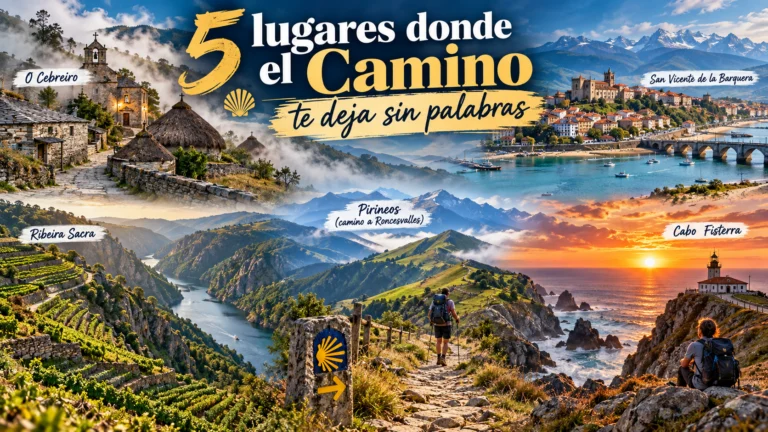
- San Vicente de la Barquera, where the sea and mountains create a unique environment for the eclipse
- Comillas, with cliffs and elevated spaces ideal for observation
- Llanes, one of the most spectacular points in the north due to its open coast
- Ribadesella, with wide beaches and clear horizons
- Gijón, especially in Cerro de Santa Catalina
- Avilés, with large coastal areas and good visibility
These locations offer a key advantage: the maritime horizon allows a clear view of the eclipse at sunset, without natural obstacles, which significantly improves the experience.
In addition, the sound of the sea and the breadth of the landscape make the moment of the eclipse an even more intense and memorable experience.

High demand and saturation forecast in August 2026
The coincidence of the eclipse with the rise of the Camino de Santiago has caused a forecast of unprecedented high demand. The arrival of thousands of pilgrims and tourists is expected during those dates, which could generate saturation in accommodations and services.
Experts recommend planning ahead, booking accommodations and considering organized options that include logistics tailored to eclipse viewing.
The risk of lack of places in hostels and hotels will be high, especially on the most popular sections of both the Camino Frances and the Camino del Norte.
The rise of astrotourism on the Camino de Santiago
The creation of this guide confirms the growth of astrotourism, a trend that combines travel with the observation of astronomical phenomena. The Camino de Santiago is presented as an ideal environment for this type of experiences.
Many sections of the Camino have low light pollution, which allows you to enjoy the sky in optimal conditions. Furthermore, the combination of nature, culture and spirituality adds a differential value that makes it a unique destination.
The total eclipse of 2026 will be one of the most important events in this area, attracting visitors from all over the world.
An experience that unites nature, emotion and spirituality
The Camino de Santiago has always been a journey of personal transformation. The possibility of experiencing a total eclipse during the tour adds an even more intense emotional dimension.
For many pilgrims, this moment will be one of the most impressive memories of their lives. The combination of physical effort, inner connection and contemplation of the cosmos turns this experience into something truly unique.
The moment of total darkness, followed by the return of light, symbolizes for many a metaphor for their own personal journey.
Tourism impact and digital opportunity
Interest in this event is generating an increase in searches related to terms such as “total eclipse 2026”, “where to see the eclipse in Spain” or “Camino de Santiago eclipse”.
This represents a great opportunity to create optimized digital content and attract web traffic. The tourism sector, as well as content creators, will be able to benefit from this increase in interest.
The Camino de Santiago continues to evolve, adapting to new trends and consolidating itself as one of the most complete destinations in the world.
Conclusion: the Camino de Santiago is transformed with the eclipse of 2026
The guide “The Camino under the eclipse” marks a before and after in the way of living the Camino de Santiago. The union between pilgrimage and astronomy creates a unique experience that will attract thousands of people in 2026.
Planning will be key to enjoying the event in the best conditions, in a summer that is expected to be historic for the Jacobean routes.
The eclipse will not only be an astronomical phenomenon, but also an opportunity to rediscover the Camino from a new perspective.