



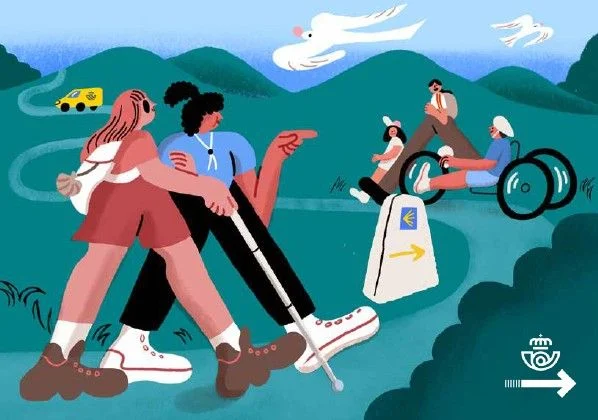
The ONCE Foundation and the Correos have presented in Spain the “Path + Accessible” initiative, aimed at facilitating the pilgrimage of people with disabilities. A group of 20 pilgrims, accompanied by ten support people, travels five stages of the French Way between Logroño and Burgos.
The Caminho de Santiago takes another important step in the direction of even. The ONCE Foundation and the Correos, the Spanish postal service, will present this second fair, September 28, in Logroño, the “Path + Accessible” project, an initiative that seeks to make the pilgrimage experience more accessible to people with disabilities.
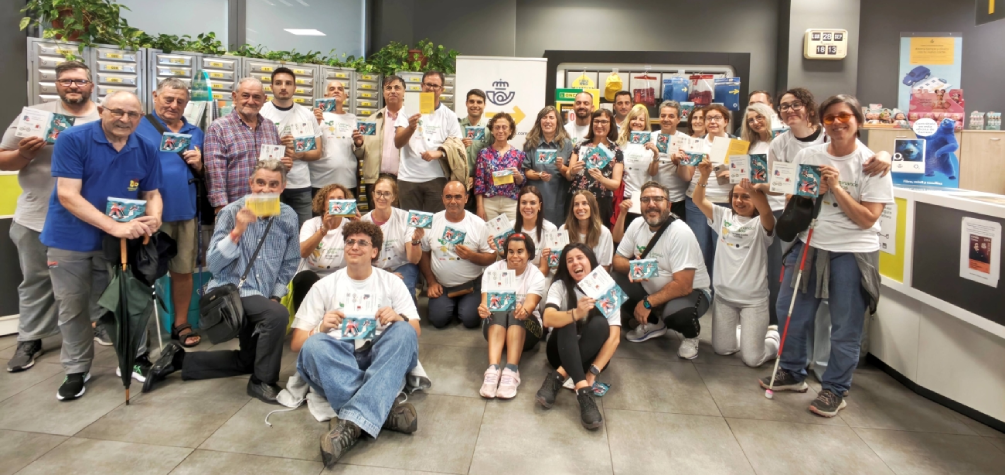
The presentation is presented at a Post Office station located on the Jacobean route and includes the participation of representatives of two institutions, social organizations and pilgrims who are preparing to live a special experience on the French Way.
More than an awareness campaign, the project brings together practical measures aimed at improving information, guidance and services available so that you encounter additional obstacles during the pilgrimage.
Vinte pilgrims and five stages between Logroño and Burgos
One of the two central moments of the initiative is the pilgrimage of a group of 20 people with different types of disabilities, coming from various regions of Spain.
Accompanied by ten support people, the participants begin this third fair, September 29, a five-stage route between Logroño and Burgos, two emblematic towns of the French Way.
This activity, promoted by the ONCE Foundation, aims to demonstrate the importance of providing adequate conditions so that each person can live the experience of walking, regardless of their personal circumstances.
Among the entities represented are organizations related to people with heart transplants, people with acquired brain damage, people with intellectual disabilities, and people with mental health problems.
During the pilgrimage, the Post Office is responsible for transporting baggage between the different stages, through the Backpack Pack service. In this way, participants will be able to concentrate on the experiences provided along the way.
A Caminho de Santiago with fewer barriers
The «Path + Accessible» project is not limited to the organization of this pilgrimage. The initiative aims to improve access to information and help future travelers prepare their itineraries with greater autonomy.
Among the measures announced is the creation of a specific information area intended for people with disabilities, which will bring together useful resources on the organization of travel, the accessibility of the stages and the services available.
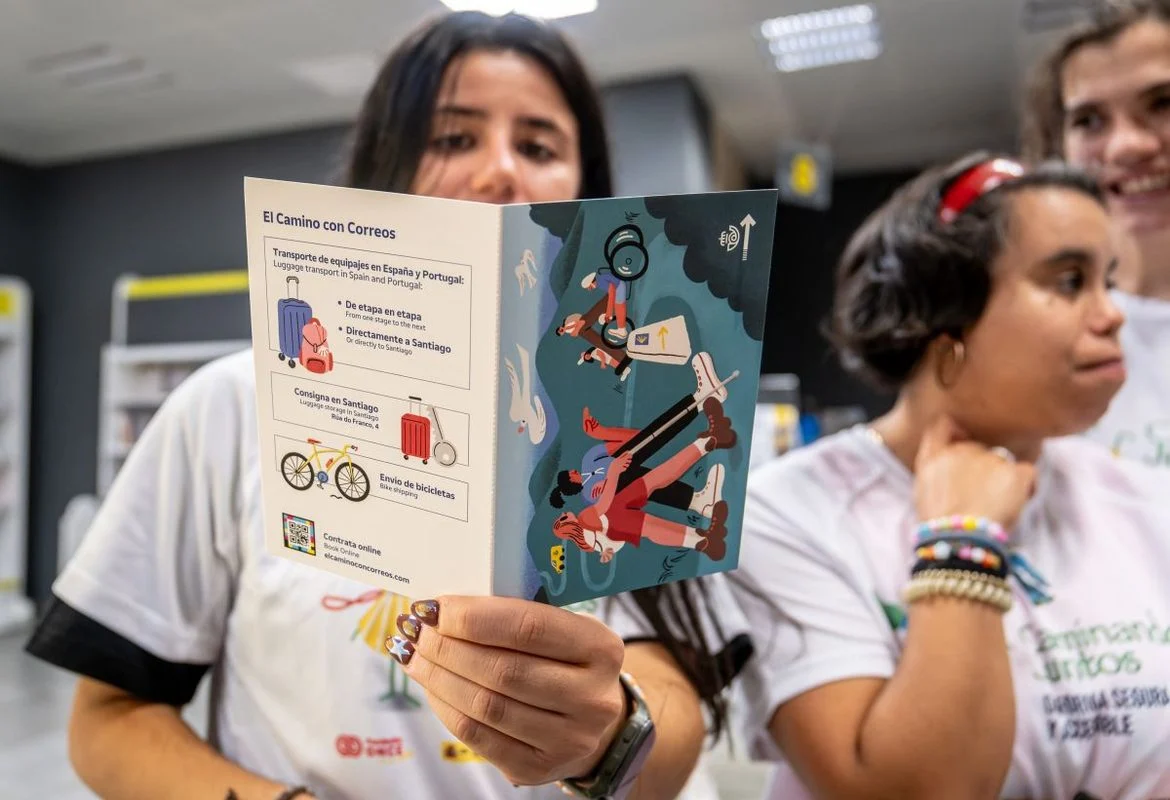
The campaign also includes the production of one thousand illustrated postcards by the artist Cinta Arribas, which will be distributed free of charge in accommodations along the Camino de Santiago.
These publications seek to raise awareness among pilgrims, hospital workers and other agents linked to the Jacobean pilgrimages to the importance of building a truly inclusive experience.
The posts will also be distributed during the XIV Congress of Jacobean Associations, expanding the scope of the initiative together with the organizations that work daily in the promotion and conservation of pilgrimage routes.
A special accreditation for pilgrims with disabilities
Other news presented by the Post Office is the creation of a specific accreditation aimed at reconfirming and valuing the pilgrimage of people with disabilities.
The document will be made available at the Post Office station in Santiago de Compostela, representing an additional way to give visibility to the challenges and experiences of these pilgrims.
As a measure, it does not replace the traditional Compostela, but seeks to reconstitute the participation of people with a deficiency in the Jacobean universe.
The campaign also aims to encourage the pilgrim community to understand that the difficulties encountered during the journey can vary greatly from person to person.
A staircase, accommodation without adapted facilities or a lack of information about a certain area may represent significant obstacles for some walkers.
Therefore, accessibility must be considered from the moment the trip is planned and not only when difficulties arise on the ground.
Technology to help pilgrims with visual impairment
The use of new technologies constitutes another aspect of the project.
The Post Office is expanding the presence of the NaviLens system in its signal, allowing better access to information and guidance, especially for people with visual impairments.
This technology uses codes that can be identified through compatible mobile devices, facilitating access to information content.
Its implementation represents more of a support tool for pilgrims who need specific orientation solutions.
However, technology does not eliminate, by itself, all the existing barriers in our paths. Accessibility also depends on the characteristics of the roads, two transports, two accommodations and the availability of adequate services.
Hospitality also means inclusive
The Caminho de Santiago is internationally known for its values of solidarity, encounter and hospitality. However, these principles also require concrete answers to the needs of the people who wish to travel.
In the existence of adapted infrastructures, reliable information and support services can determine whether a person can organize their trip safely.
In this context, the initiative developed by the ONCE Foundation and the Correos calls attention to a quest that deserves to occupy an increasingly important place in the Jacobean debate: how to guarantee that the Caminho offers real opportunities for participation to people with different abilities?
The answer is the collaboration between institutions, associations, companies, accommodations and local communities.
We, too, pilgrims ourselves can contribute through small gestures of solidarity and greater understanding of the needs of other pilgrims.
The Caminho belongs to everyone
The pilgrimage between Logroño and Burgos represents an opportunity to give visibility to the presence of people with disabilities in the streets of Santiago.
Over five stages, participants will have the opportunity to share experiences, meet other pilgrims and travel part of one of the two most emblematic Jacobean itineraries in Europe.
But the importance of this initiative goes beyond two kilometers traveled.
Its true meaning is the need to transform accessibility into a permanent element of the organization and promotion of the Caminho de Santiago.
For Portuguese and Brazilian pilgrims who plan to take the French Way, projects like this also contribute to giving greater visibility to the resources available to you and the importance of preparing the routes according to your individual needs.
The Caminho de Santiago was built over two centuries through hospitality and encounters between people of different origins.
This tradition only becomes truly universal when more people have the conditions to participate in it.

















