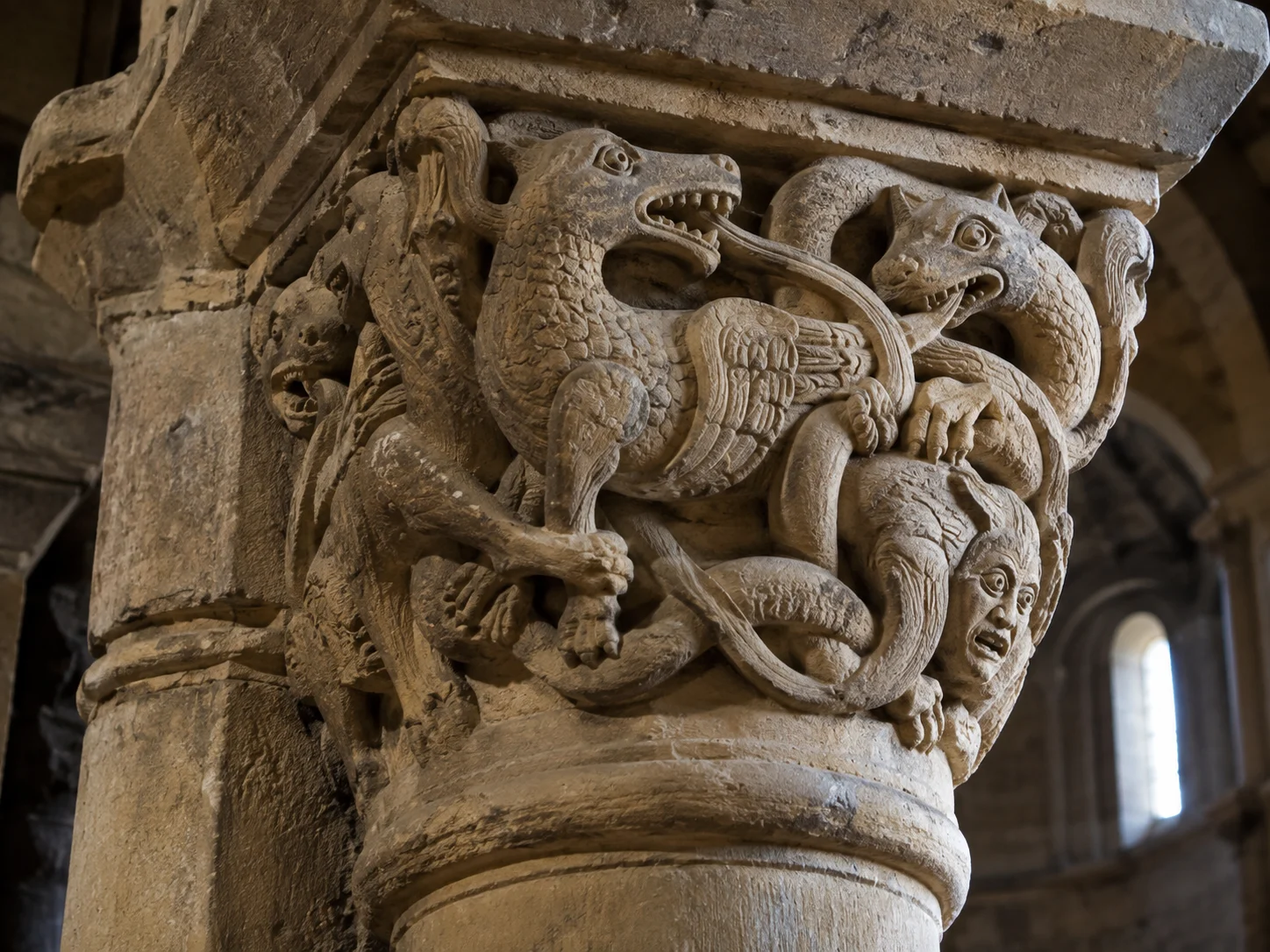
Capitals, corbels, gargoyles and impossible creatures have watched over many churches on the Camino de Santiago for centuries. They are not there by chance: they are part of a medieval language full of symbols, fears, warnings and also fascination with the unknown.
Whoever enters a Romanesque church on the Camino de Santiago usually first looks for the doorway, the apse, the columns or the light that enters through a small window. But if you look closely, other less calm inhabitants appear: ferocious animals, coiled snakes, monsters with open jaws, hybrid figures between man and beast and creatures that seem to have escaped from a nightmare.
They are in capitals, corbels, corbels, cornices and gargoyles. They have been there for centuries, observing pilgrims, neighbors and travelers. And although today they may seem like simple strange decorations, in the Middle Ages They had a much deeper function.
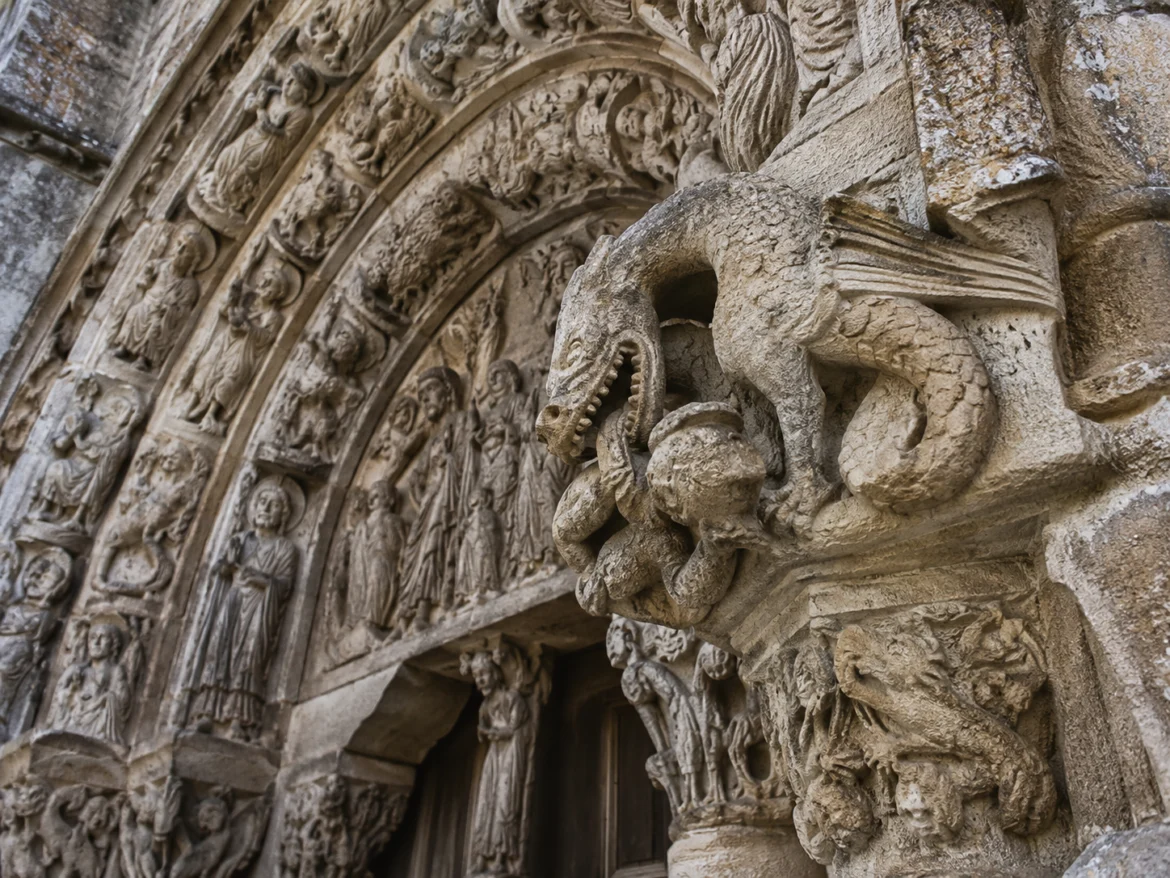
An art that spoke without words
In medieval times, the majority of the population did not know how to read. Therefore, churches were not only places of worship: they were also authentic stone books. His sculptures taught biblical stories, conveyed moral norms, and reminded us of the dangers of sin.
Within that visual language, monsters occupied an important place. They were not whimsical decoration. They were a way of representing evil, chaos, fear, temptation or the dark forces that threatened human beings.
A pilgrim who arrived exhausted at a church on the Camino could find lions biting human figures, birds with disturbing heads, twisted demons or snakes surrounding bodies. Those images spoke for themselves. They warned, impressed and forced us to look.
Beasts, demons and creatures mixed
Many of the creatures sculpted in Romanesque art do not exactly belong to reality. They are mixed animals, fantastic beings or deformed figures. Sometimes they have the body of a reptile and the wings of a bird. Others look like lions with a human face. Figures also appear that devour others or show exaggerated expressions of pain, surprise or horror.
This overflowing imagination should not be understood as a simple artistic fantasy. The medieval world coexisted with a strong symbolic vision of life. Everything could have a meaning. A monster was not just a monster: it could represent sin, pride, lust, punishment or danger to the soul if it strayed from the right path.
And on the Camino de Santiago, where so many pilgrims walked moved by faith, that message gained even more strength.
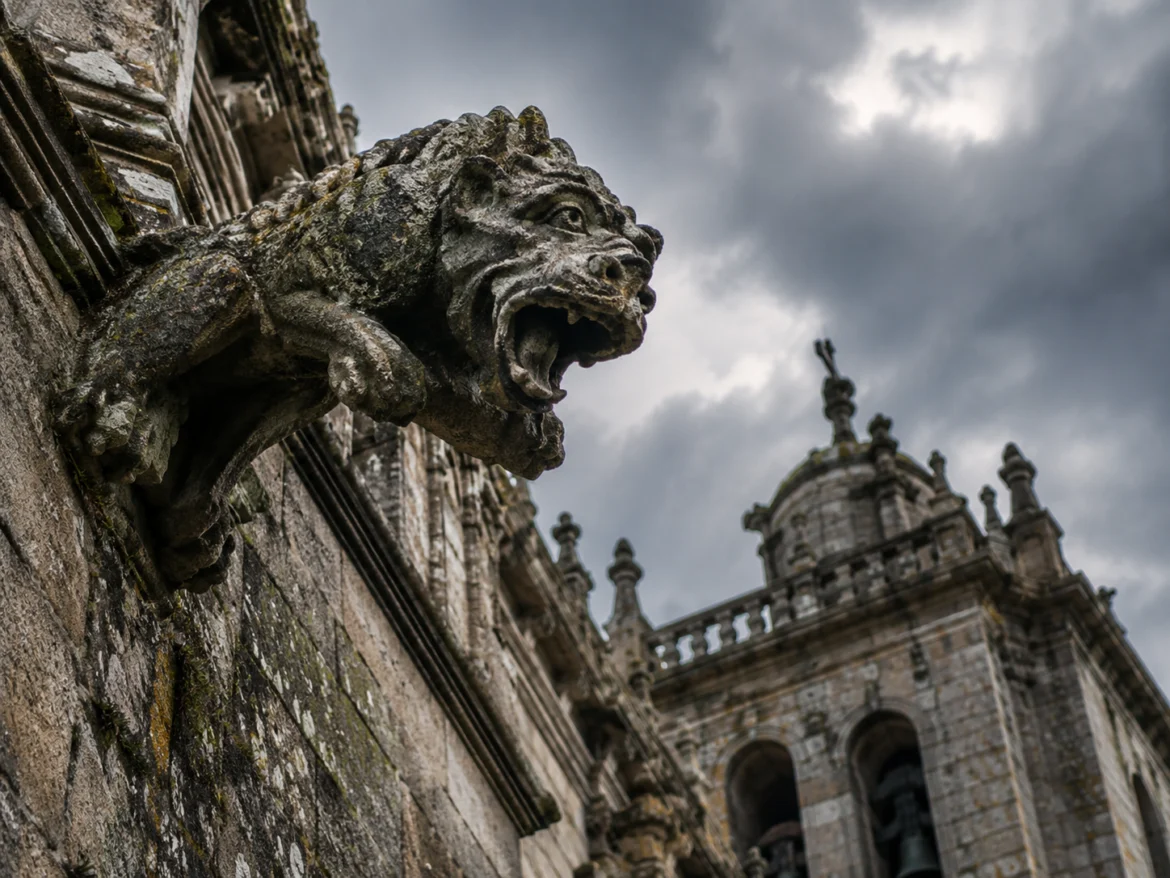
Gargoyles: fear and usefulness
Among the most striking figures are the gargoyles, especially in temples after the Romanesque, already within the Gothic and other styles. Many are shaped like menacing beasts, with open mouths and tense bodies, as if they were about to jump from the façade.
But gargoyles were not just terrifying figures. They also had a practical function: channeling rainwater away from the building's walls. That is, they were drains turned into sculptures.
The mix is fascinating: an architectural need resolved with symbolic imagination. Water came out of the beast's mouth, as if the monster itself were spitting from the roof.
The Camino as a border between the sacred and the wild
The Camino de Santiago crosses towns, mountains, plains and cities, but it also runs through the spiritual imagination of Europe. The churches of the Camino were places of refuge, prayer and rest. However, the fear of disorder, sin and the wild world that threatened outside the sacred was also reflected in its walls.
Therefore, it is not strange that these creatures appear in so many temples along the Camino. The medieval pilgrim did not see the journey only as a physical movement. It was also an internal combat. Walking towards Santiago meant leaving burdens behind, overcoming trials and standing firm in the face of multiple dangers, both real and spiritual.
In this context, the stone beasts functioned as a reminder: evil exists, temptation lurks and the soul must remain alert.
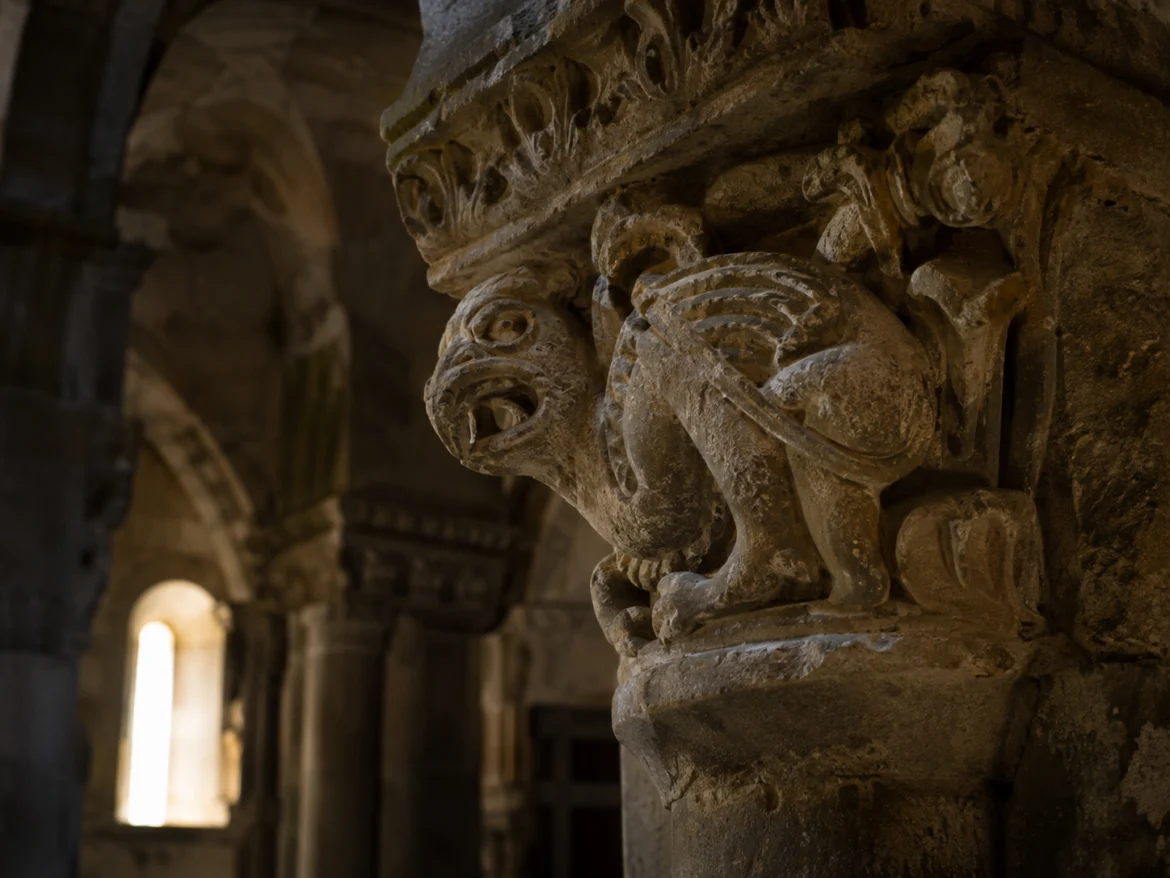
It wasn't all fear
However, reducing these sculptures to a simple threat would be an understatement. Medieval art also enjoyed amazement, strange humor and a taste for the grotesque. Some figures seem more playful than terrifying. Others show almost overflowing creativity.
This reminds us that medieval stonemasons were not simple executors of orders. Many left a world of their own in the stone, populated by imaginary creatures, visions inherited from bestiaries, legends, popular traditions and religious symbols.
Thanks to them, the churches of the Camino today preserve a second reading: they not only tell the story of faith, but also that of the medieval imagination.
look up
Perhaps that is one of the most beautiful lessons for today's pilgrim. Sometimes we pass in front of a church on the Camino without looking up. We go in, take a quick photo and continue walking. But above our heads there is an entire universe of stone waiting to be discovered.
Capitals with intertwined animals, gargoyles that defy the sky, creatures crouching in a corner and hidden monsters that generations of pilgrims have been watching for centuries.
They are part of the Camino. They also tell their story. And they remind us that, long before screens existed, medieval artists already knew how to capture the eye and awaken the imagination.
Because the Camino de Santiago is not only walked: it is also observed, interpreted and, sometimes, deciphered creature by creature.