



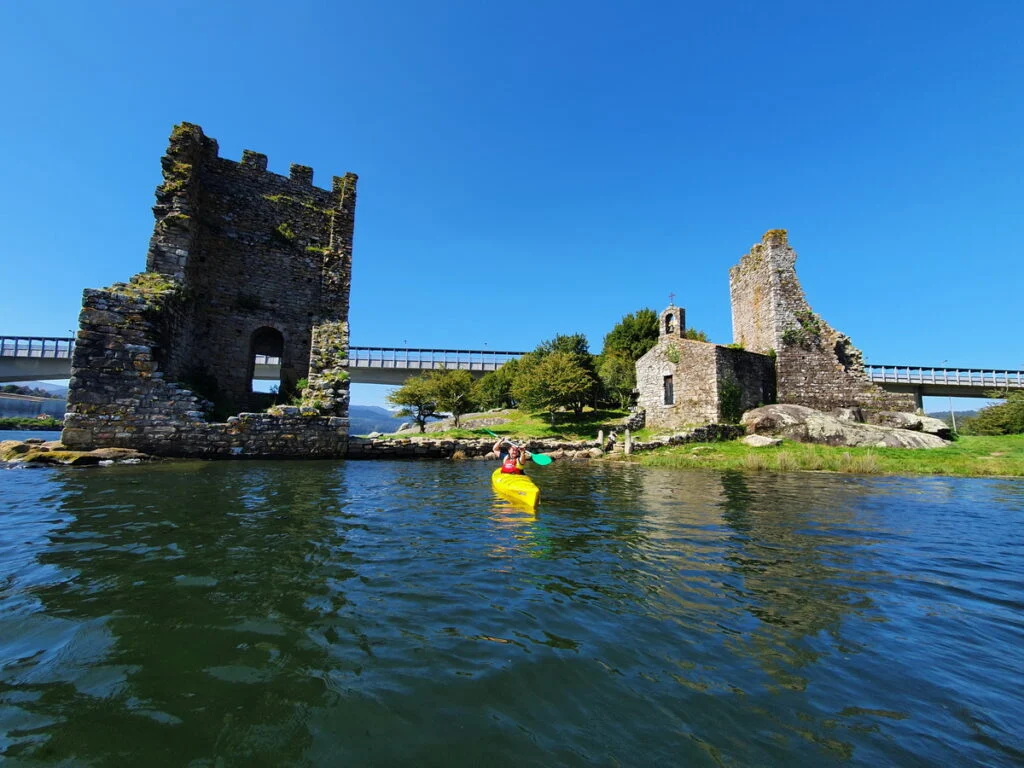
The Camino de Santiago once again demonstrates that there is no single way to pilgrimage. A new initiative born in Vilanova de Arousa proposes traveling part of the Jacobean route by kayak, following the sea and the river before completing the last section on foot to Praza do Obradoiro.
The Camino can also start on water.
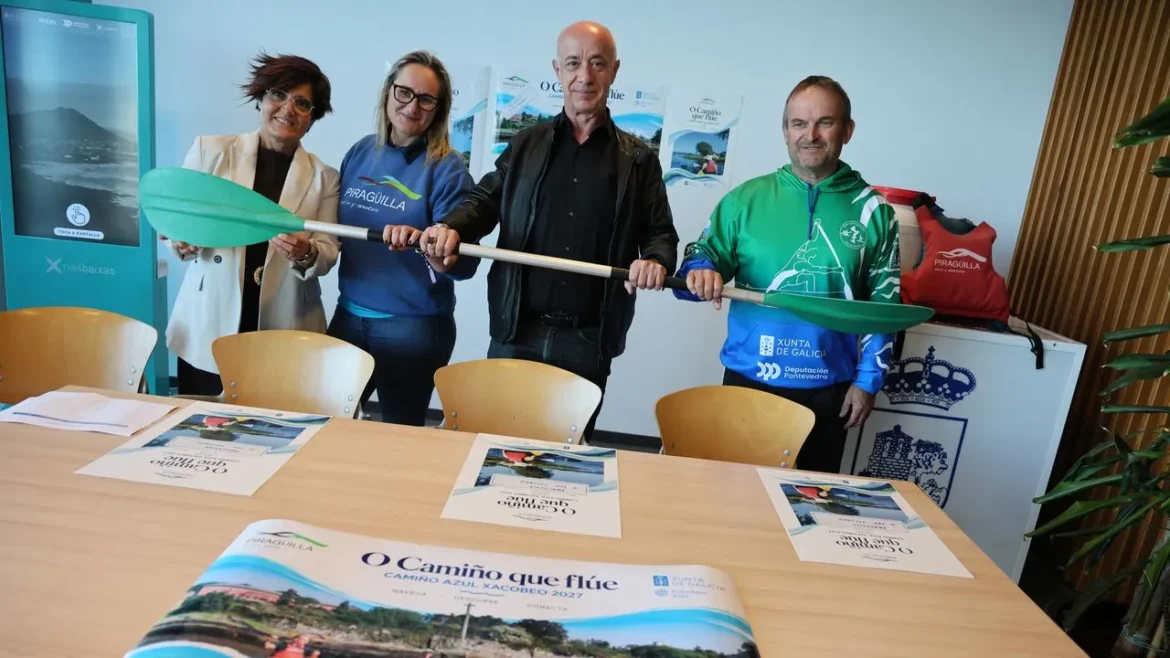
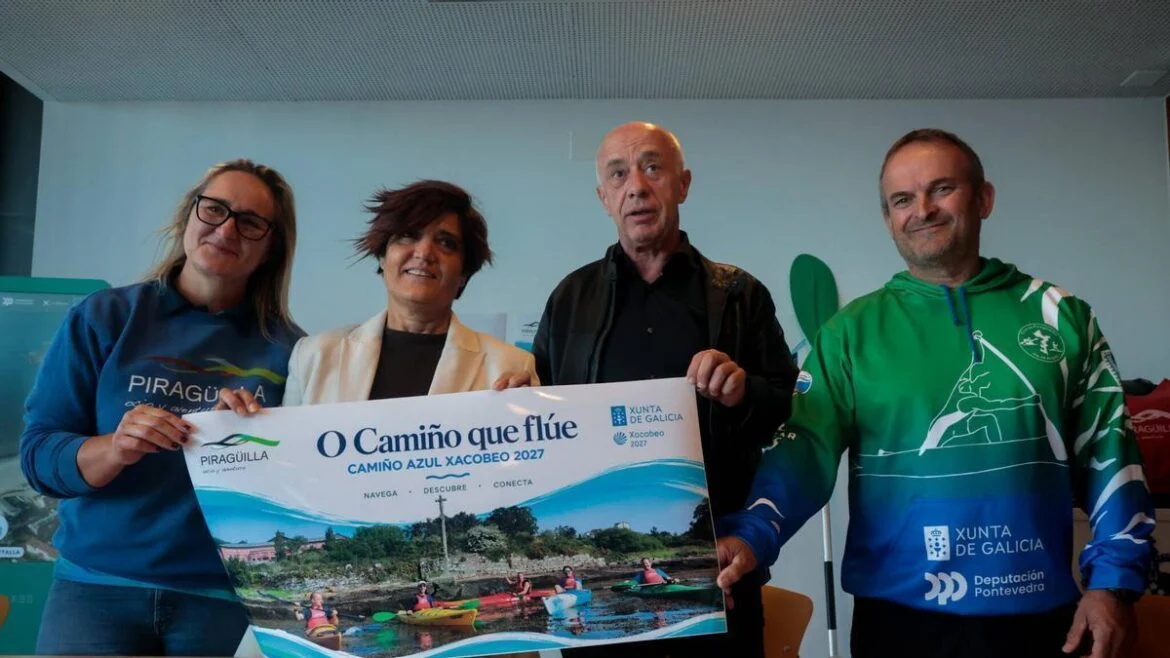
Vilanova de Arousa has presented “O Path that flows”, an initiative that seeks to highlight a different way of approaching Santiago de Compostela by combining kayak navigation, heritage, landscape and the final stage on foot.
The project is promoted by the Piragüilla company within the framework of Xacobeo 2027 and was born with the intention of continuing to develop the potential of the Camino por mar.
The proposal has begun with a reception greater than expected.
The organization expected to gather around thirty participants on the first day, but finally the number exceeded fifty people.
First stage from Vilanova
The first stage departs from the port of Vilanova de Arousa.
Participants kayak along the coast until they reach the island of Cortegada, one of the most unique natural spaces in the estuary.
It also includes an activity related to shellfish fishing, turning the day into something more than a simple sports trip.
Afterwards, the group continues sailing until Bamio, where this first part of the experience ends.
The organization has insisted that participants are accompanied throughout the entire route, seeking to make the activity accessible also to those who do not have extensive prior sailing experience.
Second stage towards Pontecesures
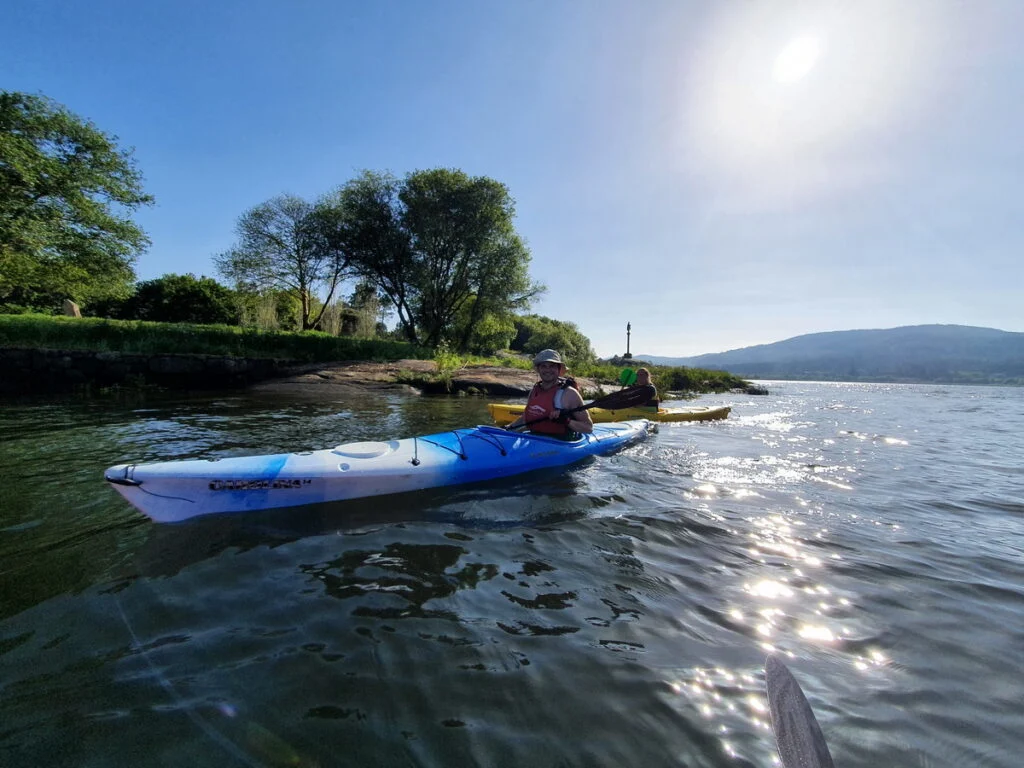
The second day will continue from Bamio to Pontecesures.
During the tour there will be a stop at Catoira, where participants will be able to see one of the great historical symbols of the area: the Torres do Oeste.
The passage through Catoira also connects perfectly with the history of the maritime routes to Santiago.
For centuries, this area was a strategic entry point into the interior of Galicia.
Today it is once again part of a different pilgrimage, this time starring kayaks.
The last section will be walking
The third and final stage will completely change the scenario.
Participants will leave the water and complete the course on foot to Santiago de Compostela.
The final arrival is scheduled at Praza do Obradoiro.
The day will be held on October 18, thus closing an experience that mixes navigation and traditional pilgrimage.
The change from the kayak to the boots also represents the transition between two ways of understanding the Camino.
First following the water.
Then following the arrows.
Recover the relationship of the Camino with the sea
The maritime pilgrimage has a very important historical presence in Galicia.
Before there were airports, trains or modern roads, many pilgrims from northern Europe reached the Galician coast by boat before continuing to Compostela.
The sea was part of his Way.
Current projects like “O Camiño que flúe” recover that connection from a different perspective.
It is not about reproducing exactly those medieval pilgrimages, but rather remembering that the routes to Santiago were never exclusively terrestrial.
Cortegada, nature in the middle of the route
One of the great attractions of the first stage is the stop at Cortegada.
The island is part of the Maritime-Terrestrial National Park of the Atlantic Islands of Galicia and offers a completely different image from that usually associated with the Camino de Santiago.
There are no long forest tracks or mountains here.
There is water.
Vegetation.
Seafaring activity.
And an estuary that for centuries has been a natural means of communication.
Integrating this landscape into a Jacobean experience allows us to show another side of the Camino.
Catoira and the history of the estuary
The second stage incorporates another important heritage element.
The West Towers, in Catoira, remember the defensive importance that this point had during the Middle Ages.
Located next to the Ulla River, they controlled one of the main access routes to Santiago.
The history of the estuary and the history of Compostela are deeply connected.
Navigating this area allows us to better understand that relationship.
The pilgrim not only advances towards Santiago.
It also spans centuries of history.
More pilgrims in Vilanova
The Vilanova City Council has also highlighted the strong growth in pilgrims that the town is experiencing.
The mayor, Gonzalo Durán, has pointed out that the arrival of walkers during this period is being especially important, even above some times in the summer.
This increase is leading the municipality to study new solutions to better serve pilgrims.
Among the possibilities raised even appears the authorization of municipal facilities in some parishes when necessary.
An opportunity to diversify the Camino
The constant growth of the Camino also forces us to seek new experiences.
Not all pilgrims want to take the same route.
Some look for historic paths.
Others prefer coastal routes.
Others combine cycling, sailing or walking.
Initiatives like this allow us to expand the way of discovering the territory without losing sight of the final objective: Santiago.
In addition, they can help distribute the flow of visitors between different municipalities and spaces.
Water also points the way
For centuries we have associated the Camino with a very specific image.
A backpack.
A staff
A yellow arrow.
But the pilgrimage to Santiago has always been much more diverse.
It has been reached walking.
On horseback
By boat.
By bicycle.
And now also in kayak.
Perhaps that is one of the great strengths of the Camino de Santiago.
You can change the way you travel without losing your destination.
In Vilanova, during these days, the yellow arrow also seems to advance over the water.

















