The Camino de Santiago has also become a stage for a new generation of content creators. TikTok, Instagram and YouTube are already part of the experience of many young pilgrims, and names like Pablo Vera, Manu Rivas, Lucía Correa or Anitarqp They have shown this year to what extent a pilgrimage can also become a viral phenomenon.
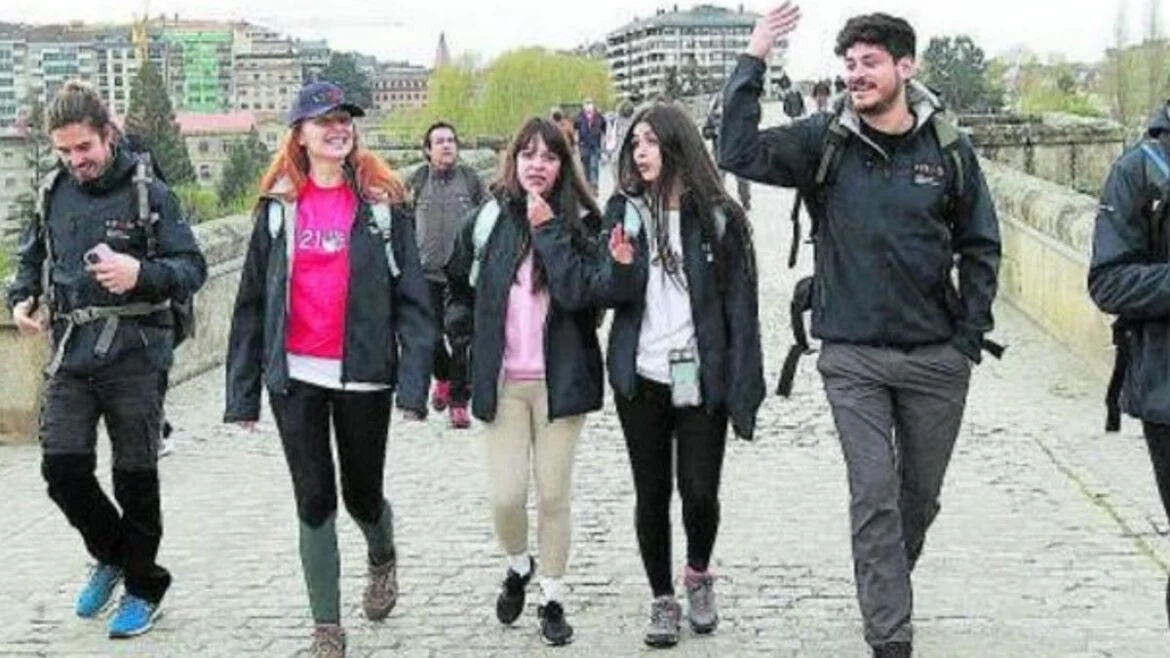
In spring, several of these creators traveled different stages of the Camino from Sarria, sharing practically every day with their followers. The trip began surrounded by mystery, but it didn't take long for the networks to discover that the destination was Santiago de Compostela.
What seemed like a getaway between friends ended up generating thousands of views and growing expectation during each stage.
An arrival surrounded by followers
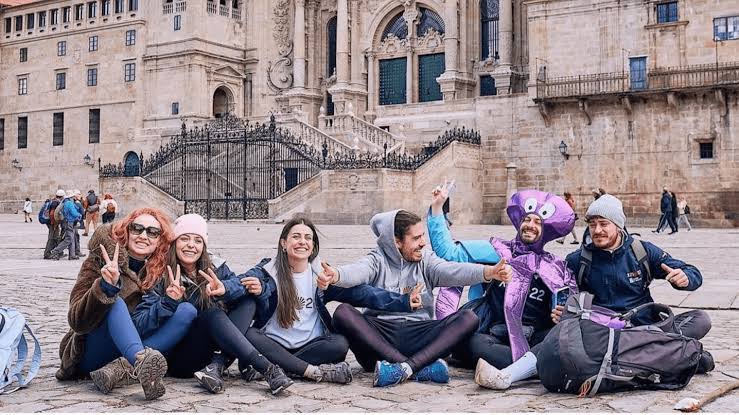
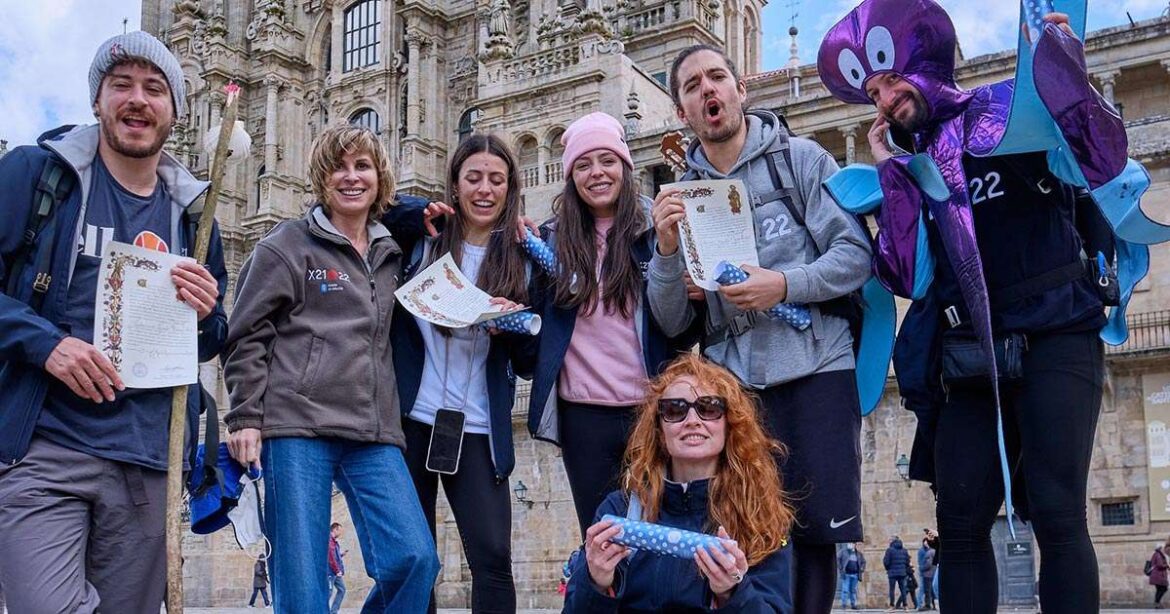
The arrival at the Plaza del Obradoiro was probably the moment that best explained the phenomenon.
Dozens of young people waited for the creators in Santiago after having followed their publications for days.
The Camino had gone from being solely a personal experience to also becoming a collective story told in real time.
For many of those followers, it was possibly the first time they saw up close how a pilgrimage works: stages, fatigue, hostels, backpack, blisters and finally the arrival in Compostela.
This also has an obvious effect: the Camino enters the phones of millions of young people who perhaps had never thought about walking it.
Fabiana Sevillano and a generation accustomed to sharing everything
Interest is now returning to focus on creators like Fabiana Sevillano, one of the most recognizable figures on TikTok in Spain, and in other profiles linked to the same digital environment.
Sevillano gathers millions of followers across different platforms and belongs to a generation for whom traveling, training, eating or simply spending a day with friends can immediately become content.
The Camino is not outside of that logic.
The interesting question is not so much whether or not influencers should do the Camino.
The question is what happens when a centuries-old pilgrimage fully enters TikTok culture.
From the staff to the mobile phone
For centuries, pilgrims carried staff, calabash and scallop.
Today many add another essential element: the mobile phone.
They photograph breakfast, record the path, tell how their feet are, show the hostel and broadcast the arrival at the Obradoiro.
For some traditional pilgrims it may seem strange.
For a twenty-year-old person, however, it may simply be the natural way to tell about their journey.
The Camino itself has always changed with the generations that travel it.
What was once written in a personal diary can now become a thirty-second video watched by hundreds of thousands of people.
A huge promotion for the Camino
From a tourist point of view, the effect is evident.
A creator with one or two million followers can show a small town on the Camino to a much larger audience than any conventional tourism campaign.
Sarria, Portomarín, Palas de Rei, Melide or Santiago can suddenly appear to millions of people who until then barely knew those places.
It has already happened on different occasions.
In recent years, administrations and companies have turned to content creators to promote Jacobean routes among young audiences.
The phenomenon, therefore, is not new.
What changes is its dimension.
Does it help the Camino or does it turn it into a decoration?
The debate also appears here.
For some, social networks make it possible to bring the Camino closer to new generations and show an experience that otherwise they might never know about.
For others, there is a risk of turning the pilgrimage into a simple setting for videos, photographs and advertising campaigns.
Both realities can coexist.
A person can start the Camino thinking only about creating content and end up discovering something completely different.
That is precisely one of the historical characteristics of the route: no one knows exactly what they are going to find when they start walking.
El Camino also speaks the language of Generation Z
The image of the pilgrim has changed a lot.
There is no longer a single profile.
There are religious pilgrims, athletes, retirees, students, solo travelers, families and also influencers.
And they all end up sharing the same kilometers.
Maybe the real question isn't whether TikTok is changing the Camino.
Maybe it's just the opposite.
Perhaps the Camino is finding a new way into the lives of a generation that apparently lives glued to a screen.
Because behind the video, the selfie and the followers there are still things that no social network can avoid:
the kilometers, the fatigue, the rain, the unexpected conversations and the arrival in Santiago.
And that is still the Way.