Surely at some point, while walking the Camino de Santiago, you came across small piles of stones carefully placed on top of each other. They appear along the paths, on some milestones, in the mountains and in places where pilgrims usually stop.
But have you ever wondered why they are there and what they mean?
Behind these small buildings hide ancient customs, pilgrim traditions and, in many cases, personal stories that we will never know.
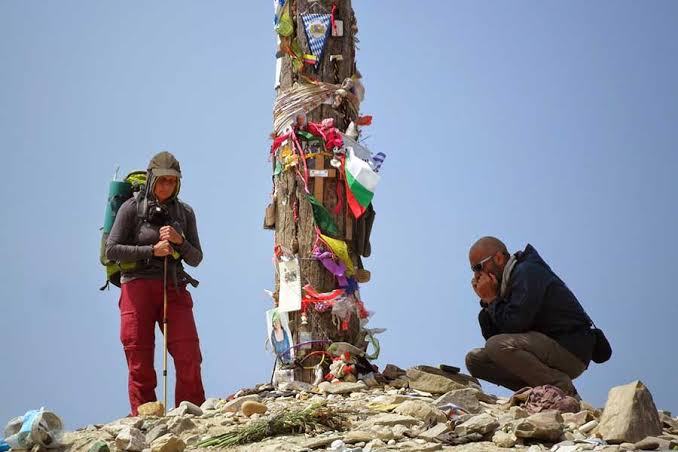
A tradition much older than the Camino de Santiago
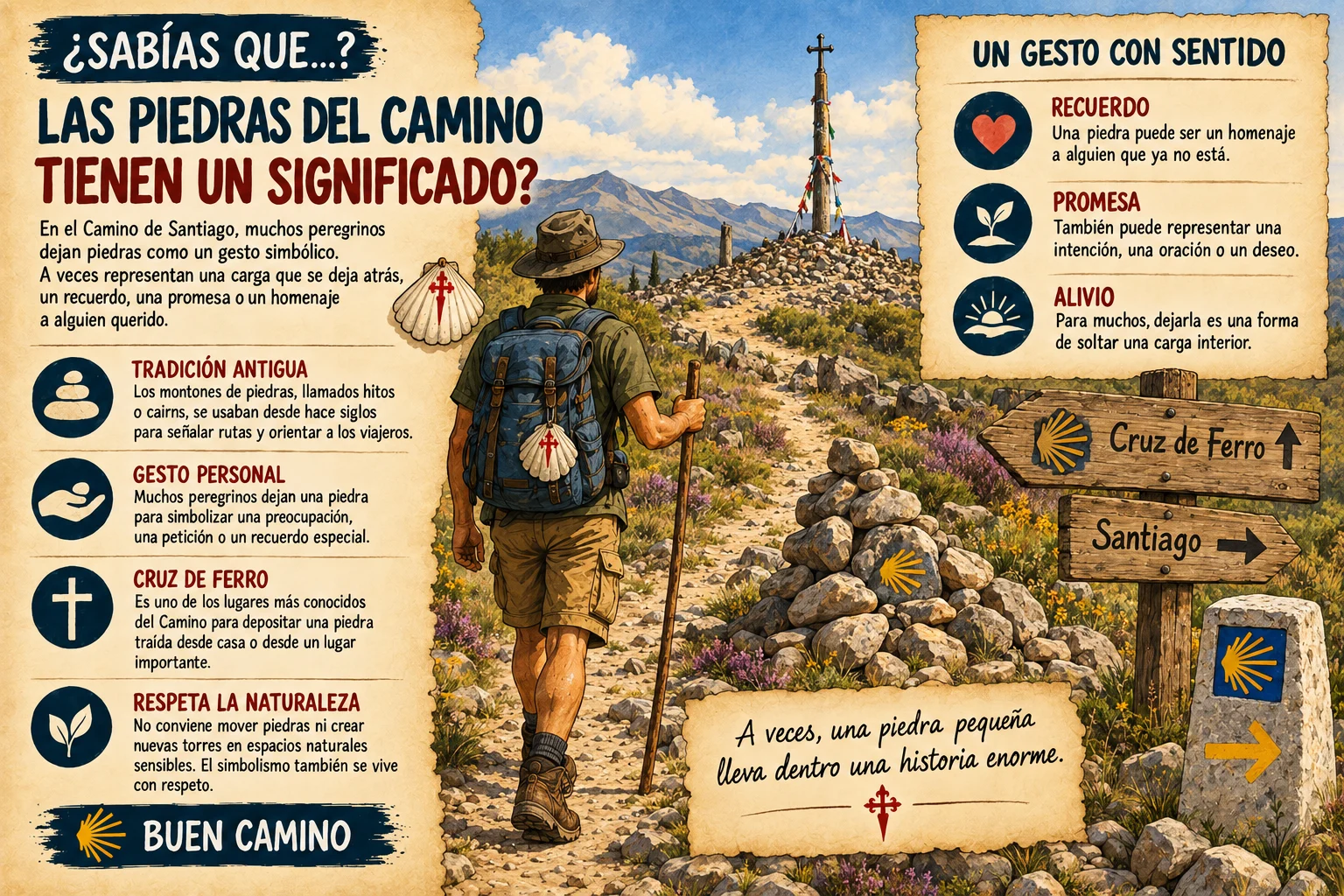
Cairns, known around the world as cairns or cairns, have been used for centuries to mark paths, identify certain locations, and help travelers navigate difficult terrain.
Before modern signs existed, these small sets of stones could be especially useful in mountain areas, where trails were not always easy to distinguish.
However, not all the piles that we currently find on the Camino fulfill that function. Many are recent constructions made by pilgrims and walkers, who attribute a personal or symbolic meaning to them.
Leave a stone to release a burden
For some pilgrims, placing a stone represents much more than a curious gesture.
It can symbolize a worry that you want to leave behind, a promise, a request or the memory of a loved person.
There are those who walk for days carrying a small stone in their backpack, hoping to find a special place to deposit it.
There is no single meaning or mandatory interpretation. Each person can experience that gesture differently.
A stone can represent a memory. Another, a farewell. And another, simply an important moment of the pilgrimage.
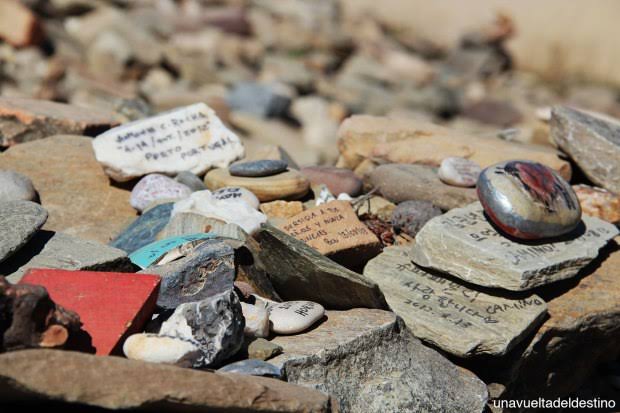
The Cruz de Ferro, the best known example
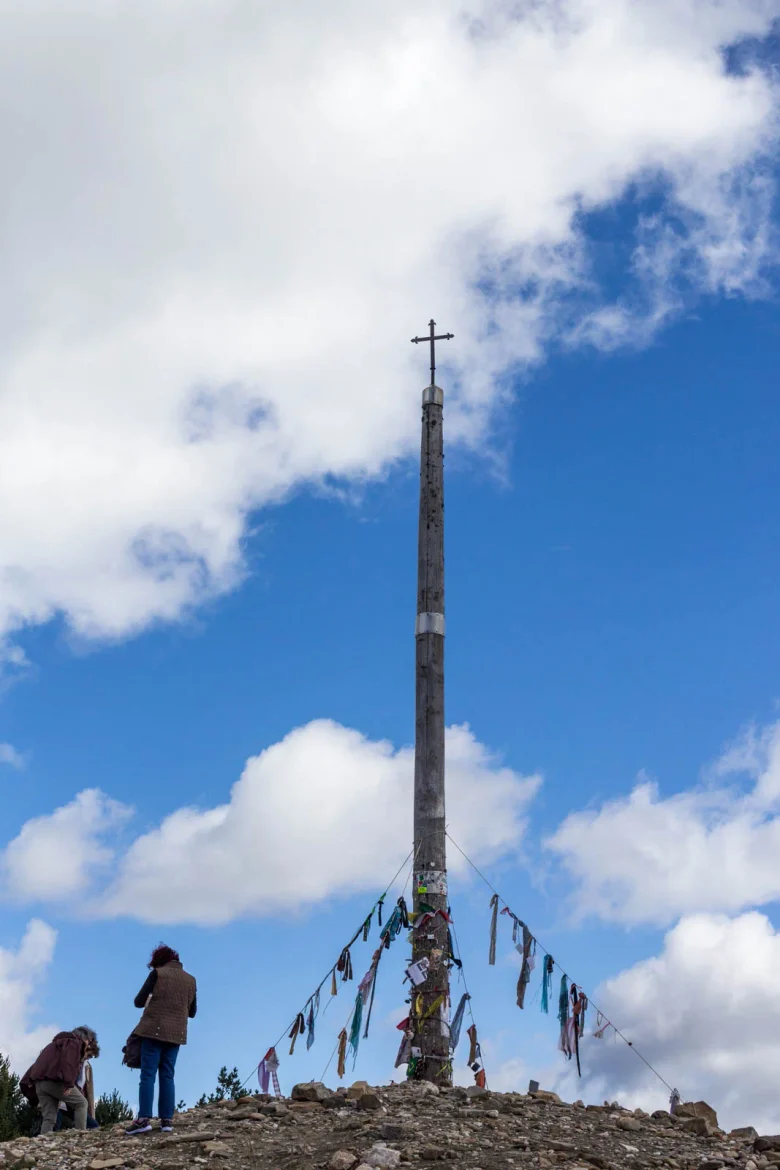
One of the most emblematic places of this tradition is the Cruz de Ferro, located on the French Way, between Foncebadón and Manjarín, in the mountains of León.
There, around a tall post crowned by an iron cross, countless stones deposited by pilgrims accumulate.
Many arrive with a stone brought from their city, their country or some especially significant place.
When depositing it, some remain silent, others remember their loved ones and others simply continue walking after experiencing an intimate moment.
It is one of those scenes of the Camino where a seemingly simple gesture can take on an enormous emotional charge.
Is it advisable to build new piles of stones?
Although these small towers may be beautiful or symbolic, we must also remember that the Camino crosses natural spaces that deserve protection.
Moving stones from their original place can alter small habitats, affect organisms that live under them and, in certain areas, confuse hikers if improvised signs are created.
Additionally, some milestones have a true guidance function and should not be modified.
Therefore, it is advisable to respect existing constructions, avoid building new towers in natural spaces and not remove stones from protected places.
The symbolism of the Camino can also be experienced without altering the environment.
Little stones, big stories
Perhaps the most interesting thing about these piles is precisely what we cannot see.
We will never know how many people stopped before them, what they were thinking or what memory they wanted to preserve.
A stone may have been placed by someone celebrating having overcome a difficulty. Another, by a person who remembered a deceased relative. And another, by a pilgrim who simply wanted to leave a small sign of his passage.
The Camino de Santiago is full of great monuments, cathedrals, monasteries and centuries-old buildings.
But it is also made up of these small details that remind us that each pilgrim carries with them their own story.
And that, sometimes, a tiny stone can hold enormous meaning.
And you, pilgrim, have you ever left a stone on the Camino de Santiago? What did it mean to you?