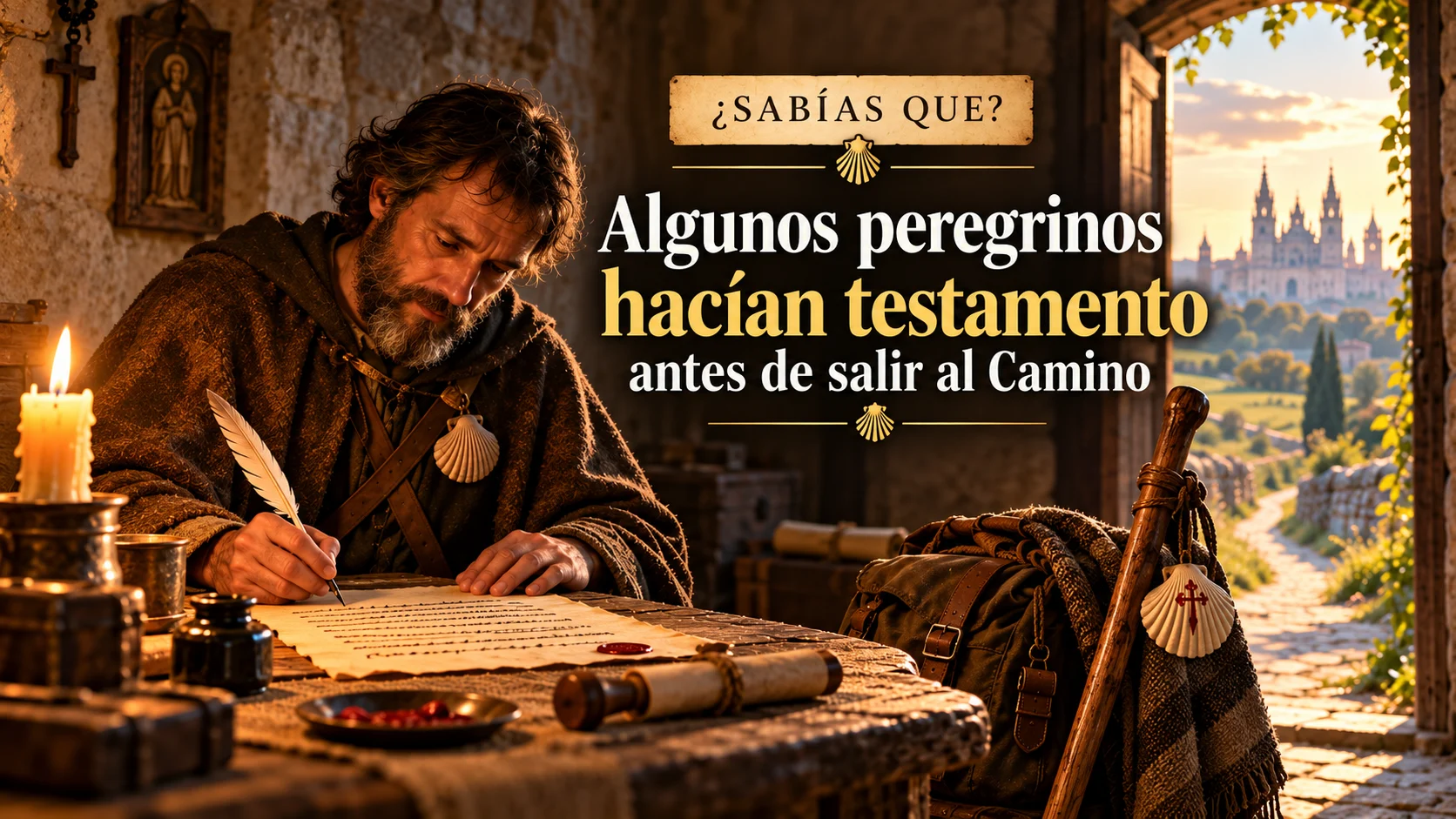
Today doing the Camino de Santiago can be an adventure, a personal challenge or a spiritual experience. But during the Middle Ages, undertaking a pilgrimage to Compostela could mean something much more serious: going away for months, crossing unsafe territories and assuming that perhaps you would not return home.
For this reason, some pilgrims left their affairs prepared before leaving.
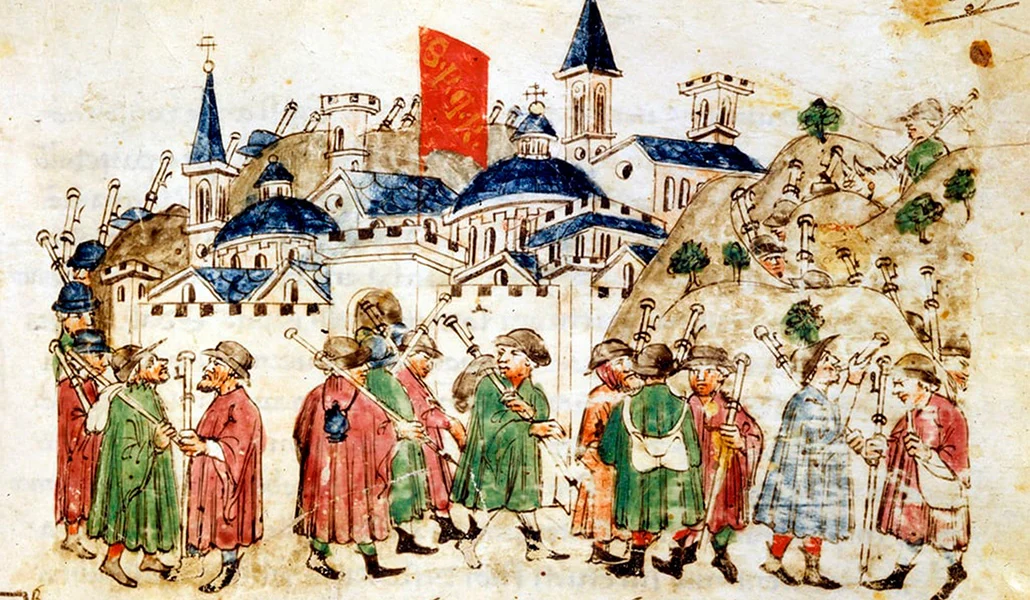
Walking could be a journey with no return
Traveling hundreds or thousands of kilometers in the Middle Ages had nothing to do with the current Camino. There were no modern roads, healthcare, telephones, weather forecasts or an organized network of accommodation like today.
The pilgrim had to face illnesses, accidents, theft, difficult roads, rivers, cold, hunger and long periods away from home.
Leaving for Santiago could turn into an absence of many months.
And there was a real possibility of not returning.
The will before the pilgrimage
In medieval documentation there are cases of people who, before undertaking an important pilgrimage, organized their assets, made donations, resolved debts or established their will in the event of death.
It was not necessarily a custom exclusive to the Camino de Santiago. The pilgrimages to Rome, Jerusalem and other large religious centers could also involve long and dangerous journeys.
But Compostela became one of the great Christian destinations in Europe and thousands of people undertook that journey from very distant territories.
For some, preparing a will was simply a measure of prudence.
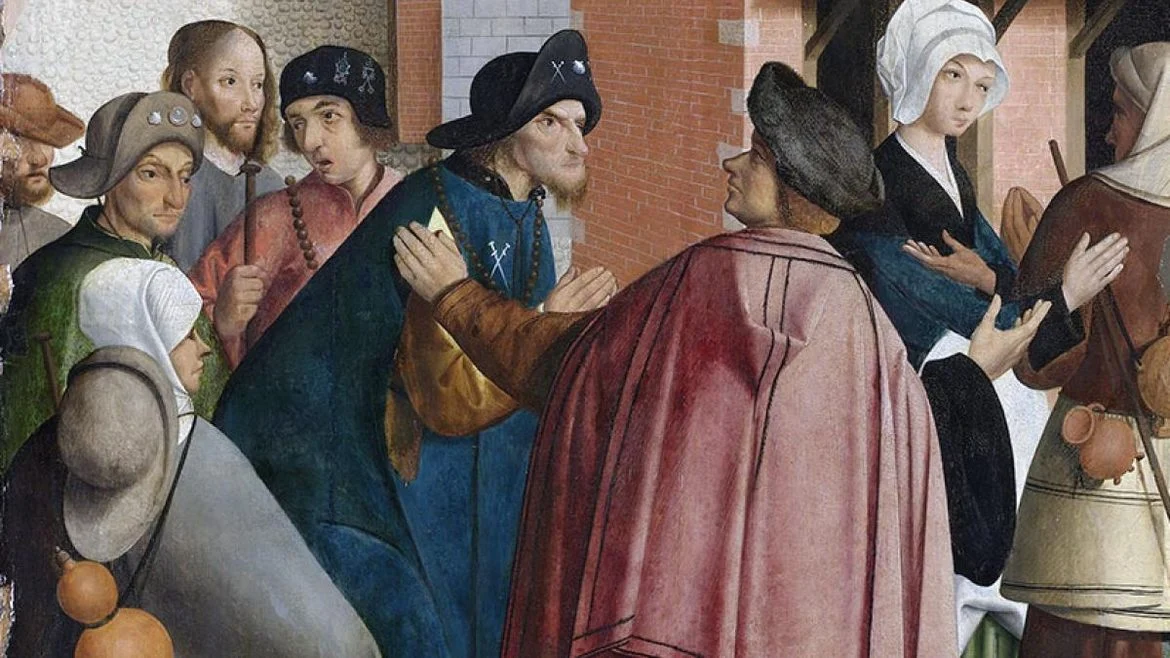
The pilgrim abandoned his daily life
Taking the Camino also meant temporarily breaking with normal life.
You had to leave your home, your job, your land or your business and rely on family members, neighbors or administrators for weeks or months.
Pilgrims could leave instructions about property, inheritances or debts before leaving.
In certain cases they also made donations to monasteries, hospitals or religious institutions.
It was a way to leave things in order before facing a journey whose outcome was never completely assured.
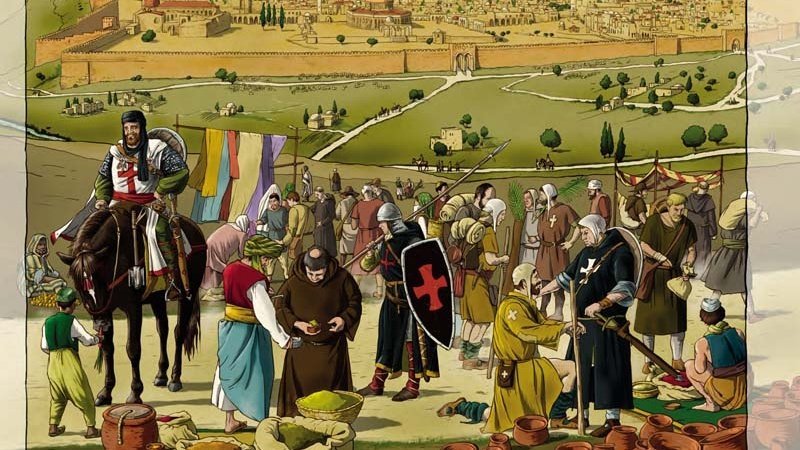
A pilgrimage much harder than the current one
The medieval Camino was not a continuous succession of hostels and services.
Pilgrim hospitals played a fundamental role. Some offered food, bed, and basic assistance to sick or exhausted travelers.
Religious orders, monasteries, churches and local communities helped maintain that network of hospitality for centuries.
But between one place of reception and another there could be long distances and enormous difficulties.
Furthermore, traveling alone increased the risks.
That is why many pilgrims tried to travel in groups whenever possible.
The Camino also had a legal dimension
Pilgrimage was so important in medieval society that it could even affect legal issues.
In different European territories there were regulations designed to protect the property or certain rights of those who were making a pilgrimage.
The pilgrim was a socially recognizable figure: he dressed in a certain way, carried a staff, escarcela and other symbols and could be identified as someone who traveled for religious reasons.
Over time, the scallop would end up becoming the great symbol associated with those returning from Santiago.
When leaving home required saying goodbye for real
This is probably one of the differences that best allows us to understand the dimension of the medieval Camino.
Today a pilgrim can send a message from any stage, reserve accommodation from the phone and return home by plane a few hours after reaching Santiago.
Centuries ago, beginning the Camino could mean disappearing from the known world for months.
There was no guarantee of returning.
And precisely for this reason some pilgrims, before placing their staff on their shoulder and beginning to walk, left a last wish prepared.
The Camino could be a pilgrimage.
But it could also become the most important—and possibly the last—trip of a lifetime.