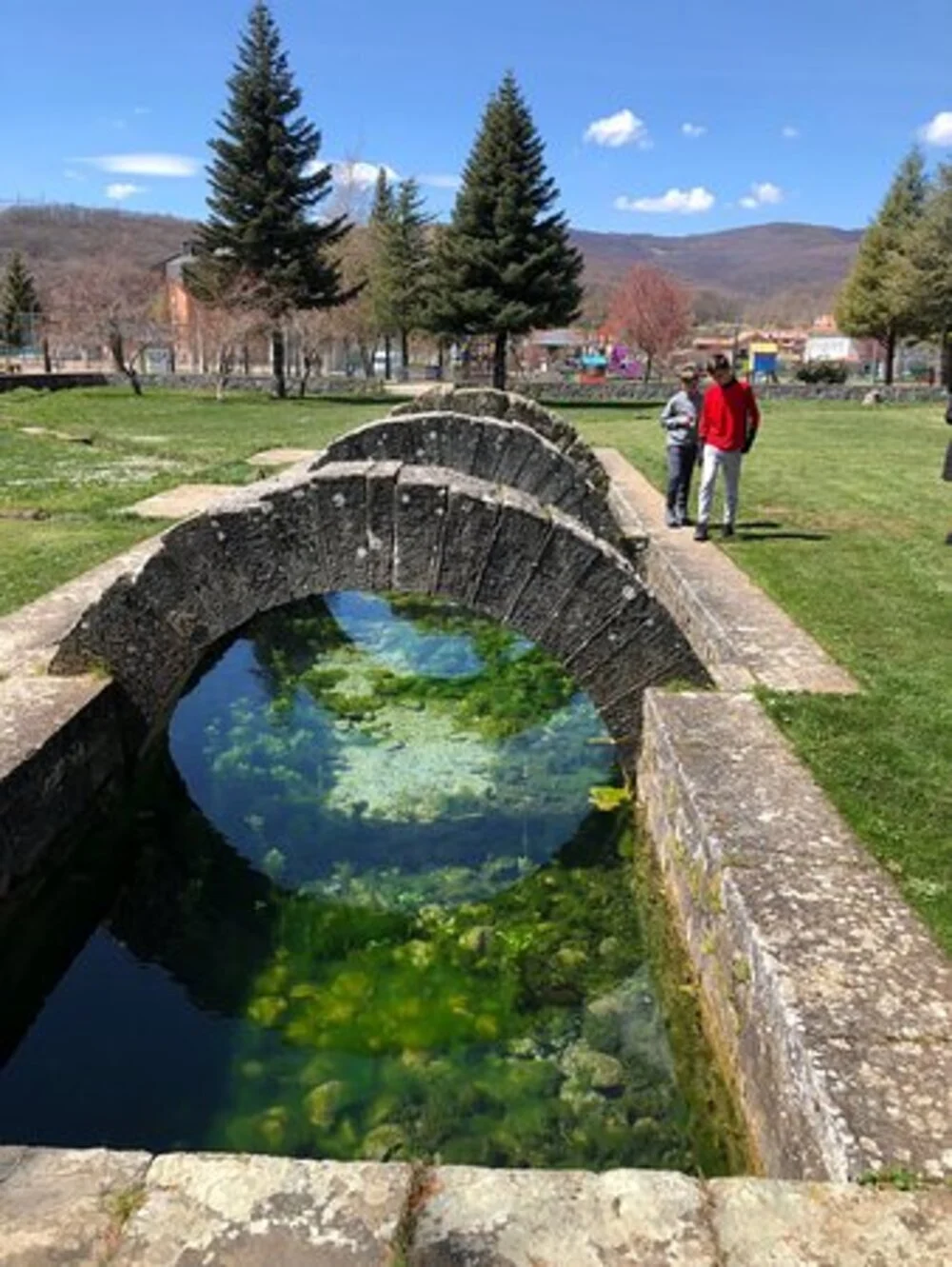
It is in Palencia, hundreds of kilometers from the sea, and at night it projects a shell to mark the Forgotten Path. One of the most surprising curiosities of the Jacobean routes.
When we think of a lighthouse we immediately imagine the sea, cliffs, boats and stormy nights. The last thing we would expect to find is one in the mountains of Palencia, hundreds of kilometers from the coast.
But it exists.
And, furthermore, It is related to the Camino de Santiago.
In Velilla del Río Carrión, in Palencia, there is a construction considered the Spain's only indoor lighthouse, a unique tower that has become one of the most curious symbols of the Forgotten Road to Santiago.
Does not guide boats.
Pilgrim guide.
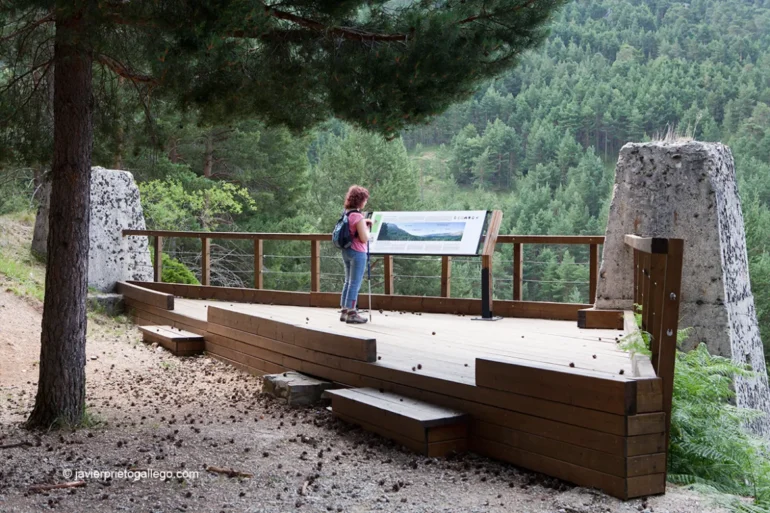
A lighthouse where no one expects to find it
The lighthouse is located in a territory surrounded by mountains, very far from any coast. Precisely for this reason it is so surprising to those who discover its existence.
Its current function has a strong symbolic component related to the Camino. When night falls, a scallop shell, one of the universal symbols of the pilgrimage to Santiago de Compostela.
Suddenly, the traditional concept of the lighthouse takes on another meaning.
For centuries, lighthouses have shown sailors where the coast was and helped them orient themselves.
There is no ocean here.
But there are also travelers looking for an address.
They are the pilgrims.
It's on the Forgotten Road
The location is not coincidental either.
Velilla del Río Carrión is part of the environment through which the Forgotten Path, one of the most unknown and fascinating Jacobean routes in Spain.
This itinerary was historically used by pilgrims seeking to advance towards Santiago through the territories of the northern peninsula. As the centuries passed and the growth of other routes, especially the French Way, it lost prominence.
Hence precisely its name.
The Forgotten Path.
In recent years, associations, municipalities and lovers of Jacobean heritage have worked to recover its memory and get new pilgrims to visit it again.
And this curious lighthouse has become a magnificent way to draw attention to a route that still remains outside the major circuits.
An illuminated shell in the middle of the night
Probably the most special moment to contemplate it comes when daylight disappears.
Then the scallop appears.
The image has an enormous symbolic load.
An illuminated shell in the middle of the mountain reminding us that a road that leads to Santiago also passes through there.
For a pilgrim, the scallop doesn't need much explanation. It appears on milestones, signs, hostels, churches and credentials along practically all Jacobean routes.
Finding it projected from a lighthouse located far from the sea is, however, completely unexpected.
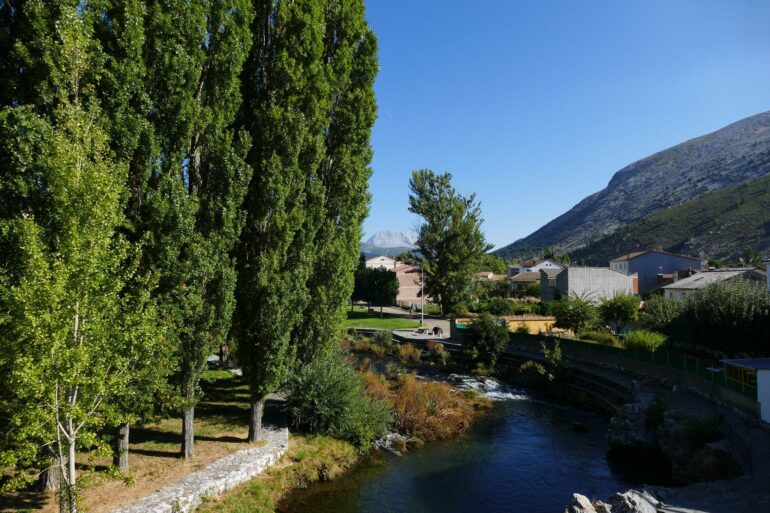
The Camino is full of places like this
This is precisely one of the reasons why the Camino de Santiago is never fully discovered.
We all know the Cathedral of Santiago.
Roncesvalles.
Or Cebreiro.
Queen Bridge.
Sarria.
But around the enormous network of roads that crosses Spain there are hundreds of extraordinary places that remain practically unknown to most pilgrims.
Small churches.
Medieval bridges.
Former hospitals.
Sources.
Legends.
Monasteries.
And, as Velilla del Río Carrión demonstrates, even a lighthouse located where there is no sea.
The Forgotten Way seeks new pilgrims
The growing interest in alternative routes can become an opportunity for itineraries like this.
Many pilgrims who have already traveled the French Way, the Portuguese Way or the Northern Way subsequently seek different experiences: less crowding, more nature and territories still far from the large tourist flows.
The Forgotten Path responds precisely to that profile.
It does not have the gigantic infrastructure of the most popular routes and requires greater planning, but in exchange it allows you to discover another way of pilgrimage.
Calmer.
More unknown.
And full of surprises.
A beacon for those who walk
Perhaps that is why this construction is so appropriate to represent the Camino.
A lighthouse exists to guide.
To tell someone that, even in the midst of darkness, there is a direction.
Pilgrims have been searching for signs for more than a thousand years.
Before they were the stars, the churches, the bell towers and the indications of those who lived along the Camino.
Today we continue looking for yellow arrows and scallops.
In Velilla del Río Carrión they found a different way of doing it.
They built a lighthouse far from the ocean.
And when night comes, instead of pointing the way to the ships, An illuminated shell reminds walkers that Santiago continues waiting.