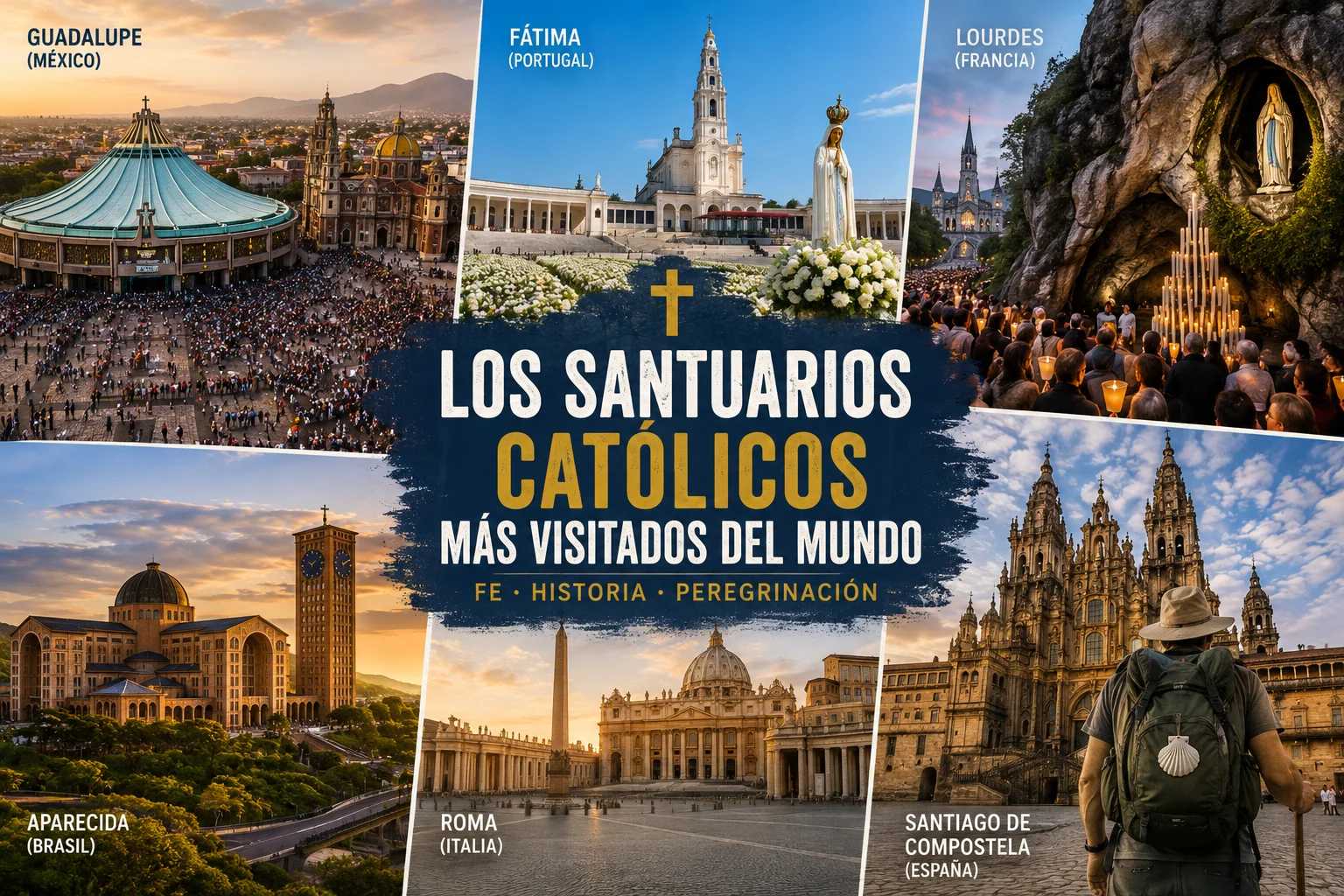
Millions of people travel every year to places that for them represent much more than a tourist destination. They walk, pray, keep promises or travel thousands of kilometers to reach Guadalupe, Fátima, Lourdes, Aparecida, Rome or Santiago de Compostela. Religious tourism moves an extraordinary international flow of travelers and shows that, many centuries after the first pilgrimages, setting off for spiritual reasons continues to be a global phenomenon.
The pilgrim was not born with the Camino de Santiago.
Long before traveling was easy, men and women crossed entire territories to reach places considered sacred. Jerusalem, Rome and Santiago became great destinations in medieval Christianity, while over the centuries other centers of devotion appeared capable of attracting millions of people today.
Today that world map of pilgrimages extends from Mexico to Portugal, from France to Brazil.
And the figures allow us to understand its dimension.
Guadalupe: a devotion that mobilizes millions of people
The Basilica of Our Lady of Guadalupe, in Mexico City, is one of the largest Catholic pilgrimage centers on the planet.
Guadalupana devotion is deeply linked to Mexican identity and has spread throughout the American continent. The great pilgrimages reach their climax around the December 12, festival of Our Lady of Guadalupe.
Official Mexican sources have historically placed the annual influx of the basilica at figures of many millions of visitors, which makes it possible to understand the extraordinary dimension of the phenomenon.
Here the pilgrimage is not only a journey.
Entire families, parishes and communities travel long distances to reach the sanctuary. Some pilgrims walk for days and others fulfill promises made years ago.
It is one of the most impressive demonstrations of popular religiosity in America.
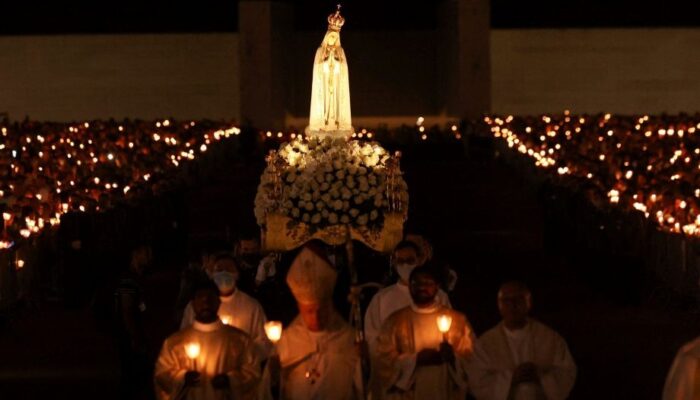
Fátima: more than six million pilgrims
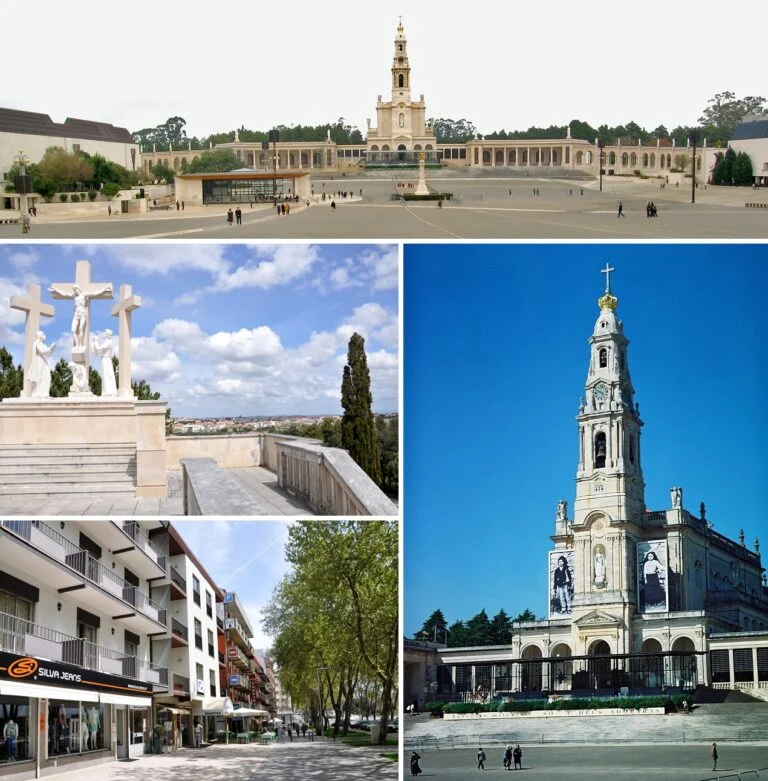
Much closer to the Camino de Santiago we find another world giant of pilgrimage: Fatima.https://es.wikipedia.org/wiki/F%C3%A1tima_
The Portuguese sanctuary has recently published its data for 2025: around 6.5 million people participated in at least one celebration, compared to 6.2 million the previous year. In addition, 5,608 organized groups from numerous countries were registered.
The international dimension is especially interesting.
Of the groups registered in 2025, 4,332 came from abroad, and 84 countries were represented. The sanctuary itself highlights the growing number of pilgrims arriving from Asia.
Fátima is, therefore, much more than a great Portuguese destination.
It is a place of world pilgrimage.
And there is an especially interesting element for those of us who know the Camino de Santiago: The arrival to Fátima on foot is also being promoted. The sanctuary works on pilgrimage routes and has even announced a specific certificate for those who arrive as pilgrims.
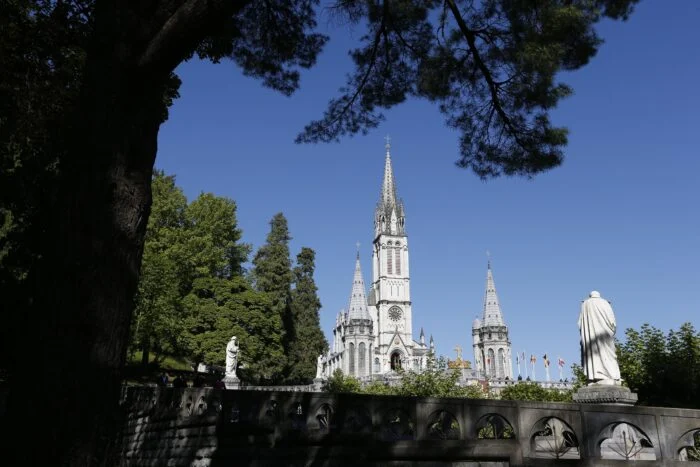
Lourdes: pilgrimage seeking hope
In the French Pyrenees there is another name inseparable from the contemporary history of Catholic pilgrimages: Lourdes.
Since the apparitions that Catholic tradition attributes to the Virgin Mary before Bernadette Soubirous in 1858, the French town became an international destination.
Its most unique feature is probably the presence of numerous sick pilgrims.
Every year volunteers, associations, families and religious organizations accompany people who come seeking solace, hope or a spiritual experience linked to the Massabielle grotto.
Here the pilgrimage takes on a particularly human character.
Not everyone comes expecting a miracle.
Many arrive simply looking for the strength to continue.
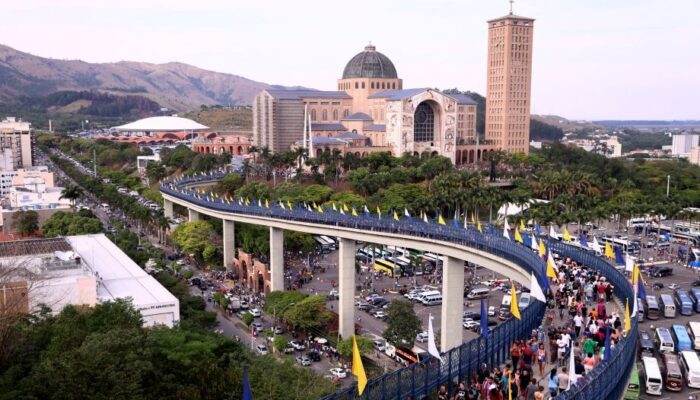
Aparecida: the great sanctuary of Brazil
On the other side of the Atlantic, Brazil has another of the world's great centers of Marian devotion.
He National Sanctuary of Nossa Senhora Aparecida, in the state of São Paulo, is dedicated to the patron saint of Brazil and has become one of the largest religious destinations in Latin America.
Its enormous basilica gives an idea of the dimension that the pilgrimage has acquired.
The history of the devotion dates back to the 18th century, when some fishermen found a small image of the Virgin in the Paraíba do Sul River.
From that simple image a devotion was born that would end up spreading throughout the most populated country in Latin America.
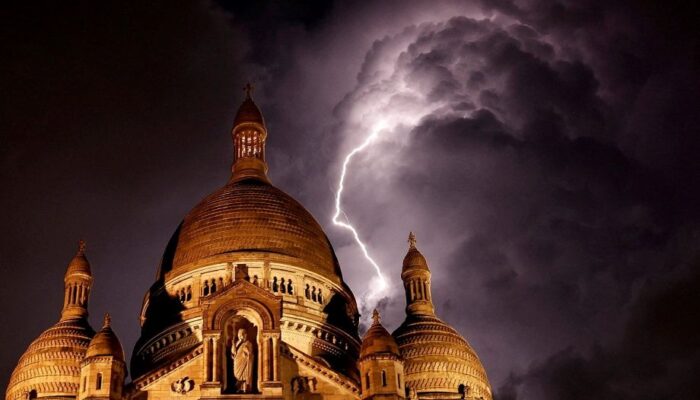
Rome: two thousand years of pilgrims
And then there is Rome.
Few cities can better explain the history of Christian pilgrimages.
The tombs of the apostles Peter and Paul made Rome one of the great religious destinations since the first centuries of Christianity.
The St. Peter's Basilica, the Vatican and the great Roman basilicas continue to receive pilgrims from all over the planet.
The jubilee years multiply this movement even more.
But there is an interesting difference with other destinations: it is very difficult to separate the cultural tourist from the religious pilgrim in Rome.
The same person can enter San Pedro fascinated by Michelangelo and, minutes later, participate in a religious celebration.
Heritage, art, history and faith constantly mix.
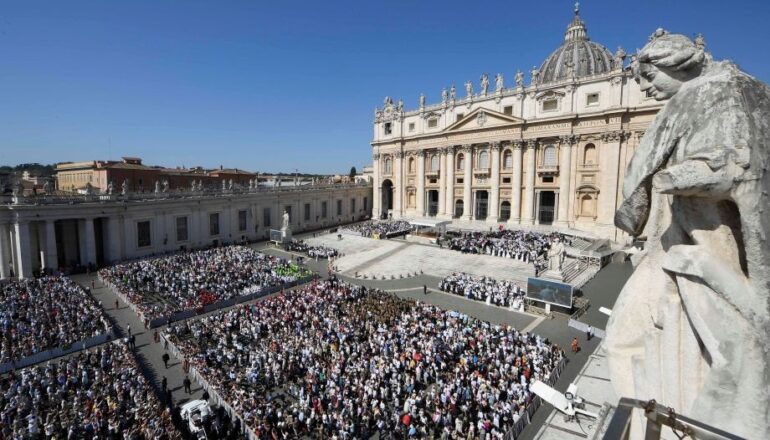
Santiago de Compostela: arriving after having walked
And finally we arrived at a different place.
Santiago de Compostela.
Not necessarily because it receives more visitors than all the previous ones.
But because a fundamental part of their identity continues to be linked to the very act of get there walking.
For centuries, pilgrims from all over Europe followed different paths to the supposed tomb of the apostle Santiago.
That medieval network never completely disappeared.
And in recent decades it has once again become an international phenomenon.
The French, Portuguese, Northern, Primitive, English, Vía de la Plata and dozens of Jacobean itineraries lead to the same place.
The Obradoiro square.
What makes Santiago different?
Maybe here is one of the keys.
In many great sanctuaries the journey leads to the sacred place.
In Santiago, the trip itself becomes an essential part of the experience.
Sleep in a hostel.
Cross a mountain.
Follow a yellow arrow.
Share a table with strangers.
Walking in the rain.
Putting your boots back on when your feet hurt.
It's all part of the pilgrimage.
That is why the Camino has managed to transcend even the strictly religious sphere.
Catholics, believers of other confessions, agnostics and people without any religion share the same routes to Compostela daily.
Each one carries a different reason inside the backpack.
The global return of walking pilgrimages
There is also a phenomenon that deserves attention.
While we live in a time when we can cross Europe by plane in a few hours, thousands of people voluntarily decide to delay weeks to reach a destination.
Fátima is promoting her routes.
Traditional pilgrimages continue to mobilize crowds in Mexico and Latin America.
And the Camino de Santiago receives walkers from practically all over the planet.
It doesn't seem like a contradiction.
Perhaps precisely because our lives are getting faster, walking slowly somewhere is attractive again.
Much more than tourism
The term religious tourism It is useful to study this enormous movement of people and its impact on hotels, restaurants, transportation, businesses and territories.
But it does not fully explain the phenomenon.
A tourist visits.
A pilgrim, at least in the traditional sense of the word, seeks.
You can seek God.
An answer.
A thank you.
A promise.
A memory.
Or just a few days to better understand your own life.
Guadalupe, Aparecida, Lourdes, Fátima, Rome and Santiago are very different places separated by thousands of kilometers.
But every year something similar happens in all of them.
Millions of people decide to hit the road.
And perhaps that is one of the oldest human traditions that still remains extraordinarily alive.