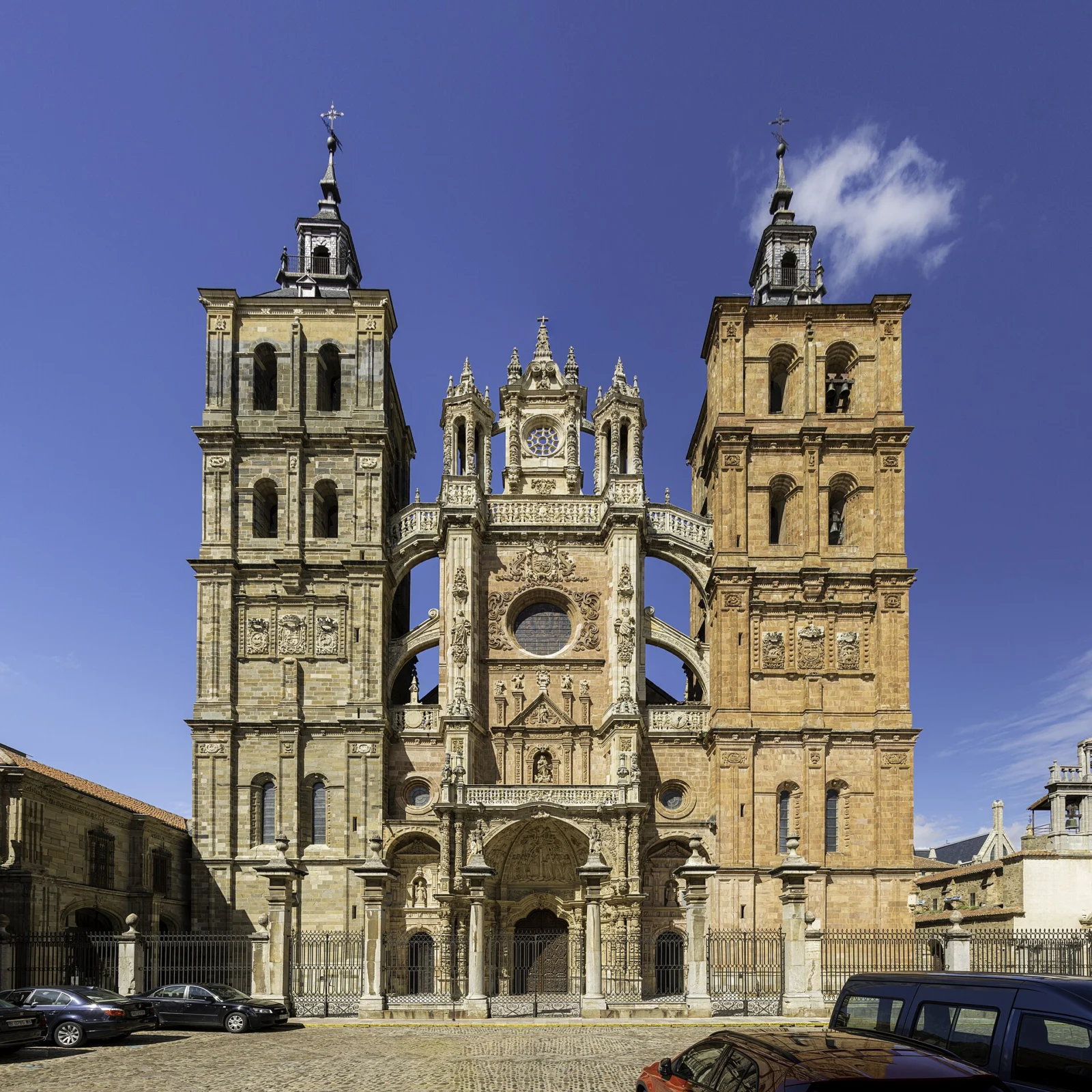
Astorga is a city where paths meet, and its cathedral allows you to explore several centuries of architecture in a single visit. The Gothic vaults, the monumental façade and the interior works speak of an episcopal see that has been transformed over time.
A cathedral built over several centuries
The current Cathedral of Santa María de Astorga began to be built in 1471 on a site that had housed previous temples. The work lasted for centuries, and this long process helps explain the diversity of styles that coexist in the building.
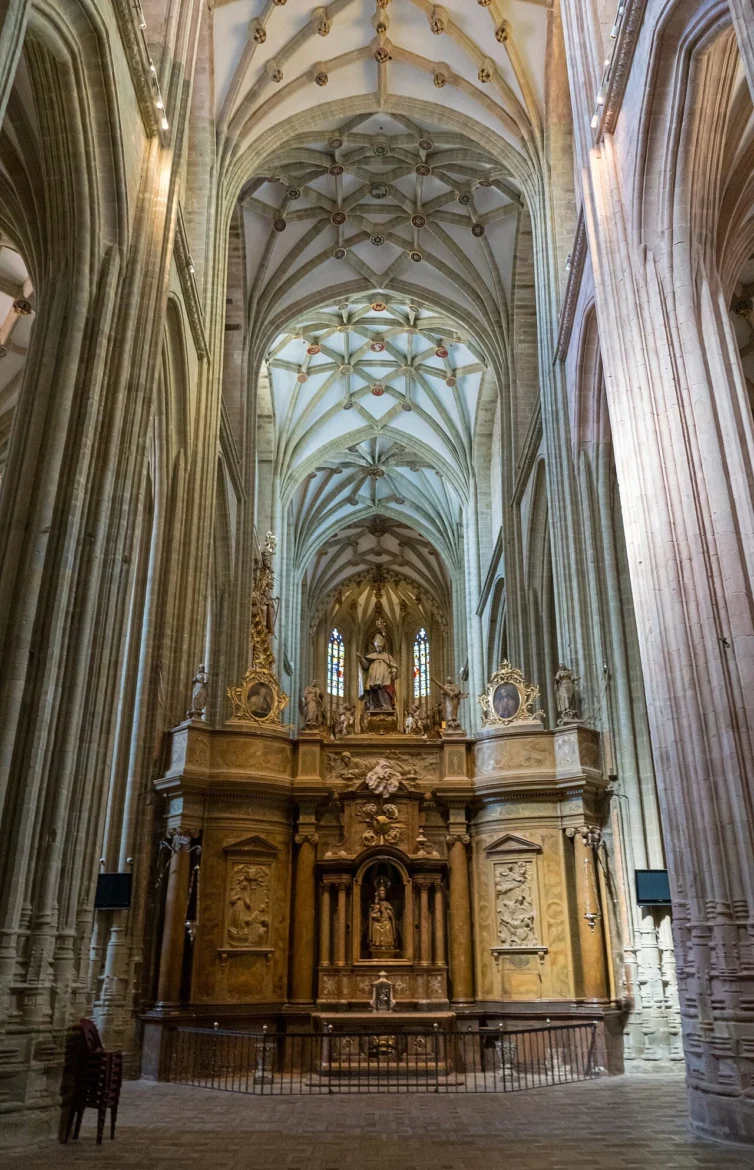
The basic structure responds to late Gothic. Its elevated naves, cross vaults and buttresses recall the architectural ambition of the late Middle Ages. Renaissance, baroque and neoclassical elements were later added to these forms, without the Gothic personality of the complex disappearing.
The cathedral belongs to one of the oldest historic dioceses on the Peninsula. It is located in the elevated part of Astorga, within the old urban area, and is part of a heritage complex that also includes the Cathedral Museum and buildings linked to the religious and welfare life of the city.
The facade and towers of Astorga
From the outside, the two towers and the large western façade form a characteristic image of Astorga. In its architecture, renovations and decorative solutions from different periods can be recognized. The stone, moldings and monumental sculpture allow us to observe how medieval languages gave way to later artistic expressions.
The western façade stands out for its ornamentation and the dialogue between volumes, openings and reliefs. It is a good idea to walk around the square to observe it from different angles, without limiting yourself to the front view. The proximity of Gaudí's Episcopal Palace adds another chapter to the historic architecture of Astorga, although it is a separate building.
The interior: vaults, altarpieces and sacred art
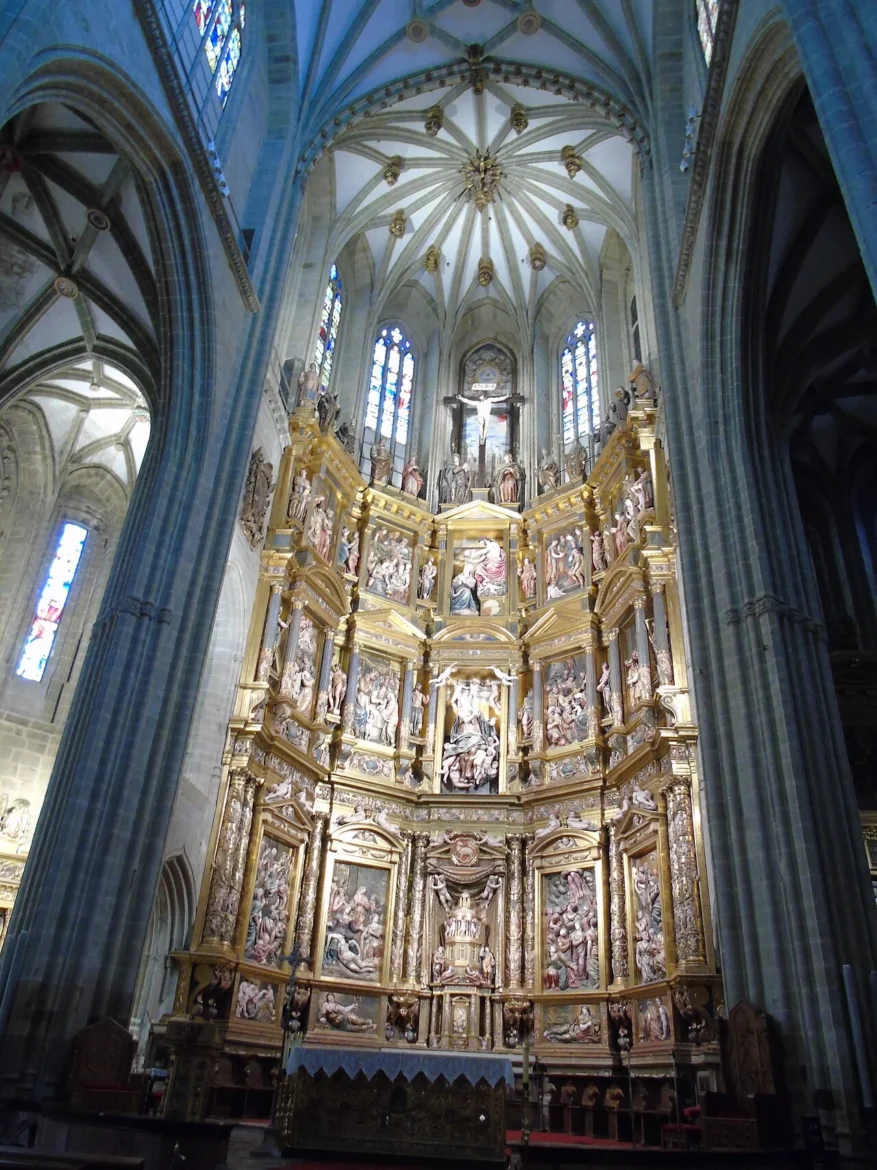
The interior is organized into three high naves and a chancel with apsidal chapels. The star vaults, with complex and carefully drawn shapes, allow you to admire the work of the masters who developed this architecture in the last years of the Gothic period.
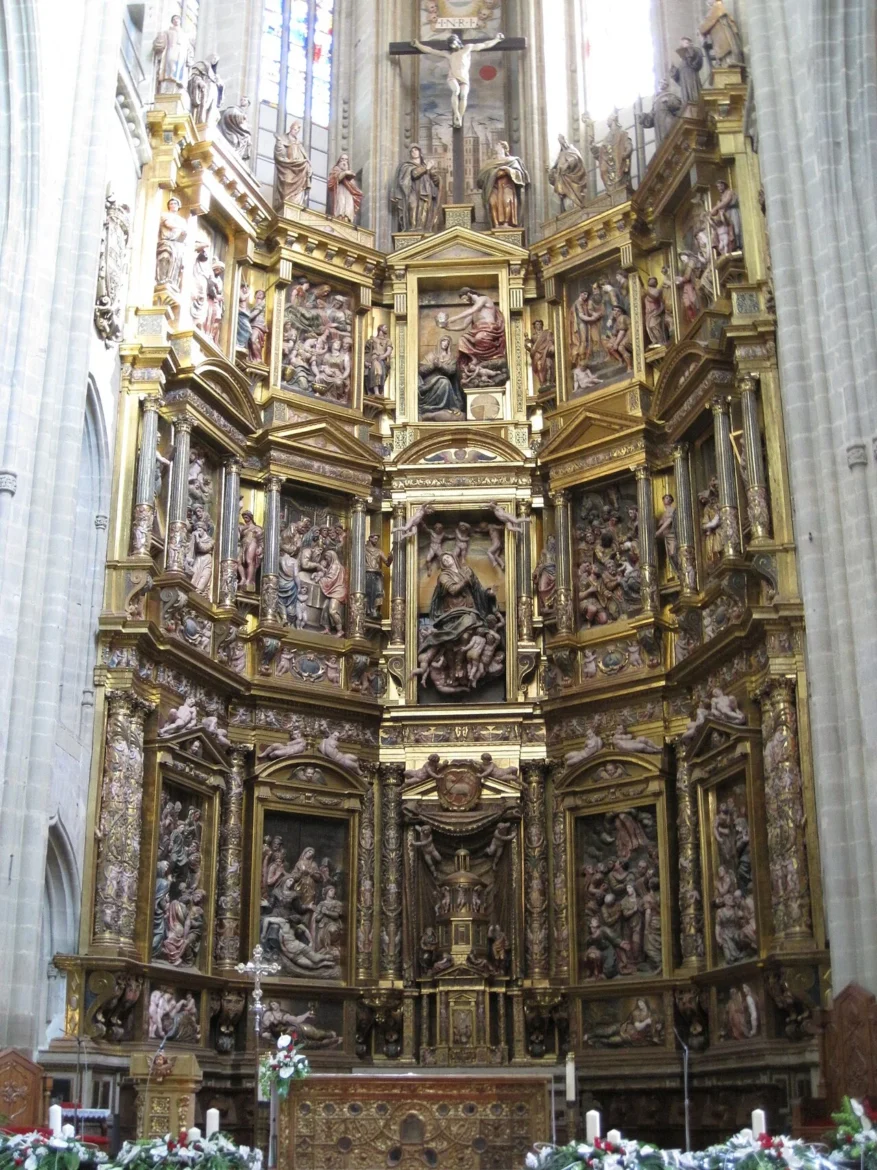
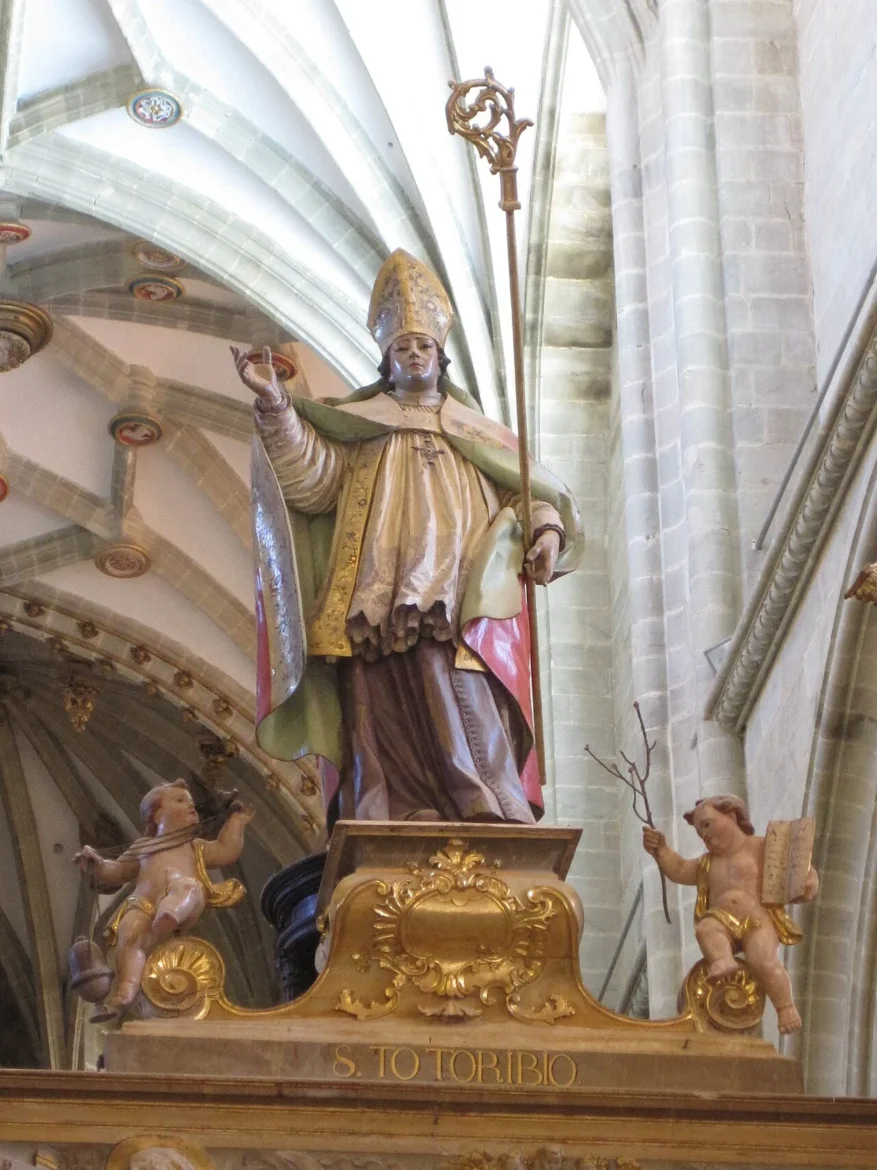
Among the most notable works is the main altarpiece, made by Gaspar Becerra in the 16th century. Its design and organization show the renewal of religious art during the Renaissance. Sculptures, liturgical elements and other pieces are also preserved that help to understand the richness of a cathedral seat active for generations.
The tour of the monumental complex can be completed with the Cathedral Museum, depending on the entry modalities and the current schedule. The documentation, sculpture and objects of worship allow the building to be related to the history of the diocese and the region.
Astorga, between the French Way and the Vía de la Plata
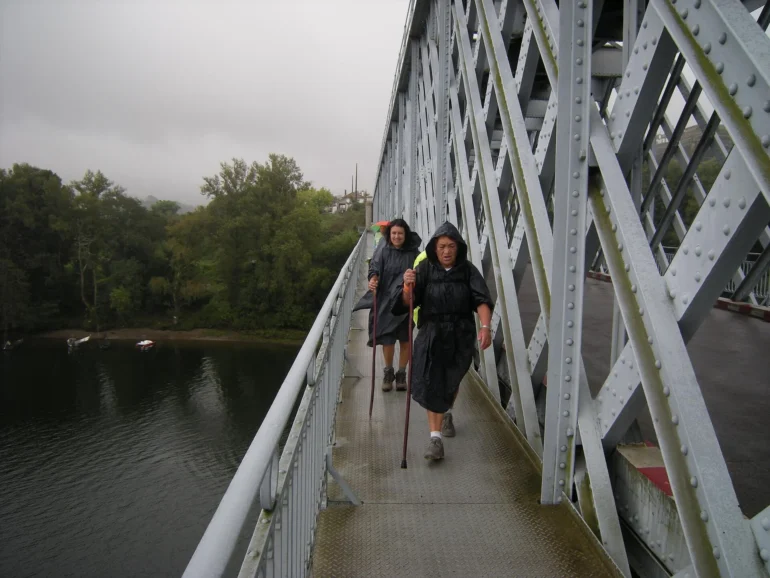
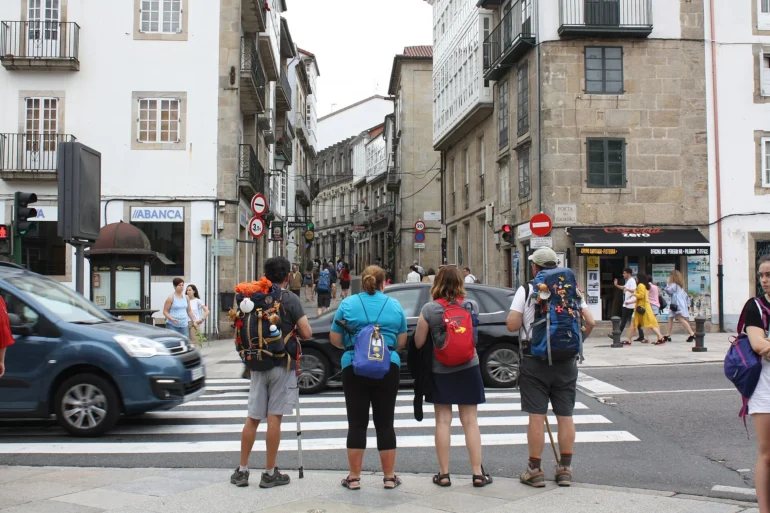
The city occupies a strategic place for pilgrimages. Here the traditions of the French Way and the Vía de la Plata come together through their continuation towards Santiago. This crossroads condition explains part of the cultural and commercial importance of Astorga over the centuries.
Before leaving for the towns around the Maragatería, the pilgrim can visit the Cathedral Square and the historic center. It is recommended to confirm schedules, rates and availability of visits on the official website, as they may change due to celebrations or temple activities.
The building is a lesson in art history: it allows us to distinguish the constructive logic of the Gothic, the organization of the Renaissance and the ornamental expressiveness of the Baroque, all within a monument that continues to fulfill its religious function.
Astorga Cathedral is a place to stop and understand how the Camino has connected cities, styles and generations.
Sources: Spain.info, Astorga Cathedral; Astorga Cathedral, interior architecture; Diocese of Astorga, cathedral complex.
Images: Image: Wikimedia Commons (author and license in the original file) | Photography: Wikimedia Commons (author and license in the file).