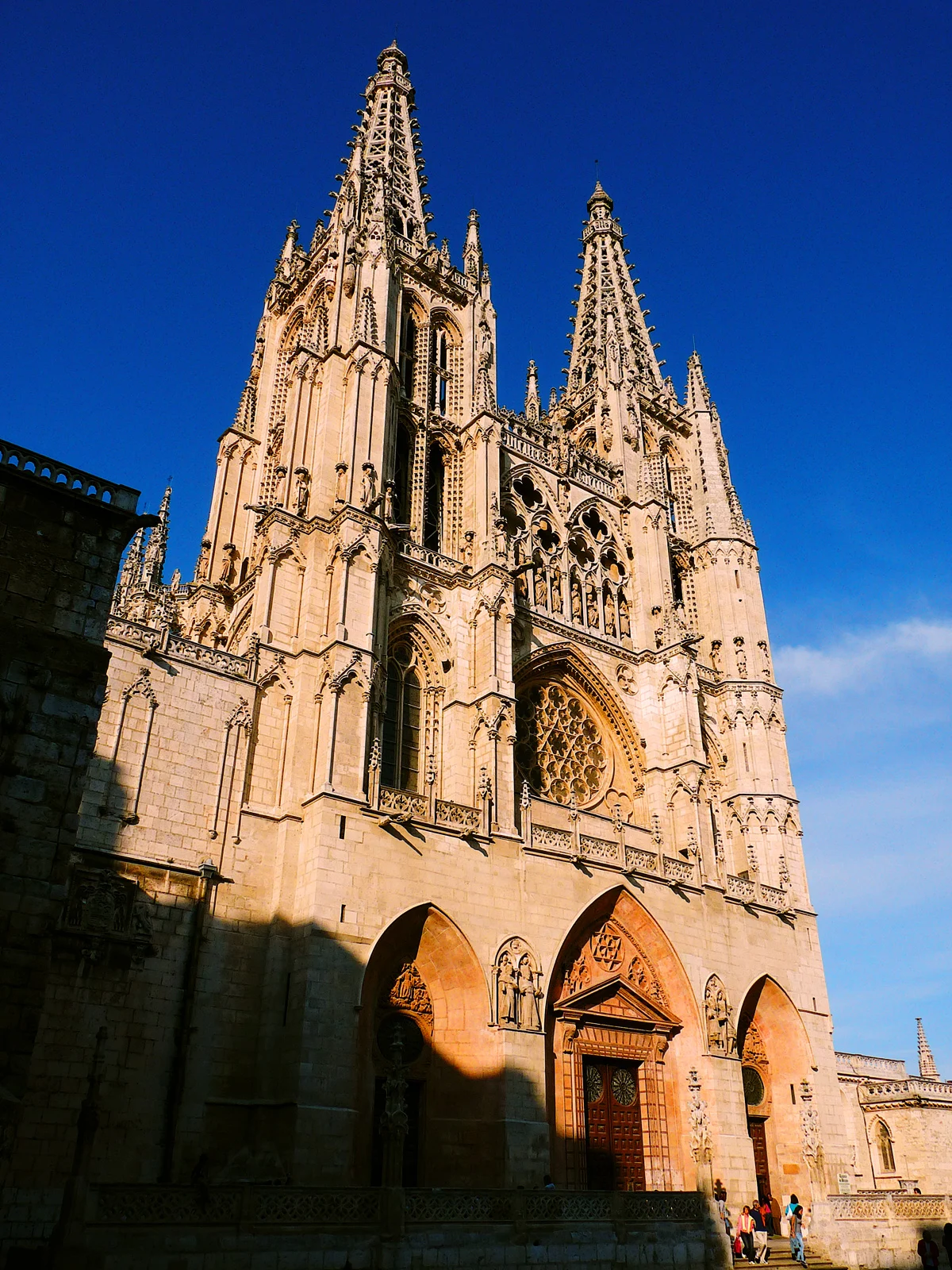
The Cathedral of Santa María de Burgos occupies an essential place in the history of the Camino de Santiago. Its spiers, its doorways and the numerous works of art collected over eight centuries turn the temple into a cultural stop that deserves more than just a photograph from the square.
A project that began in 1221
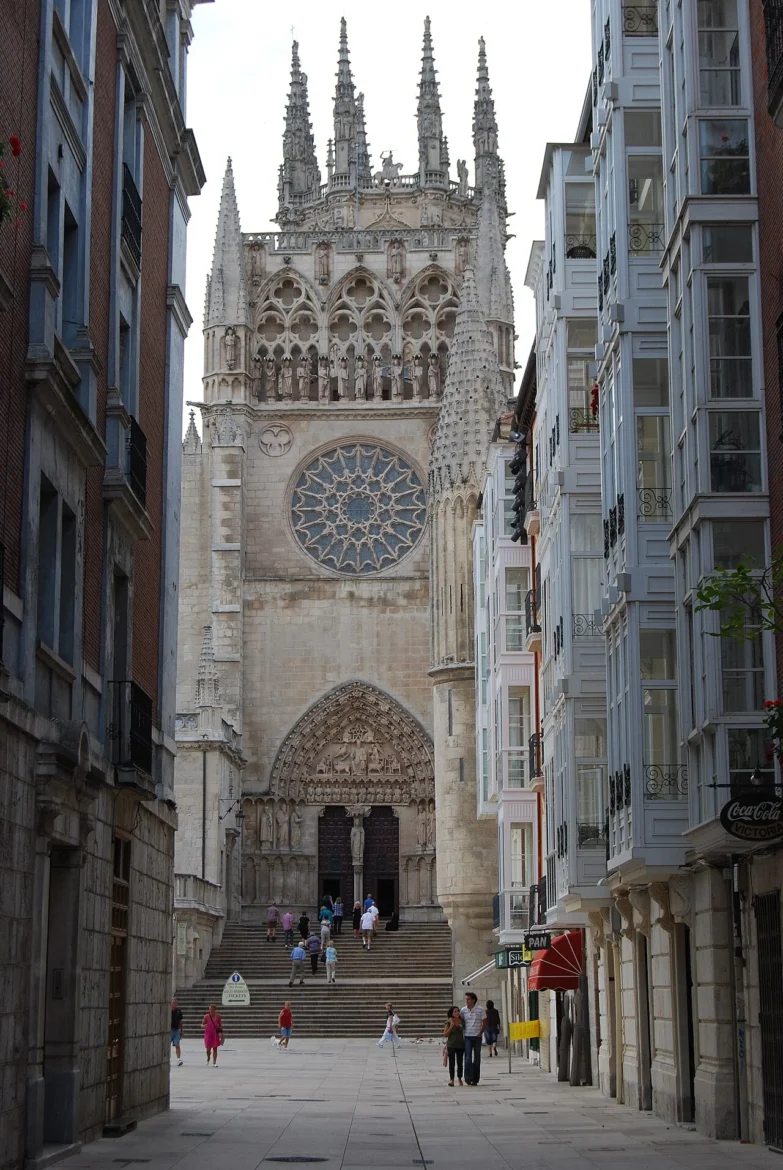
The first stone of the Gothic cathedral was laid in 1221 at the initiative of King Ferdinand III and Bishop Maurice, on the site of a previous Romanesque church. Its architecture incorporated models developed in the great French cathedrals, with a language that adapted to the tastes and needs of Castile.
The construction was not resolved in one go. The building grew through different campaigns, and between the 15th and 16th centuries it reached some of its best-known images. The openwork spiers of the towers and the large sculptural solutions recall the work of the Colonia family, linked to the transformation of the complex.
UNESCO added Burgos Cathedral to the World Heritage List in 1984. Unlike many other cathedral properties inscribed next to a historic city, Burgos enjoys its own inscription. This recognition refers both to its extraordinary architecture and to the set of works of art preserved inside.
What to look for during your visit
The western façade, with its two towers and spiers, is the most recognizable image, but a visit offers other perspectives. The Sarmental door preserves one of the great sculptural programs of Spanish Gothic. The Coronería door and the Pellejería door show different moments in the artistic evolution of the temple.
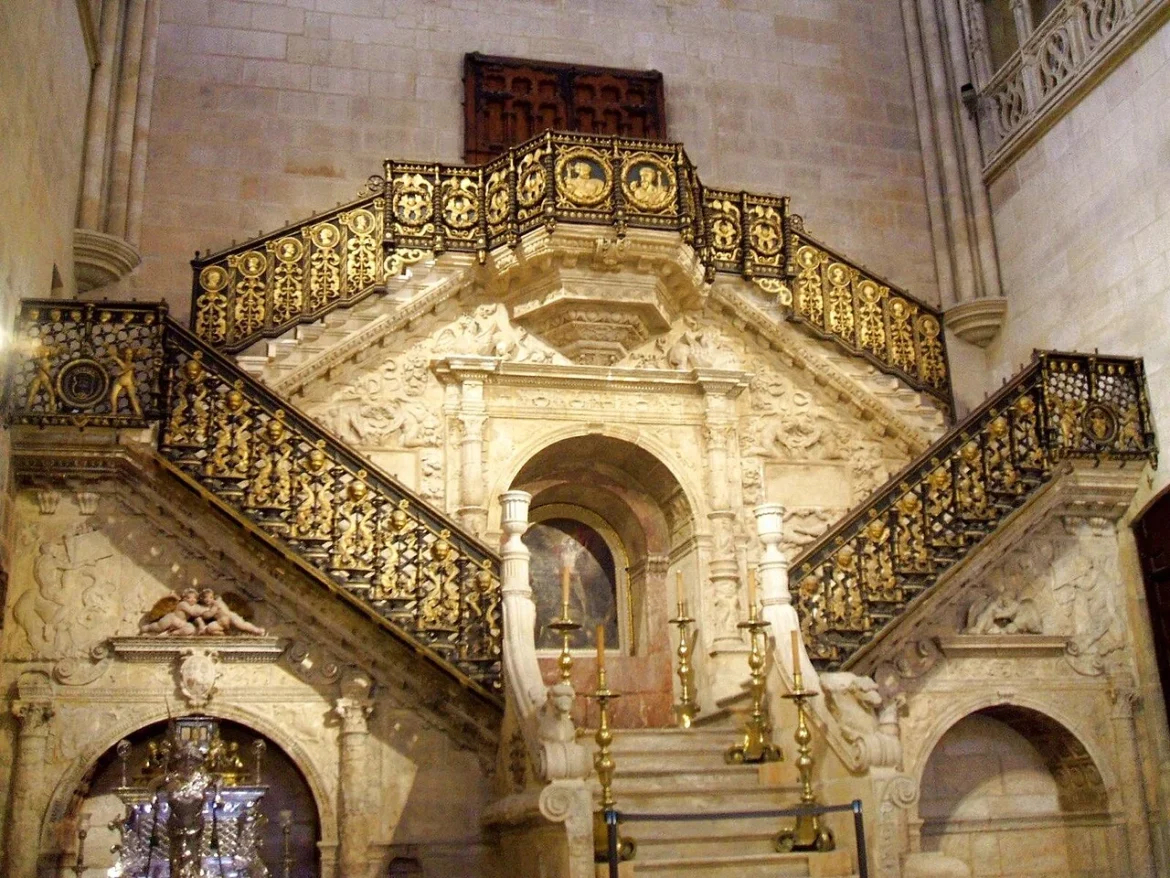
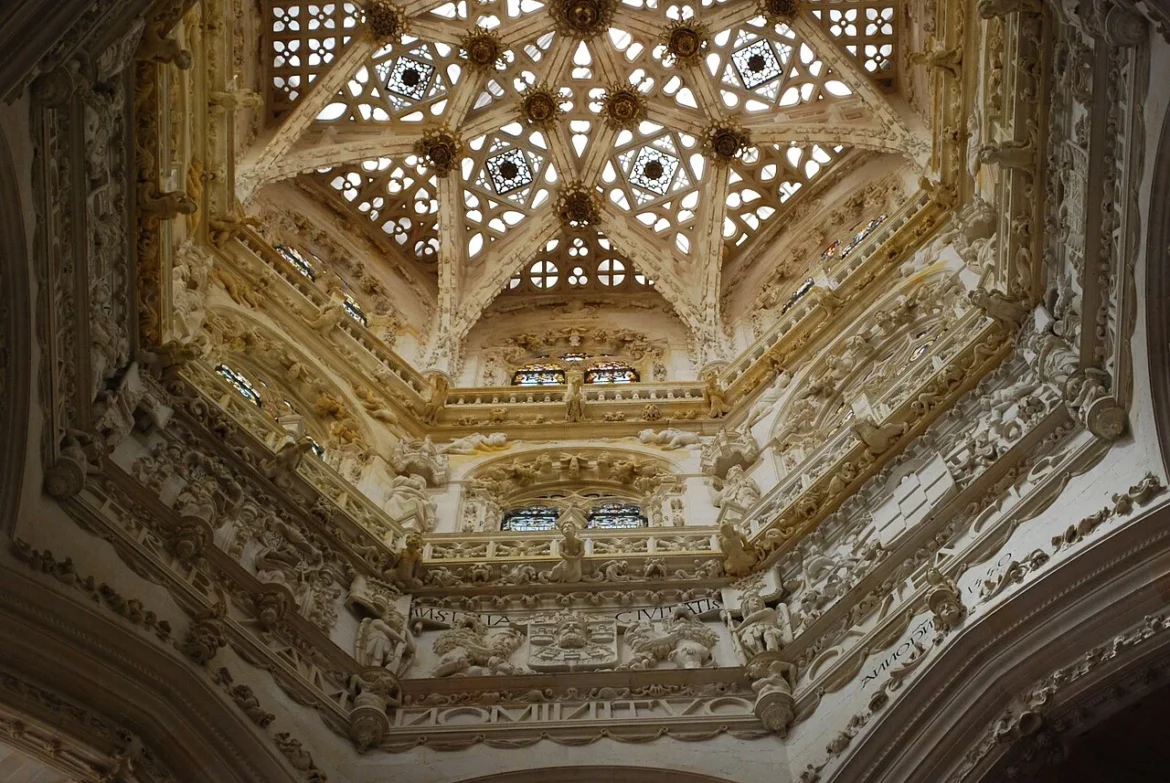
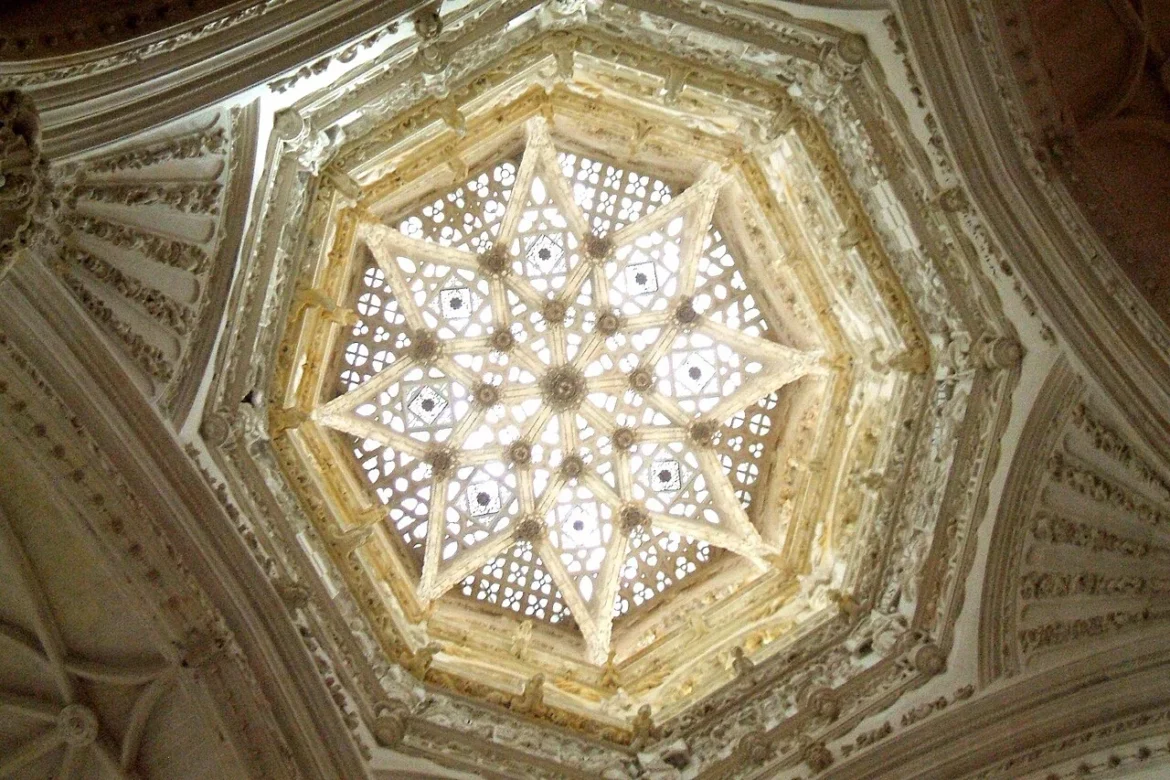
Inside, it is worth stopping at the dome, the Golden Staircase by Diego de Siloé and the Chapel of the Constables. The latter allows us to understand how the patronage of large Castilian families promoted new funerary and representation spaces. Altarpieces, tombs and stalls enrich the reading of a building that was transformed over the centuries.
In the cruise there is the grave of Cid Campeador and his wife Jimena, closely linked to the historical memory of Burgos. The Flycatcher clock also attracts attention, a mechanical character that is part of the temple's popular tradition.
The cathedral in the pilgrim city
The relationship with the Camino Frances begins outside the building. Burgos was an urban center of great importance for those who crossed Castilla in the direction of Santiago. Churches, hospitals and historic streets formed a welcoming network that is still recognized in different spaces of the city.
Today's pilgrim can approach the cathedral after touring the historic center and continuing through the western neighborhoods towards the fields of Castilla. Spending time visiting helps you understand that the Camino is also a succession of cities whose monuments narrate centuries of cultural exchanges.
Practical tips
It is advisable to reserve time for the exterior and for the interior tour. The cultural visit may have different entrances and times than the religious events. Before going, check the calendar and current conditions on the cathedral's official channels. Do not confuse access to worship with tourist access.
To appreciate the towers, the Plaza de Santa María offers a frontal perspective. From other points of the historic center you can discover the ambulatory, the chapels and the roofs. If you are traveling with a backpack, check the access and luggage custody rules before entering.
The Cathedral of Burgos is not only a place of passage. In it you can follow the transformations of European Gothic, Castilian art and the city itself over the centuries.
A stop in Burgos allows you to explore, in the same building, a good part of the artistic history of the French Way.
Sources: UNESCO, Burgos Cathedral; Ministry of Culture, World Heritage; Provincial Council of Burgos.
Images: Image: Wikimedia Commons (author and license in the original file).