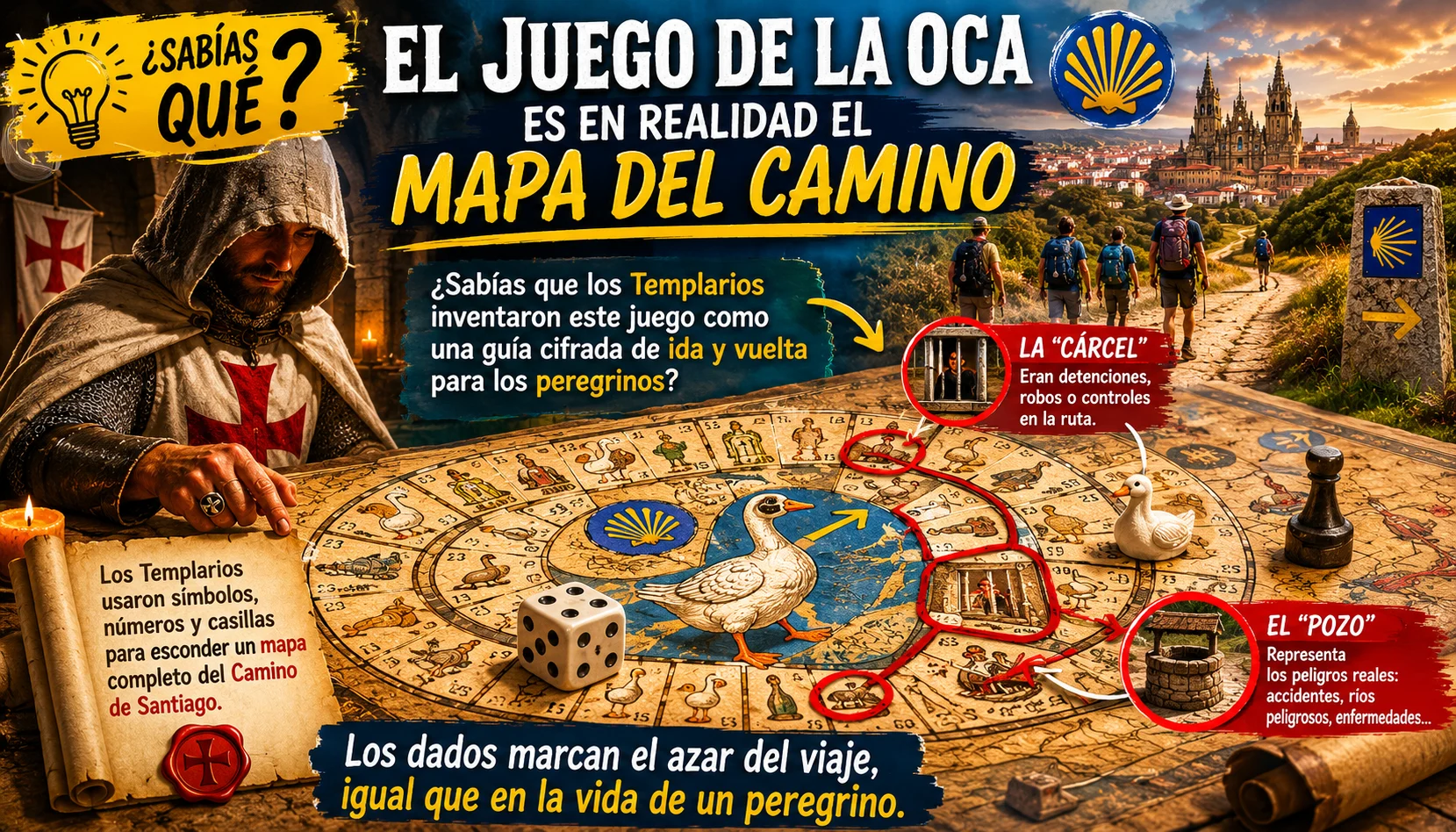
A fascinating theory links the Templars, the pilgrims and one of the most popular games in Europe
Few people imagine that a simple dashboard Goose Game may be related to the Camino de Santiago, but for decades there has been a theory that continues to arouse the curiosity of historians, pilgrims and lovers of medieval mysteries.
According to this hypothesis, the popular game would not only be entertainment, but a symbolic representation of the Camino de Santiago designed to transmit information to pilgrims during the Middle Ages. Some researchers even maintain that the original idea could have been linked to the Knights Templar, although there is no conclusive historical evidence to prove it.
A board full of Jacobean symbols
Defenders of this theory point out that many of the squares in the Goose Game have surprising parallels with the experiences that the pilgrims lived during their journey to Santiago de Compostela.
The goose, an animal that appears repeatedly throughout the board, is related in some medieval traditions to orientation, paths and certain symbols used on pilgrimage routes.
Furthermore, the spiral route reminds some scholars of the initiation journey that the pilgrims took through Europe until they reached the tomb of the Apostle Santiago.
The dice represent the chance of the Path
In the Middle Ages, undertaking the Camino de Santiago was a real adventure.
The pilgrims faced illnesses, attackers, accidents, storms, river flooding and multiple unforeseen events. For this reason, some authors interpret that the dice of the Goose Game symbolize precisely the unpredictable factor that accompanied each day of the trip.
Each roll could bring the pilgrim closer to his destination or delay it, in the same way that happened in reality.
The well, prison and death
One of the most striking parts of this theory is the interpretation of the special boxes.
The jail It would represent the unjust detentions or conflicts that some travelers could suffer.
He well It would symbolize the physical dangers of the Camino, from accidents to illnesses that forced the march to stop.
The death, present in some old versions of the game, would remind us of the enormous risks involved in traveling through Europe during the Middle Ages.
For many medieval pilgrims, completing the Camino was a true test of survival.
Was it really the Templars?
This is where the debate begins.
Although numerous popular publications attribute the origin of the game to the Templars, historians remember that there are no documents that allow this relationship to be definitively demonstrated.
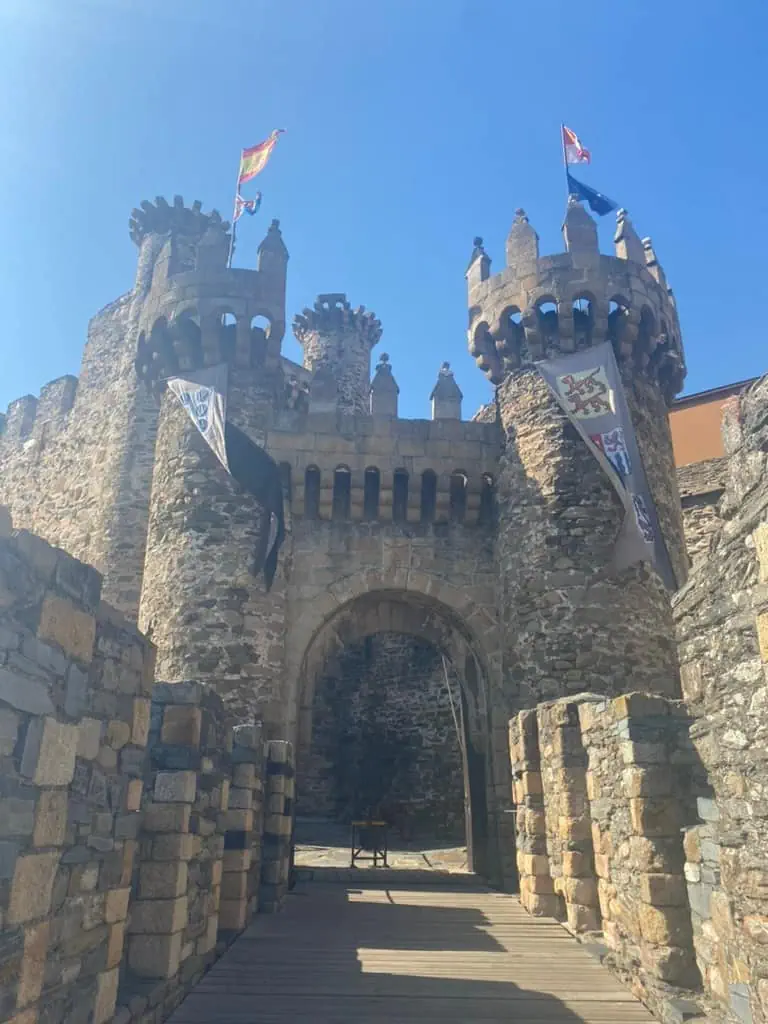
What is proven is the enormous importance that the religious and military orders had in the protection of pilgrims, the construction of hospitals, bridges and shelters along the Jacobean routes.
This has fueled for centuries all kinds of legends related to hidden messages, secret symbols and knowledge transmitted through the Camino.
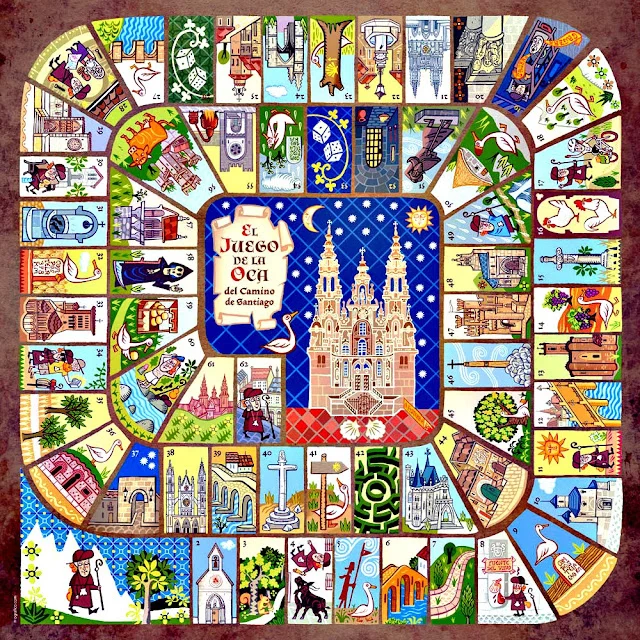
A mystery that lives on
Whether the theory is true or not, the link between the Goose Game and the Camino de Santiago continues to be one of the great mysteries of the Jacobean universe.
Many pilgrims continue to discover surprising details on the board and seek connections to places, symbols and traditions that appear along the route.
We may never know if the Templars actually designed this game as an encrypted guide for walkers.
But what does seem certain is that, just as it happens on the Camino de Santiago, in the Goose Game the journey is as important as reaching the goal.