Churches and monasteries that have accompanied pilgrims for more than a thousand years
The Camino de Santiago is not only a pilgrimage route, it is a journey through time. Along its different routes, thousands of ancient temples still stand, remembering that this path has been traveled for more than a thousand years by people in search of faith, meaning and experience.
From small Romanesque hermitages to churches linked to medieval orders, the Camino preserves a unique heritage in Europe. These temples are not museums, they are still alive. They step on each other, visit each other, pray to each other.
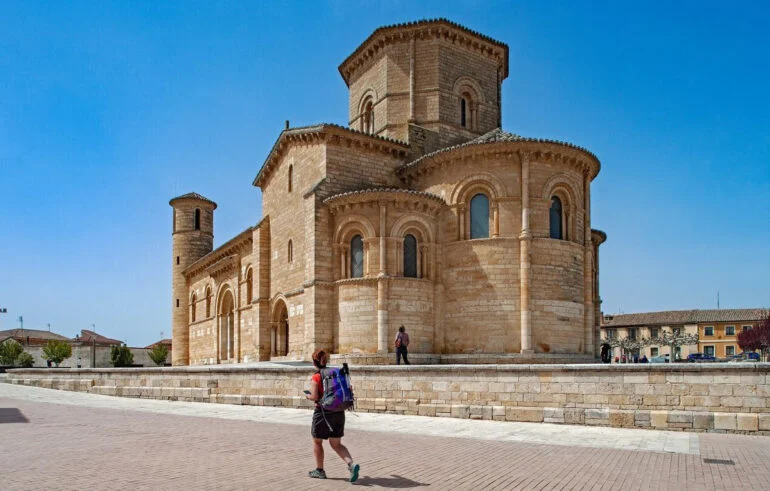
The Romanesque: the stone language of the Camino
One of the most representative styles of the Camino is the Romanesque. Emerging between the 11th and 12th centuries, this architectural style accompanied the rise of pilgrimages.
Along the French Way, especially in sections such as Navarra, Castile and Galicia, Churches built in stone appear, with a sober and robust appearance. Its function was clear: to serve as a spiritual refuge for the pilgrim.
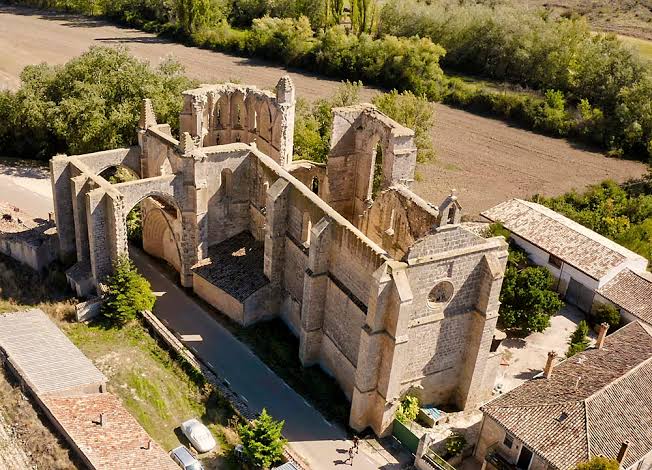
Many of these churches retain their original structure, with semicircular apses, barrel vaults and doorways sculpted with religious symbols.
Temples linked to pilgrims since the Middle Ages
It is no coincidence that these temples are located at strategic points along the Camino. Since the 11th century, they were built next to pilgrim hospitals, crossroads or entrances to cities.
A clear example is the Church of Santiago de Ledigos, in the middle of the French Way, which already in the Middle Ages was linked to the care of pilgrims and to the organization of the Jacobean territory.
These temples were not only places of worship, they were also spaces of rest, protection and community.
The imprint of religious and Templar orders
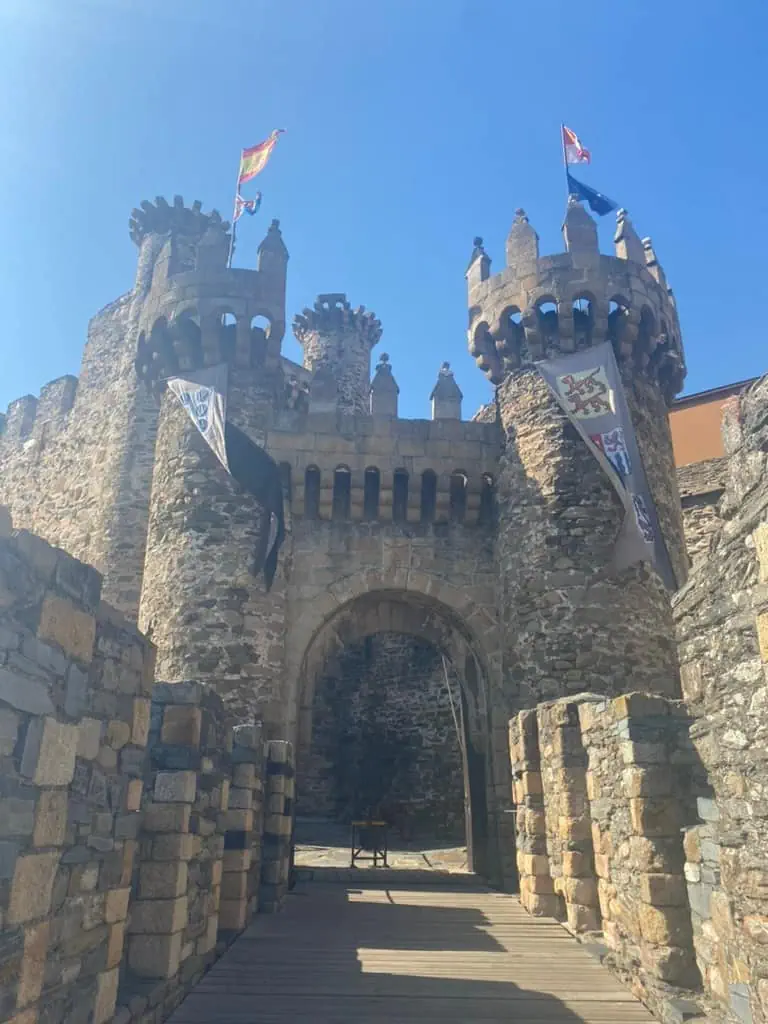
Many of these temples are linked to orders such as the Templars or the Order of Santiago. In some cases, they even served as centers of religious and military power.
One of the most representative examples is the Church of Vilar de Donas, built in the 12th century and linked to the Order of Santiago, where even knights of the order were buried.
This type of construction reinforces the idea that the Camino was not only a spiritual route, but also a medieval strategic network.
Small hermitages, big stories
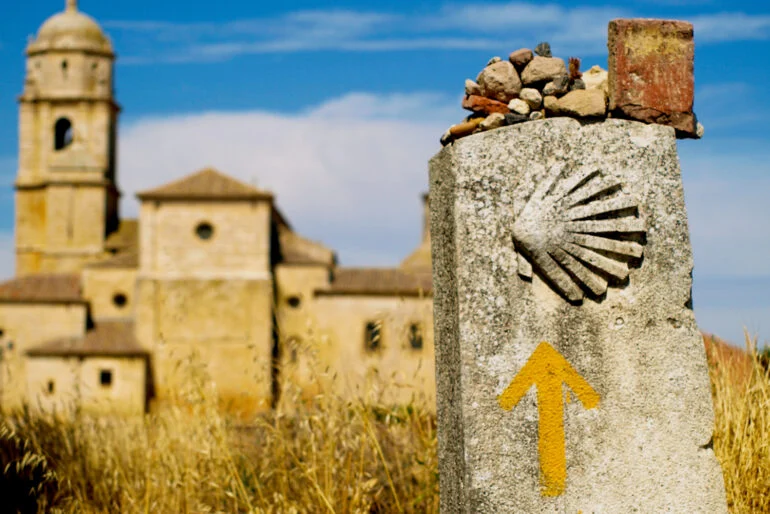
Not all the temples on the Camino are large churches. In fact, many of the most authentic buildings are small hermitages, many of them with more than 800 years of history.
Some of these hermitages were born as pilgrim hospitals or resting points, and over time they became places of worship.
These constructions, often isolated in the middle of nature, represent one of the purest symbols of the Camino.
A heritage that is still alive
The most striking thing about these temples is that they are not ruins. They are still in use.
In many cases:
- masses are celebrated
- Credentials are stamped
- Pilgrims are received
- Centuries-old traditions are maintained
This makes the Camino something different from any other historical route.
Here history is not observed... it is lived.
Spirituality beyond religion
Although many pilgrims do not walk the Camino for religious reasons, these temples still have a strong emotional impact.
Entering a Romanesque church after a long stage, in silence, with light coming in through small windows... is an experience that is difficult to explain.
It is a mixture of:
- History
- Art
- Spirituality
- Accumulated fatigue
And therein lies the key to the Camino.
More than 1,200 years of history on a single route
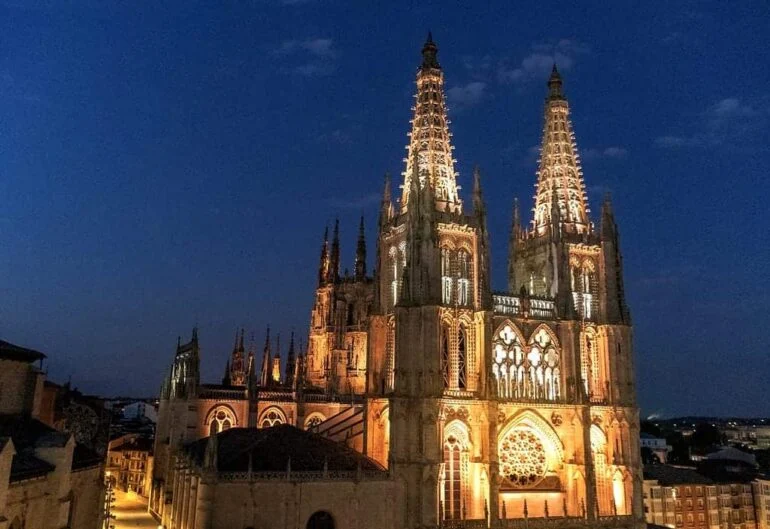
The Camino de Santiago has more than twelve centuries of documented history, and much of that history is preserved in these temples.
Each church, each hermitage, each stone... is part of a continuous story that is still alive today.
It is not a distant past. It is present.
A journey between stone, faith and time
Walking the Camino de Santiago is crossing an invisible line that connects centuries.
Millennial temples are not just ancient constructions. They are witnesses.
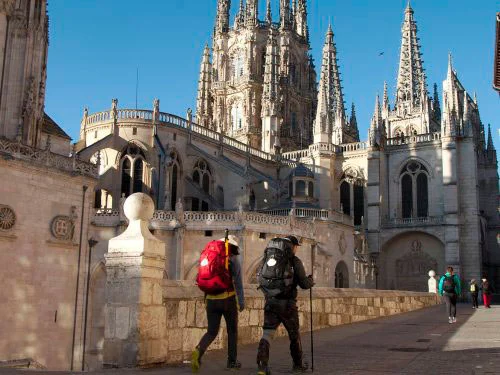
They have seen medieval pilgrims, knights, merchants, travelers pass by... and today they continue to see backpacks, canes and boots pass by.
And probably, in another thousand years, they will still be there.