Eating on the Camino de Santiago: A Gastronomic Festival (and Digestive Surprises)
Ah, the Camino de Santiago! That odyssey of self-knowledge, self-improvement and, let's be honest, a hidden culinary marathon. Because yes, pilgrim, while your feet take you towards Compostela, your stomach goes on its own pilgrimage, sometimes glorious, sometimes... well, let's say "unexpected."
The Gluttonous Pilgrim: Breakfasts of Champions and Dinners of Legends
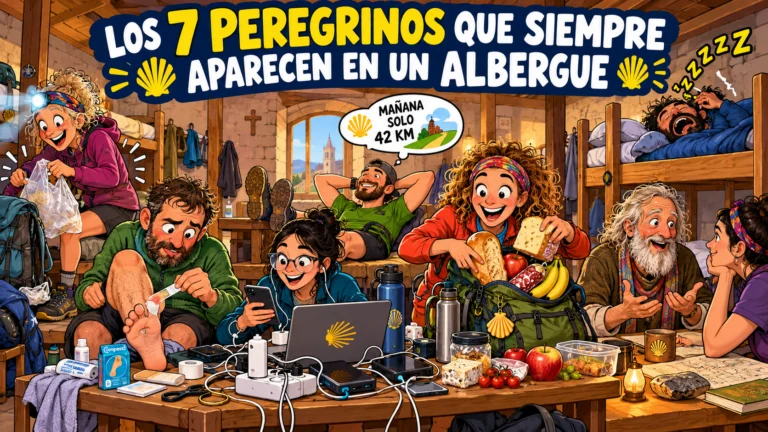
Forget about the diet. On the Camino, the word “calorie” is just a suggestion. You start the day with a breakfast that could feed a regiment: lattes the size of a bathtub, toast that looks like sheets, and sometimes, for the brave, even a piece of omelet that looks at you with "I know you need me" eyes. It is the fuel for those stages where each slope whispers to you: "you are going to regret that second helping of bacon."
And at the end of the day, the crowning moment arrives: the pilgrim's dinner. For eight, ten or twelve euros (a bargain!), they serve you a feast. First course, second course, dessert, bread and wine. Often the wine is so young that it still has a pacifier, but who am I to complain? After 25 kilometers, even the washing water seems like nectar from the gods. The key is to eat quickly before the hostel lady asks you if you want a second lentil meal (and yes, you always do).

The Cravings of the Trail: When Chocolate is a National Priority
But not everything is menus of the day. The Camino is a battleground against cravings. That bag of chips in the minimarket in the lost town becomes a treasure more valuable than any relic. Ice cream after a stint under the scorching sun is an epiphany. And let's not forget the chocolate. Pilgrim, if you haven't devoured an entire bar of chocolate while your feet beg for mercy, have you really walked the Camino? It's energy, yes, but also a small dose of happiness that helps you ignore the blisters.
Epic Snacks and Culinary Challenges
Lunches are usually sandwiches. Giants. Chorizo, cheese, whatever there is. The important thing is that it is easy to transport and gives you the strength to continue. But be careful with the potato omelet sandwiches that you have been carrying in your backpack for hours under the sun. They are a… unique experience. Some call it “Camino flavor”; others, "controllable health risk."
And then there are the challenges: Will you be able to finish that paella for one that seems like it could serve four? Will you dare to try the Padrón peppers that "some sting and others don't"? (Spoiler: those who touch you always sting). And will you overcome the temptation of the Santiago cake in every sweet shop? The answer to all this is a resounding: yes, and without regrets.
Life Lessons (and Slow Digestion)
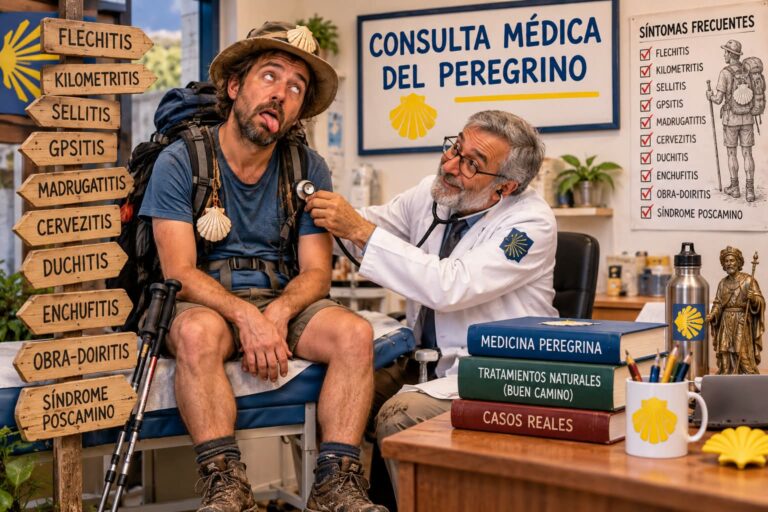
The Camino teaches you that food is more than sustenance; It is a social moment, a reward, a way to connect. It teaches you to appreciate a simple piece of bread and celebrate every bite. But it also teaches you that sometimes what goes in with joy comes out with… well, a little less joy. The pharmacies of the Camino are well aware of the digestive needs of pilgrims. It's not glamour, it's pure survival.
So, when you put on your boots and shoulder your backpack, remember: the spirit of the Camino lies as much in the final kilometer as in the first spoonful of that noodle soup that tasted like blessed glory. Bon appetit, pilgrim! And may your legs resist as much as your appetite.