The 100 km under suspicion: mud, suffering and the uncomfortable truth of the pilgrim
Let's say it clearly from the beginning:
👉 not everyone who arrives in Santiago... deserves the Compostela.
Yes I know. Controversial. But someone had to say it.
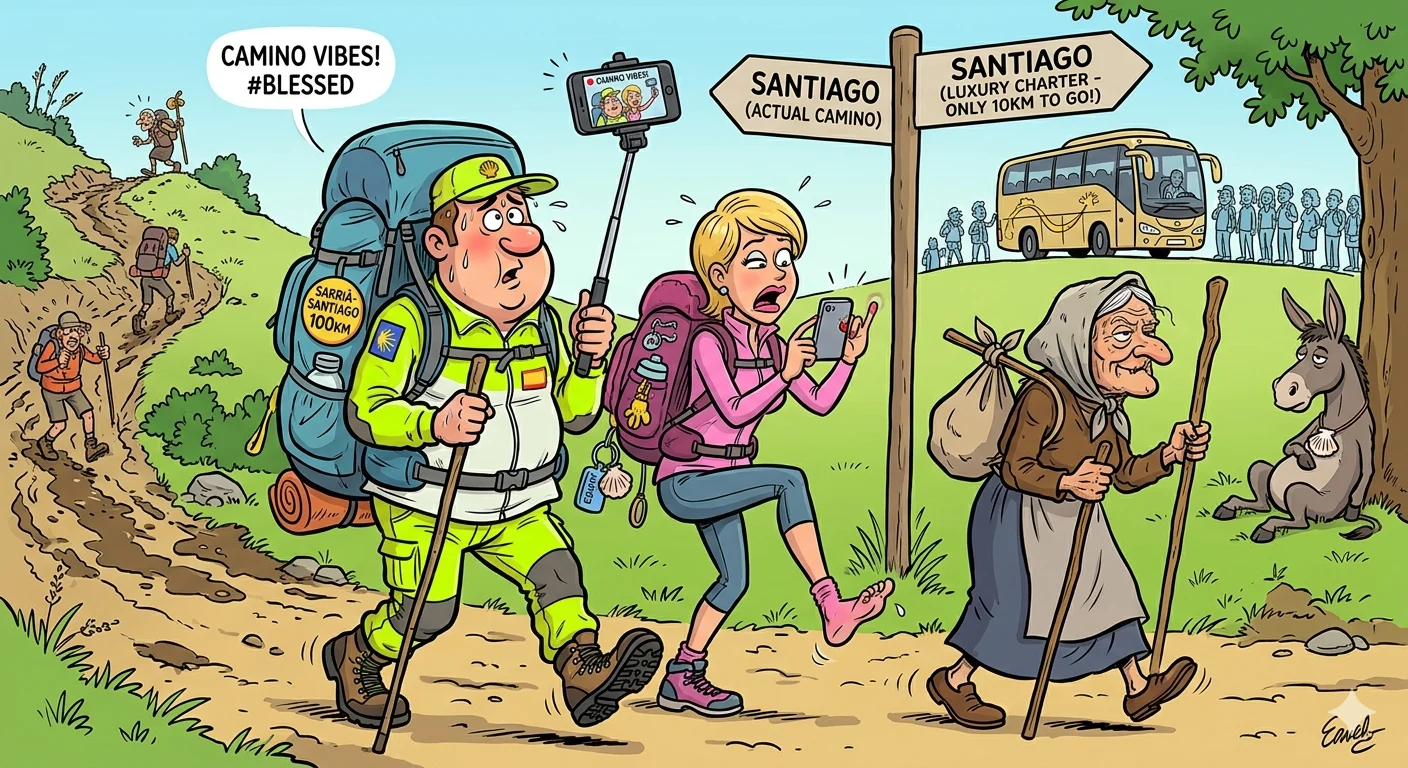
Because this last 100 km of the Camino de Santiago It's gotten a little out of hand. You arrive in Sarria, you take four photos, you buy the shell, you learn to say “Buen Camino” with an international accent… and you already look almost holy.
And of course... then you arrive in Santiago cleaner than when you left home.
Suspicious.
The definitive test: are you a pilgrim or a tourist with a backpack?
First question:
👉 Have you gotten mud up to your ears?
If the answer is NO... we're off to a bad start.
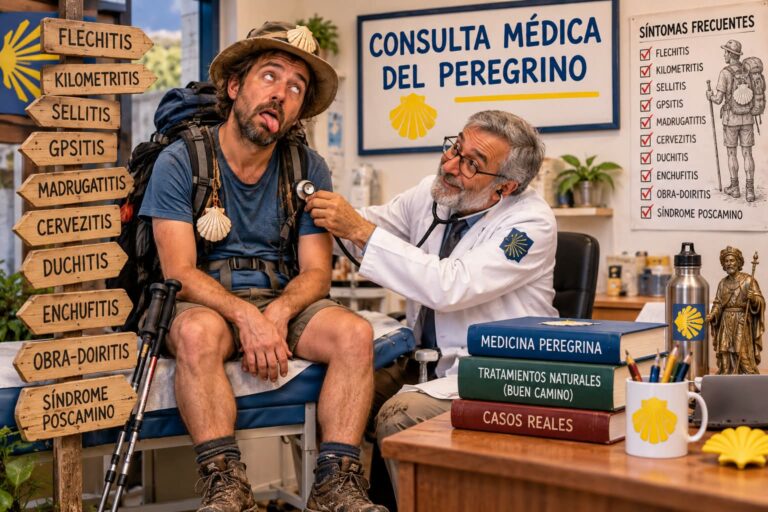
Mud is not optional. The mud is identity. If you haven't slipped at least once, if you haven't had that moment of “I fall but I keep walking with dignity”… I'm sorry, but your Camino is under review.
Second question:
👉 Have you had blisters?
No chafing. Blisters. One of those that have their own name. If you haven't spoken to your feet as if they were people ("hold on, please, there's only 5 km left"), something's wrong.
Third question:
👉 Have you cursed the Camino at any time?
Because the Camino is not just spirituality. It is also thinking:
“Who told me to do this?”
If you haven't had that moment... suspicious again.
The 100 km: the great debate that nobody wants to open
Here comes the good thing.
The system says: you do the last 100 km… and you have your Compostela.
Perfect.
But of course, then you see people who:
- starts in Sarria
- his backpack is cleaner than an operating room
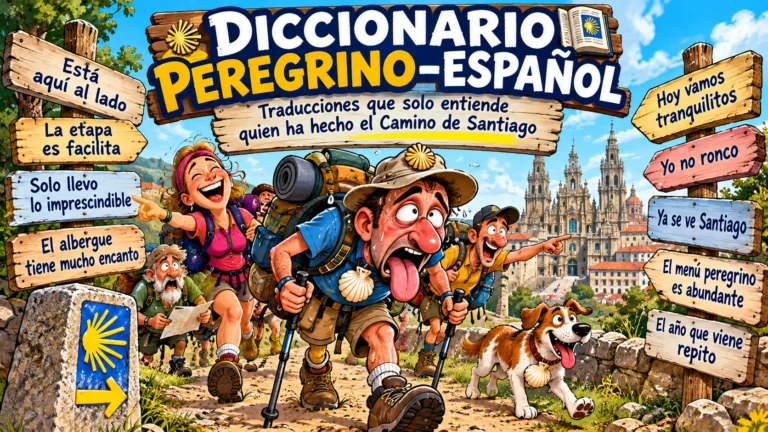
- and ask if there is an Uber to the next hostel
And you, who come from Roncesvalles, with the look of having lived through three wars... you think:
👉 “Are we competing in the same league?”
There are those who propose 70 km.
Others say 300 km.
And then there are the extreme purists who think that if you haven't crossed half of Europe on foot... it doesn't count.
But let's be honest.
The problem is not the distance.
👉 is the attitude
The real pilgrim vs the “Instagram” pilgrim
The royal pilgrim:
- smells average
- wear clothes with history
- knows what it's like to walk in horizontal rain
- and he ate what there was, not what he wanted
The “Instagram” pilgrim:
- coordinated outfit
- perfect backpack
- constant smile
- and phrases like “the Camino is changing me” in stage 2
Yes, we all start the same.
But the Camino puts you in your place.
The final test: getting to Santiago
It doesn't fail here.
You enter the Plaza del Obradoiro... and you see everything.
There are two types of arrival:
- The one who arrives excited, broken, happy... and sits on the floor without really knowing what to do with his life.
- Whoever arrives, takes a photo, story, video... and in 10 minutes is looking for where to have dinner
Both valid.
But it's not the same.
Proposal (totally serious… or not)
From now on, new rules for Compostela:
👉 Level 1: you have done 100 km
We give you the Compostela… but with an asterisk
👉 Level 2: you have suffered a little
Standard Compostela
👉 Level 3: you have arrived with mud, blisters and existential doubts
Premium Compostela + automatic respect
👉Legend level: you don't even know what day it is
We give you the Compostela… and a hug
The uncomfortable truth
The Camino is not measured in kilometers.
It is measured in:
- what you have endured
- what you have thought
- and what has changed you
You can do 800 km… and not know anything.
Or do 100… and have it change your life.
But yes...
👉 If you arrive too fresh... something doesn't add up
Very undiplomatic conclusion
Do you deserve the Compostela?
Only you know.
But there are signs:
If your boots are clean...
If your backpack looks new...
If you haven't doubted even once...
👉 check your Camino
Because the true pilgrim does not arrive perfect.
He arrives tired.
A little broken.
And quite happy.
And above all...
👉 arrives with history