



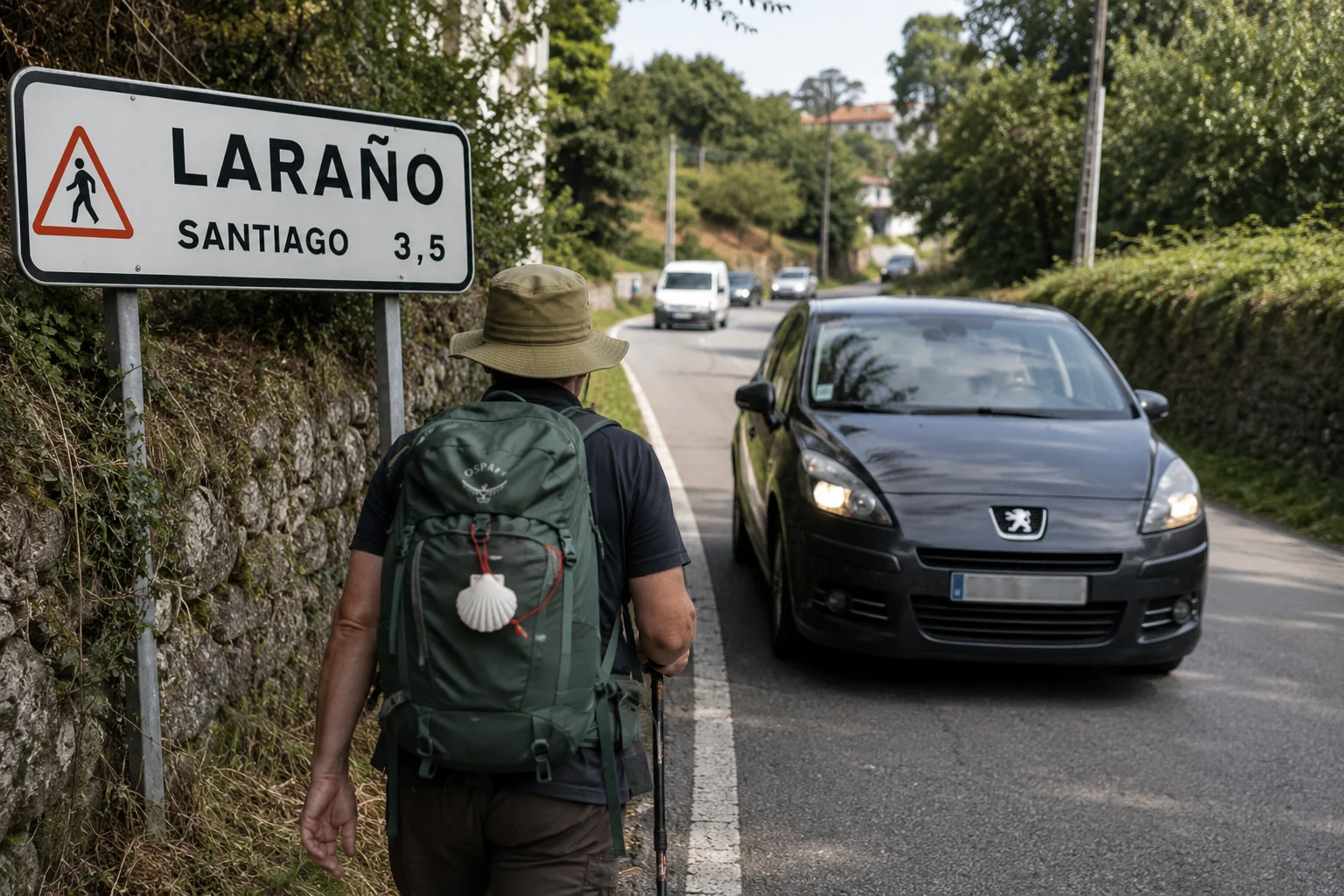
A few kilometers from the end of the pilgrimage, residents of Laraño once again warn of the risk that sharing certain roads with traffic poses for walkers. Narrow roads, absence of shoulders and vehicle circulation make passing through some points around Santiago a situation that has been worrying for some time.
Arriving in Santiago de Compostela should be one of the calmest and most exciting moments of the Camino. After hundreds of kilometers, the pilgrim faces his last steps towards the Cathedral convinced that the great difficulties of the route are behind him.
However, in the environment of Larano, a parish belonging to the Compostela municipality, residents have been warning for some time about a very different reality: pedestrians and vehicles must coexist on narrow roads where in some places there are not enough sidewalks or shoulders to guarantee safe separation.
The concern takes on special relevance for the Camino de Santiago because pilgrims approaching Compostela travel through this area.
Pilgrims and vehicles sharing a space that is too tight
The problem has not appeared this summer.
The residents of Laraño have been demanding improvements in road safety for years. One of the points indicated is the track that connects Pardiñas with A Barcia, also used by vehicles as an alternative when traffic problems occur at other accesses to Santiago.
The A Xunlla neighborhood association has warned that it is a narrow road, without a shoulder and with open ditches. Its president, Julio Fernández, even explained that some pedestrians had had to move towards the ditch to avoid being hit by vehicles.
The difficulty increases when two large vehicles coincide. The neighbors themselves assure that the available width may be insufficient to cross comfortably with trucks or buses.
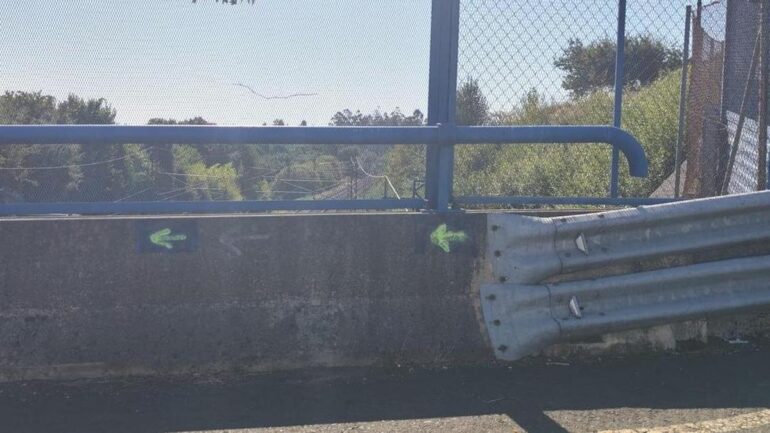
A problem known for years
The warnings are not new.
Already in 2024, residents reported that certain slopes in Laraño lacked separation of lanes, sidewalks and shoulders, forcing pedestrians to walk on the road itself.
Accidents and road departures have also been recorded. In September 2025, after several accidents in a few days, the mayor of Santiago reported that reports had been requested from the Local Police and Civil Guard to study the causes and possible measures.
The situation made the news again this year. In January, residents continued to demand actions to improve the safety of the Pardiñas runway and reported that they were still waiting for solutions.
The contrast of the last kilometers
The situation poses a contradiction that is difficult to ignore.
The Camino de Santiago receives pilgrims from all over the world every year and the Jacobean routes are promoted internationally as a great cultural and tourist itinerary.
However, at certain points close to the destination itself, situations may still occur in which the pilgrim shares space with vehicles without sufficient physical protection.
It's not just about comfort.
When a person walks carrying a backpack, especially after several hours of stage, any narrow section with vehicle traffic requires extraordinary attention.
And it is especially striking that these situations can be found precisely when Santiago is practically within reach.
Neighbors also suffer from the problem
The risk does not only affect pilgrims.
The inhabitants of Laraño use these roads daily to travel to their homes, social centers, bus stops and other services. That is why their demands seek to improve the security of both those who live there and those who walk through the parish.
In recent years there have been complaints related to traffic, deterioration of the pavement and lack of adequate spaces for pedestrians. In April 2026, for example, the City Council announced road rehabilitation actions that included different parts of rural Compostela, including Laraño.
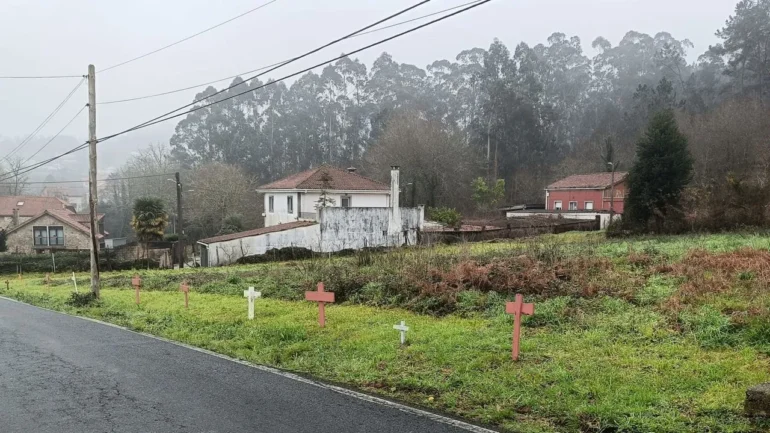
Safety is also part of the Camino
The enormous growth of the Camino forces us to look beyond hostels, signage and tourist promotion.
The last few kilometers also need to be safe.
Because after crossing mountains, roads, towns and cities for days or weeks, no pilgrim should have to face as the last obstacle a car passing too close to your backpack.
The arrival in Santiago begins long before stepping onto Praza do Obradoiro.
And ensuring that those last kilometers can be traveled safely should also be part of protecting the Camino.

















