



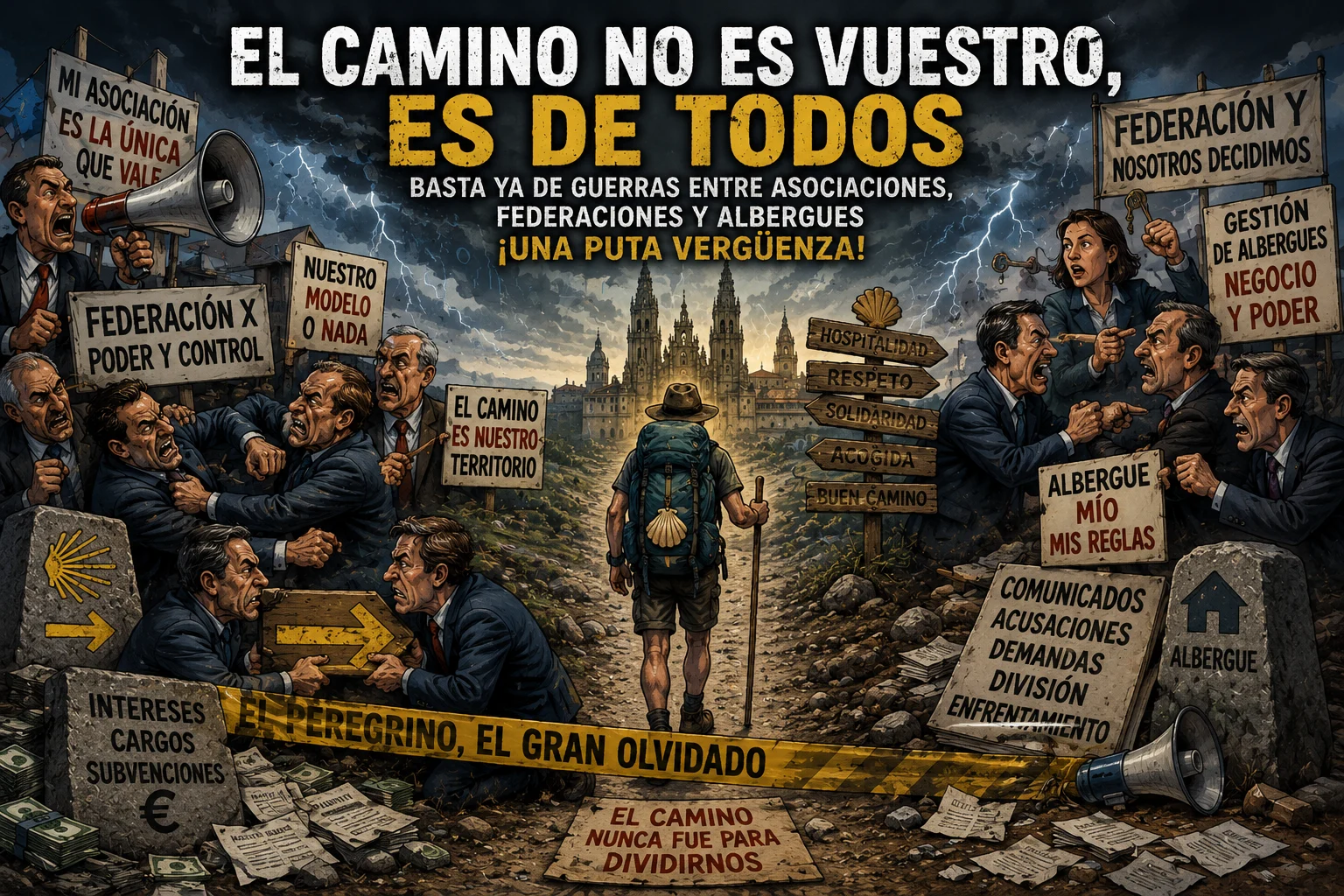
The greatest shame of the Camino de Santiago is not the arrows... it is the war between those who should protect it
While hundreds of thousands of pilgrims travel through the Camino de Santiago Seeking peace, hospitality, friendship and spirituality, those who should be the main defenders of the Jacobean legacy seem to be immersed in a constant battle for power, management and prominence.
It is deeply sad to contemplate how associations, federations, administrations and managers of some shelters turn the Camino into a field of permanent confrontation.
The Camino de Santiago was born to unite people, not to divide them.
However, in recent times we have too often witnessed cross-communications, judicial appeals, public confrontations, accusations and disputes that have nothing to do with the values that have defined the pilgrimage for centuries.
Pilgrims do not travel hundreds of kilometers to encounter internal wars.
They do not walk around looking for confrontations between associations.
They do not arrive in Santiago to find out who is right in an administrative dispute.
They come looking for hospitality.
They seek silence.
They look for people to reach out to them.
They seek the true spirit of the Camino.
And that spirit is being seriously damaged by struggles that should be resolved away from the spotlight.
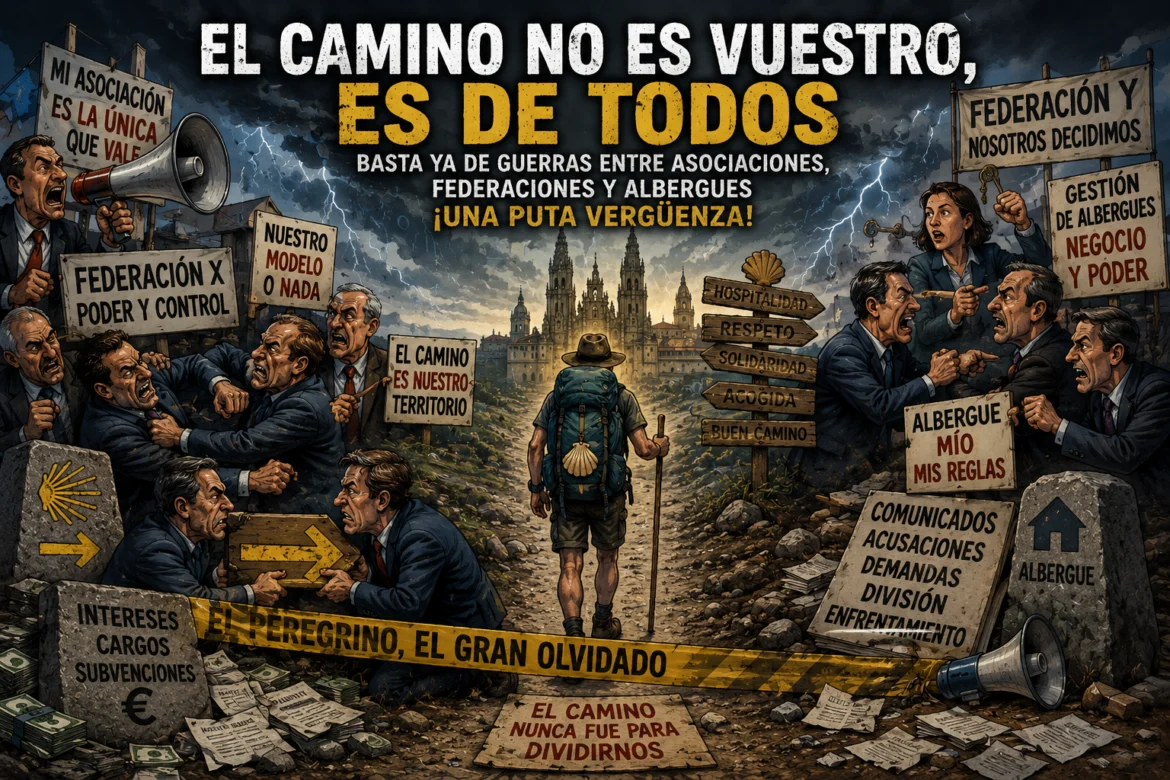
It is legitimate that there are differences of opinion about the management of a hostel, the organization of an association or the defense of certain models of hospitality.
What is incomprehensible is that these differences end up becoming a public spectacle that deteriorates the image of the Camino de Santiago.
Each incendiary statement, each public confrontation and each institutional war harms much more than the entities involved.
They harm the pilgrim.
They harm hospital workers.
They harm the small towns that live off the Camino.
And they damage the international image of a route declared World Heritage.
Perhaps the time has come to remember why the Camino exists.
Not to feed egos.
Not to gain power.
Not to accumulate charges.
But to serve the pilgrim.
Those who are part of the Jacobean movement should be the first to set an example of dialogue, respect and collaboration.
Because the true greatness of the Camino has never been in who directs an institution, but in the volunteer who opens a shelter, in the hospitalero who welcomes with a smile, in the neighbor who helps a lost walker or in the pilgrim who shares his water with another.
That is the essence that has made the Camino de Santiago a unique phenomenon in the world.
Hopefully those who are involved in these confrontations today are able to put aside their differences and remember that the true protagonist has never been an association, a federation or an administration.
The true protagonist has always been, and always will be, the pilgrim.
Because if the Camino loses its values of unity, hospitality and service, we will all have lost much more than an argument: we will have put the soul of the Camino de Santiago at risk.

















