



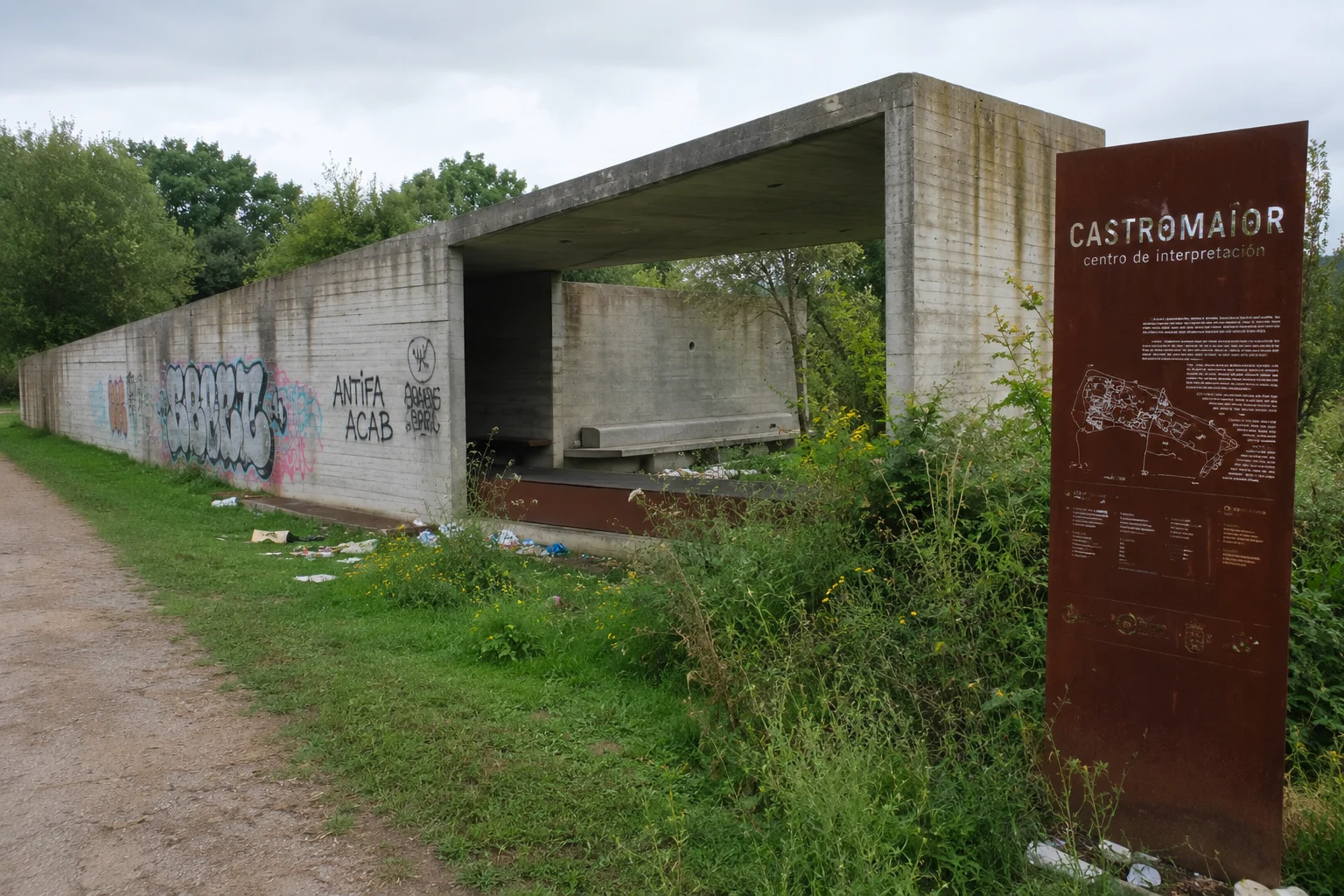
An award-winning architectural work that today offers an image of deterioration to thousands of pilgrims
What was born as a reference for Galician cultural heritage and a welcoming space for pilgrims of the Camino de Santiago is going through a worrying situation today. The interpretation center of the Castromaior fort, located in the Lugo municipality of Portomarín and a few meters from the French Way, presents obvious signs of abandonment, with graffiti, uncontrolled vegetation and accumulation of garbage in its surroundings.
The image contrasts with the aspirations with which this unique building, designed by the prestigious A Coruña architect, was conceived. Carlos Pita, whose proposal even became a candidate for the prestigious Mies van der Rohe Prize for contemporary architecture.
The center opened its doors in 2022 as an innovative space designed to interpret the important Castromaior fortified site, one of the most relevant in the northwest of the peninsula and the only one located directly on the route of the French Way. Its philosophy was for open architecture, integrated into the landscape and accessible at all times for both visitors and pilgrims.
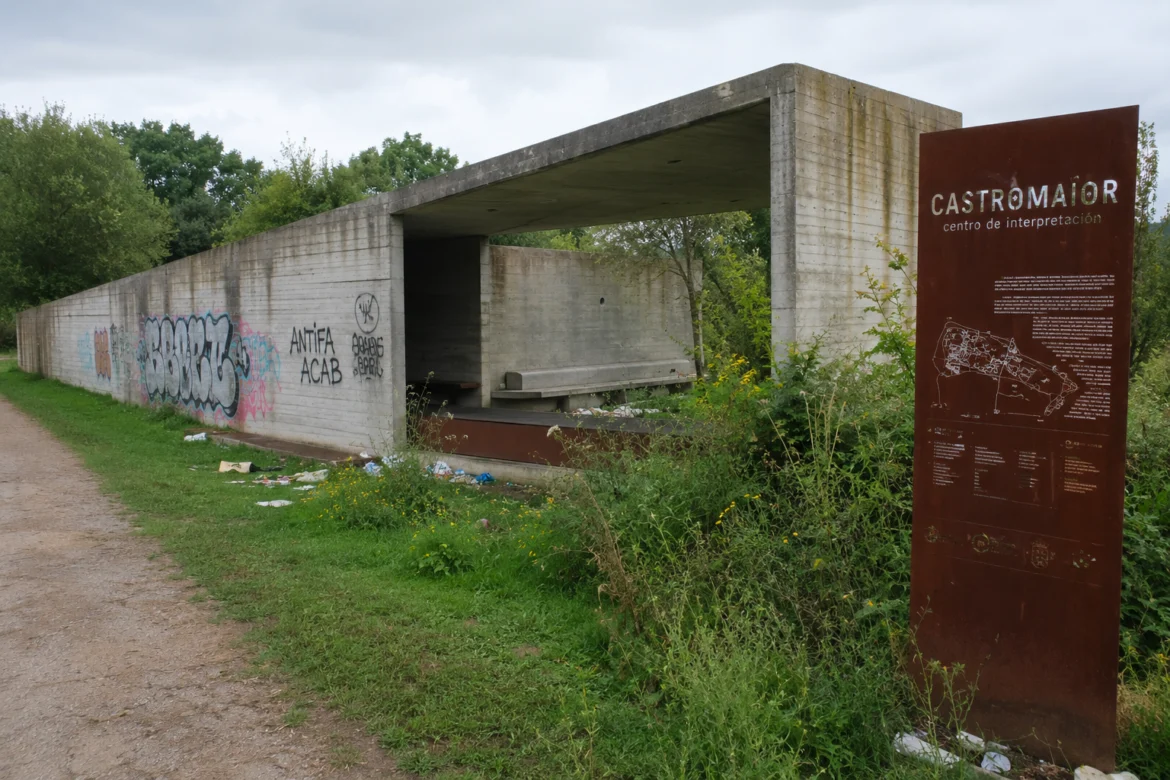
However, four years after its inauguration, the dream seems to have faded. The complete musealization of the building remains pending and the lack of surveillance has favored acts of vandalism that deteriorate the experience of those who pass through this historic enclave every day.
According to the information published by The Progress, from the Portomarín City Council recognize the difficulties of assuming certain maintenance costs and study measures such as the installation of security cameras. Meanwhile, periodic cleaning and clearing work is carried out to try to contain the deterioration.
Carlos Pita himself has acknowledged that perhaps there was excess confidence in the conception of the project, designed to become a place of rest and contemplation within the Camino. The building was born without doors or windows, inspired by popular Galician architecture and the idea that the community and the pilgrims themselves would contribute to its care.
The situation reopens an increasingly frequent debate around the heritage of the Camino de Santiago: Is it enough to build new infrastructure if there are no resources to maintain it later? Because preserving the Camino does not only mean preserving its trails; It also implies protecting those cultural and archaeological spaces that enrich the pilgrim's experience.
Castromaior is not just an interpretation center. It is the entrance door to one of the most important forts in Galicia and a symbol of the encounter between history, architecture and pilgrimage. Seeing it languish is a wake-up call about the need to commit to sustainable management of the Jacobean heritage.
Thousands of pilgrims will continue to pass through this corner of Lugo every season. The question is whether they will find a place that invites them to stop and discover the history of the territory... or a new example of how abandonment can end up overshadowing even the best ideas.

















