




“The Atrium of the Gentiles”: In a message that undoubtedly deserved other specific recipients and as a repeated warning call of a danger, neither new nor one that the most committed associations have not been denouncing for years, the Pope Francis warned days ago at a reception at the Vatican organized by the Work Don Guanella and collected in this newspaper –https://www.diariodesantiago.es/santiago/el-papa-francisco-questiona-el-truero-significado-del-peregrinaje-en-el-camino-de-santiago/- of the dangers that loom over the ancient route to Compostela in terms of what should be the true meaning of the pilgrimage to the tomb of the Apostle Santiago.
Other recipients are pointed out because there is little doubt that it is not precisely the maintenance of these religious and transcendent values that encourage the work of the religious, seminarians and lay people who for fifteen years have been offering help to pilgrims in Galicia and who were, precisely, to whom the Pope addressed in his speech, which undoubtedly could be improved, as we will later try to explain, when asking "Do the people who make the Camino de Santiago make a true pilgrimage or is it something more?"
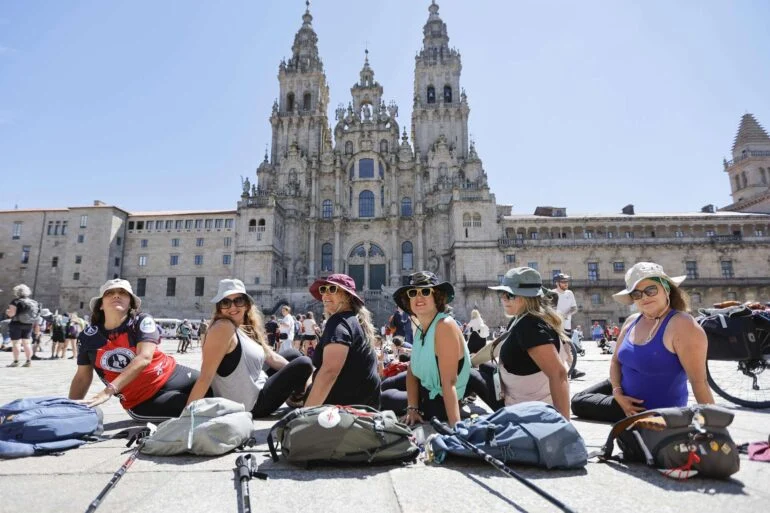
There is, evidently, that secular-religious duality among those who embark on the Route, as the Church has been inventorying for many years at the time of granting the Compostelas, and it is a phenomenon that is all the more worrying, from the strict ecclesiastical approach, to the same extent that, in a totum revolutum, no one has bothered to try to properly differentiate the pilgrim from the tourist. Furthermore, as an added factor, the Xunta de Galicia has been using the claim of the Camino for some time to turn it into the axis, center and main nucleus of its tourism policy, contributing largely to that initial deturpation that the Pontiff denounces but to which some ecclesial establishment joined with surprising effusiveness against the good judgment of the Archbishopric, trying to enforce the biblical principle that his Kingdom is not of this world.
What's more, even in the aforementioned papal audience, it is surprising that the services provided in Finisterre, more typical of other rites, mythologies, and supposedly transcendent concerns and against which Monsignor Julian Barrio He always tried, during his long teaching, to put his foot down, without often being understood. Even right now there is very questionable and euphoric following academics of which it would be good if their origin were known and who would demand a less effusive capitulation, as the illustrious neighbor of Manganeses de la Polvorosa taught us. Because, it is worth repeating it once again, the Camino, in its religious aspect, which was what allowed it to survive throughout the centuries, ends in Compostela. Everything else is folklore, gymnastics or strictly mundane, pretend interest.
FOUNTAIN: DIARY OF SANTIAGO

















