



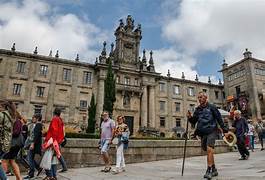
The growth of Camino de Santiago forces us to reflect on the balance between welcoming the pilgrim and the quality of life of the residents
Santiago de Compostela faces an uncomfortable, but increasingly necessary question: Is it possible to continue increasing the number of visitors without putting the essence of the city at risk?
A recent study on the perception of tourism in the Galician capital has reopened a debate that has been on the table for years. Under a phrase as forceful as it is revealing —"while we count pilgrims, we stop counting neighbors"—, the report warns about the consequences of a increasing tourist pressure, especially in the city's historic neighborhoods.
The most striking fact is that, although pilgrims are often pointed out as responsible for the overcrowding, they only represent the 22.7% of the tourism that Santiago receives, dismantling the idea that the Jacobean phenomenon is the only factor behind the changes that the city is experiencing.
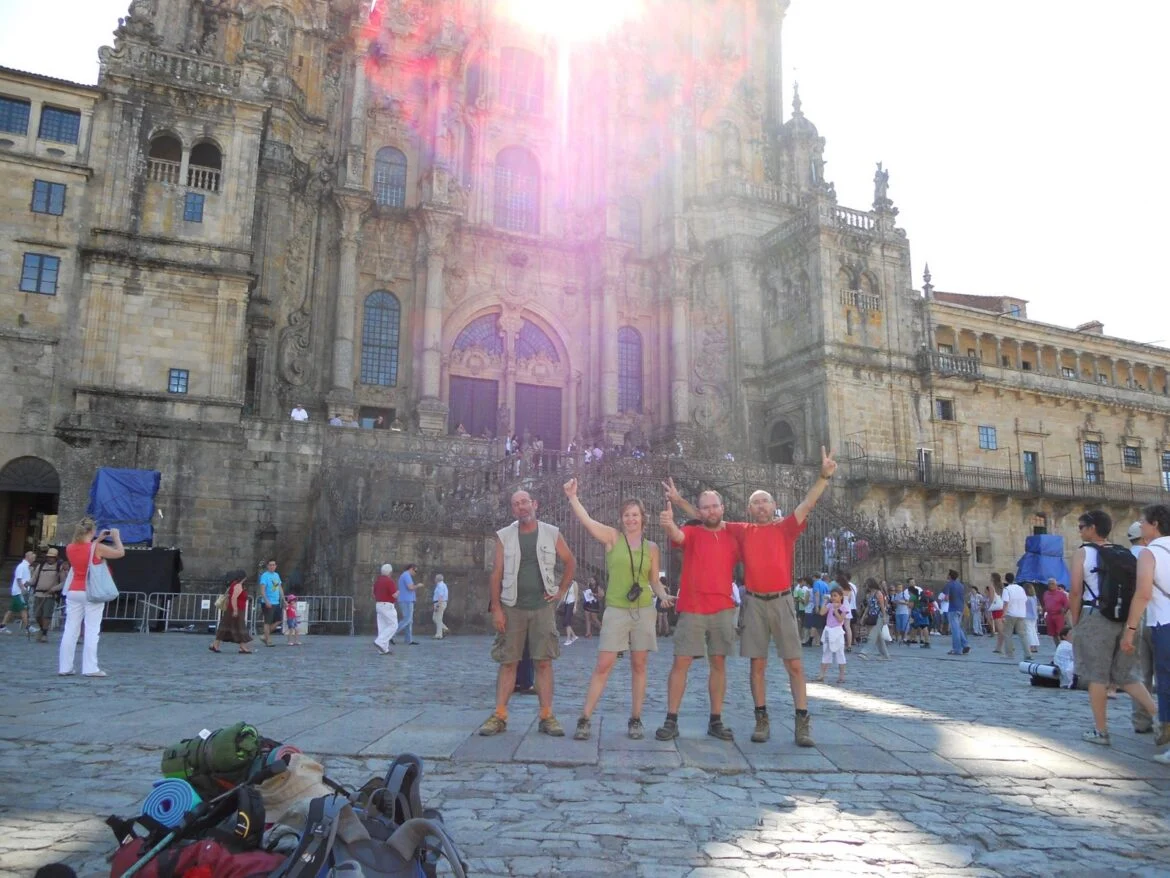
However, the number of pilgrims has not stopped growing. According to the study, in the last decade the arrival of walkers has increased more than one 110%, profoundly transforming the reality of Compostela.
The question is not whether the Camino de Santiago is positive. It is.
Generates employment.
Keeps businesses open.
Attracts investment.
And it has contributed to revitalizing many rural municipalities that, without the passage of pilgrims, would have suffered even more depopulation.
But that does not prevent us from recognizing an obvious reality: When a city is no longer habitable for those who live in it, something is being done wrong..
The increase in housing prices, the proliferation of tourist accommodation, the disappearance of traditional commerce and the progressive loss of population residing in the historic center are phenomena that are increasingly worrying Compostela residents.
Because a city without neighbors stops being a city.
And it runs the risk of becoming a decoration.
Paradoxically, many visitors come to Santiago looking for authenticity, hospitality and neighborhood life. However, the study itself indicates that some tourists perceive certain areas of the historic center as uninhabited spaces, where it is difficult to identify the presence of those who have given soul to the city for generations.
The challenge, therefore, is not to choose between neighbors or pilgrims.
The real question is how to ensure that both can coexist.
The Camino de Santiago has always been an example of balance between welcome and humanity.
But to preserve that spirit it will be necessary to commit to policies that favor access to housing, protect local commerce and better distribute tourist flows throughout the year and the territory.
Because success cannot be measured solely in numbers.
It is not enough to count compostelas.
It is not enough to break visitor records.
We will also have to wonder how many residents still live in the historic center.
How many families can afford to stay in their neighborhood.
And how many children continue to play in the squares that once made Santiago a living city.
Defending the Camino de Santiago also means defending the places and people that give it meaning.
Because if one day we stop counting neighbors, perhaps we will discover too late that we have also begun to lose the soul of the Camino.

















