The incredible story of the pilgrims who defied medieval norms to reach Compostela
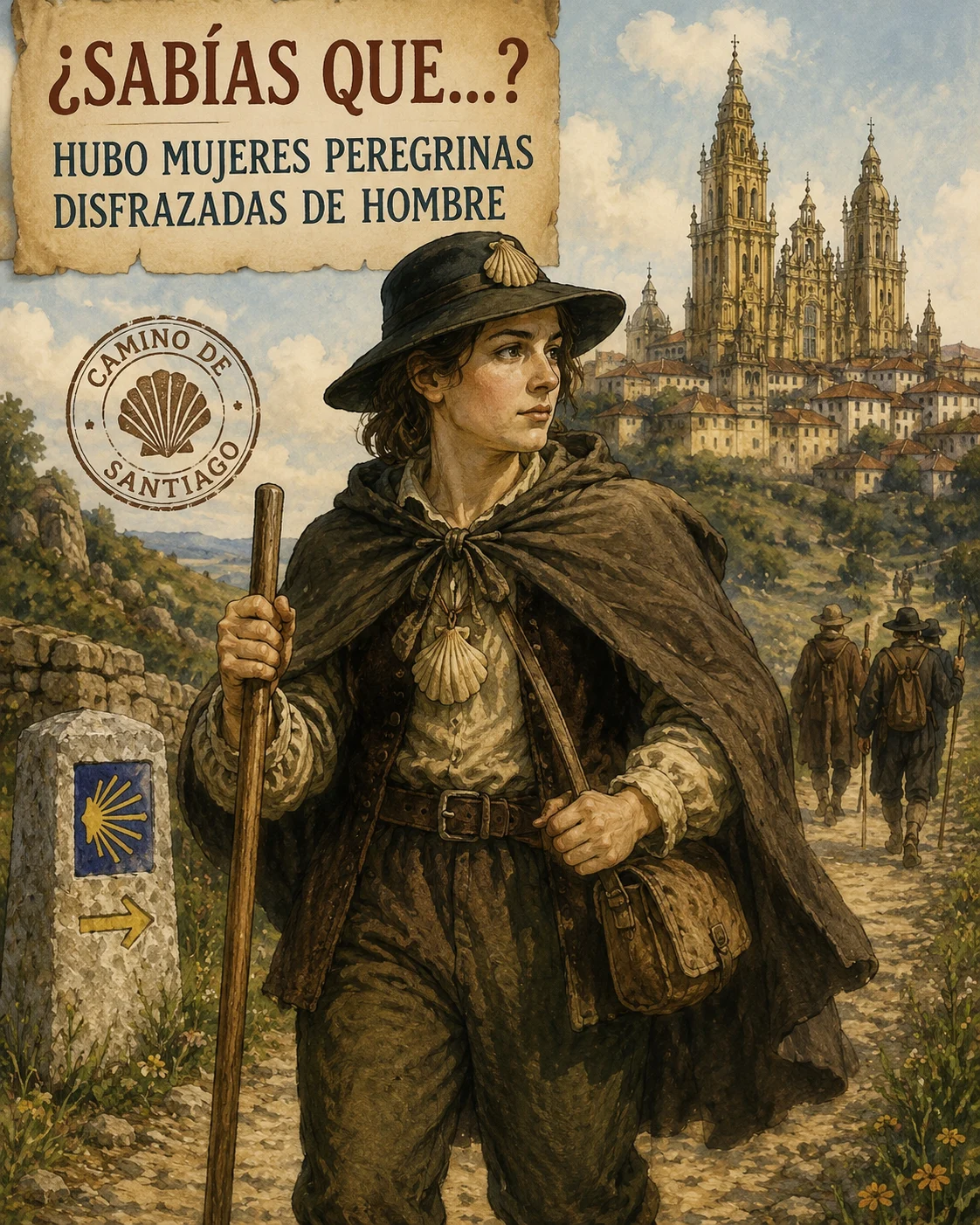
When we think of the medieval pilgrims who walked the Camino de Santiago, we usually imagine men with capes, wide-brimmed hats, staff and pumpkin walking towards Compostela. However, Jacobean history holds a fascinating secret: for centuries, numerous women performed the pilgrimage disguised as men in order to travel with greater safety and freedom.
This is one of the most surprising and least known stories of the Camino de Santiago.
Traveling as a woman in the Middle Ages was not easy
It's hard to imagine today, but for much of the Middle Ages, traveling alone as a woman could be extremely dangerous.
The roads were full of risks. There were bandits, armed conflicts, diseases, wild animals and long stretches completely isolated.
Furthermore, medieval society imposed strong limitations on female mobility.
In many places it was considered inappropriate for a woman to travel alone for weeks or months away from home.
For this reason, many pilgrims needed to travel accompanied by family members, religious groups or organized caravans.
However, some decided to look for another solution.
The costume that opened the way for them
Various historical documents relate cases of women who chose to dress as men to undertake the pilgrimage.
They cut their hair.
They wore men's clothing.
They hid their identity.
And they integrated among the groups of pilgrims without revealing who they really were.
In this way they could move more freely, avoid certain suspicions and reduce some of the dangers that women travelers faced.
It was not a simple decision.
If they were discovered they could face legal, religious or social problems.
But for many of them the desire to get to Santiago was stronger than the fear.
Saint Marina and other Jacobean legends
Among the best-known stories stands out that of several saints and pilgrims whose lives were shrouded in legend.
One of the most famous is Saint Marina, who according to some traditions traveled disguised as a man and even lived as a monk for years without revealing her identity.
Although some details belong to the realm of religious tradition, these narratives reflect a historical reality: women found multiple ways to participate in pilgrimages that officially seemed reserved for men.
Stories of women who defied social norms are repeated in numerous medieval European stories.
The pilgrims existed from the beginning
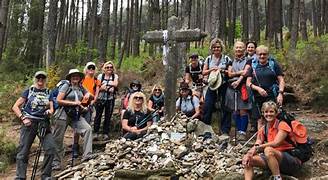
Contrary to what many believe, women were present on the Camino de Santiago from the first centuries of the pilgrimage.
Queens.
Nobles.
Peasants.
Religious.
Widows.
Merchants.
Women from all walks of life undertook the journey to Compostela.
Some sought to fulfill a religious promise.
Others wanted to ask the Apostle James for help.
Some performed penance.
And others simply longed to live an extraordinary spiritual experience.
Historical records show that women were part of the Jacobean phenomenon from its origins.
The Camino as a space of freedom
For many pilgrims, the Camino meant more than just a religious journey.
It represented a unique opportunity to escape the limits imposed by the society of the time.
For weeks or months they could explore unknown territories, meet new people and experience a freedom difficult to find in daily medieval life.
Precisely for this reason, some historians consider that the Camino de Santiago was also a space for female emancipation long before modern movements for women's rights existed.
A little known story
Despite the importance of these pilgrims, for a long time their role remained in the background within the traditional stories about the Camino.
Most medieval chronicles were written by men and focused mainly on kings, nobles, bishops, or male characters.
However, recent research has made it possible to recover many forgotten stories.
Today we know that thousands of women actively participated in the Jacobean pilgrimages and that some came to play a fundamental role in hospitality, the organization of shelters and the international dissemination of the Camino.
The legacy of those women
The women who walked to Santiago disguised as men left an extraordinary legacy.
His bravery demonstrates the extent to which the Camino de Santiago was important to the people of the time.
They were willing to travel hundreds of kilometers.
To challenge social norms.
To take considerable risks.
And all this to reach the tomb of the Apostle.
Its story continues to inspire thousands of pilgrims who travel the Jacobean routes every year from all corners of the world.
A Path for all
Today the Camino de Santiago is one of the great symbols of equality and encounter between cultures.
Men and women walk together sharing trails, shelters and experiences.
It is difficult to imagine that there was a time when some women had to hide their identity in order to make the same pilgrimage.
However, thanks to their determination and courage, those pioneers helped build the open and inclusive Camino we know today.
The next time you see a pilgrim advancing towards Compostela, remember that centuries ago other women walked those same paths facing much greater challenges.
And some of them did so dressed as men to pursue a dream that no one could stop.