The stone representation of Santiago the pilgrim, considered the oldest in the world, located in the church of Saint Martha of Tera, in Zamora, it suffers a progressive deterioration. The Zamoran Association of the Caminos de Santiago demands urgent measures to avoid irreversible damage to a Romanesque piece from the 12th century.
There are images of the Camino de Santiago that we know because they appear in guides, coins, stamps or photographs. And there are others whose importance is much greater than it seems at first glance.
One of them is located in Saint Martha of Tera, in Zamora.
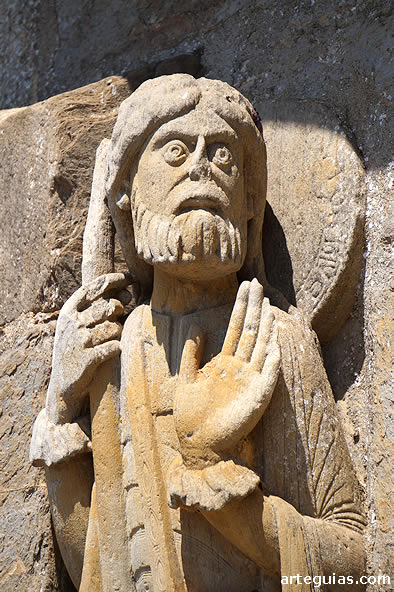
On the south façade of its church there is a Romanesque carving of Santiago dressed as a pilgrim, dated to the second quarter of the 12th century and considered one of the oldest representations in the world of the Apostle with the attributes of the pilgrim.
Today, that sculpture worries.
And a lot.
A unique piece exposed to the elements
The Zamorana Association of the Caminos de Santiago has been warning for years about the deterioration of the image.
The carving remains outside the temple, directly exposed to rain, frost, sudden changes in temperature, wind and bird droppings.
According to the association, wear and tear progresses year after year and there is fear that, if effective measures are not taken, part of the sculpture could end up being irreversibly lost.
The problem is not new.
For years, different voices have been calling for a definitive solution.
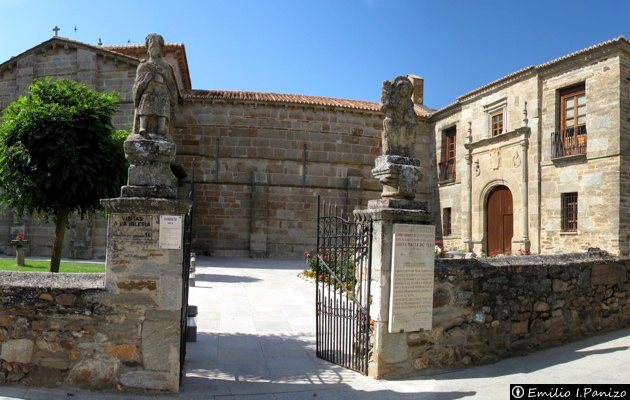
A pilgrim Santiago from the 12th century
The importance of this figure lies in its age and the iconography it represents.
Santiago appears with a staff in his right hand, his left palm open, and a pouch at his waist adorned with a scallop shell.
That is, practically all the elements that today we associate with the traditional image of the Jacobean pilgrim.
The sculpture is also in full Sanabrés Road, one of the historical routes that lead to Santiago de Compostela.
It is not just a work of art.
It is also an essential piece to understand how the figure of the pilgrim was visually constructed throughout the Middle Ages.
A roof that has not solved the problem
In recent years, protection was installed over the image to try to protect it from the rain.
However, the solution has not been enough.
The structure has also become a resting place for birds, whose droppings end up falling on the sculpture itself.
The acidity of this waste directly affects the stone and aggravates a deterioration that is already caused by environmental exposure.
At first glance you can see accumulated debris and signs of wear in different areas.
They demand to move it inside
The Zamoran Association of the Caminos de Santiago has long defended that the original carving should be moved inside the temple and replaced outside by a replica.
It wouldn't be something exceptional.
There are numerous examples of historical sculptures that have been removed from facades and open spaces to prevent their loss, while exact copies are maintained outside that allow the original image of the complex to be preserved.
The proposal seeks exactly that.
Preserve the piece.
Keep it visible.
But prevent it from continuing to deteriorate year after year.
An agreement that has not yet been executed
The concern increases because several years ago an initiative favorable to protecting and moving the sculpture was approved in the Cortes of Castilla y León.
However, the measure has not materialized.
The association criticizes the fact that different Culture officials have shown sensitivity to the problem, but without adopting a definitive solution.
Meanwhile, time continues to pass.
And the stone is still exposed.
An image known to millions of Spaniards
The carving of Santa Marta de Tera also has a very particular history within popular culture.
His image appeared in a five peseta coin on the occasion of the Jacobean Holy Year of 1993.
It was also reproduced on a stamp issued by Correos in 1995 within a series dedicated to World Heritage.
That is to say, millions of people have ever had this figure in their hands without perhaps knowing that the original is still displayed in a small church in Zamora.
Santa Marta de Tera, much more than a stop
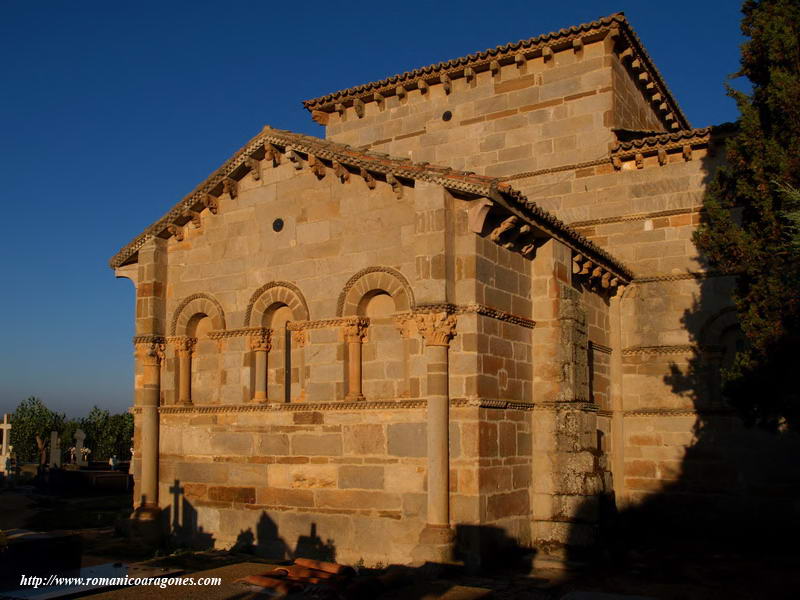
The church of Santa Marta de Tera is also known for another extraordinary phenomenon.
Around the spring and autumn equinoxes, a ray of sunlight enters through an oculus of the temple and illuminates a capital of the presbytery for a few minutes, known as the “capital of the saved soul.”
This phenomenon attracts visitors, scholars and heritage lovers every year.
But the carving of Saint James the pilgrim continues to be one of the great jewels of the building.
And possibly one of the most important pieces of the entire Jacobean heritage of Castilla y León.
Heritage also needs protection
The Camino de Santiago is not only a network of trails.
It is also churches, bridges, hospitals, monasteries, sculptures, documents and thousands of small pieces spread throughout the entire geography.
Many of them have survived for centuries.
But that doesn't mean they can do it forever without care.
The carving of Santa Marta de Tera has been contemplating the passing of generations for almost nine hundred years.
The problem is that each winter leaves a small mark.
Every rain.
Every frost.
Every temperature change.
Every year of waiting.
A race against time
The question is no longer whether the sculpture needs protection.
The question is how much longer it can remain in those conditions.
The association demands action before the damage is irreversible.
Because when a piece of these characteristics disappears, it cannot be recovered.
A replica can be made.
A photograph can be studied.
A shape can be reconstructed.
But the original will have been lost.
And in this case we are talking about one of the images that best represents the history of the Camino itself.
The pilgrim Santiago of Santa Marta de Tera has been waiting for almost nine centuries for those who pass in front of it. Now perhaps it is time for the Camino to also take care of Santiago.