



How a town in Galicia became a cheese paradise: Whoever made the Camino de Santiago knows what it represents Arzúa: in this Galician town of 6,000 inhabitants the French Way and the Primitive join together; and being 40 km from the end point of the Jacobean route, for many it represents the last stage of their long walk. For this reason, all year round - especially in spring and summer - you see pilgrims going up the central Rua Cima do Lugar tiring their legs with their backpacks, but with the anxiety of being close to the finish line. This explains why there is a surprising number of accommodations, among the hostels (such as the one in Ribadiso, which dates back to the Middle Ages), the hostels and a good number of boutique hotels located in lavish mansions and elegant stately homes.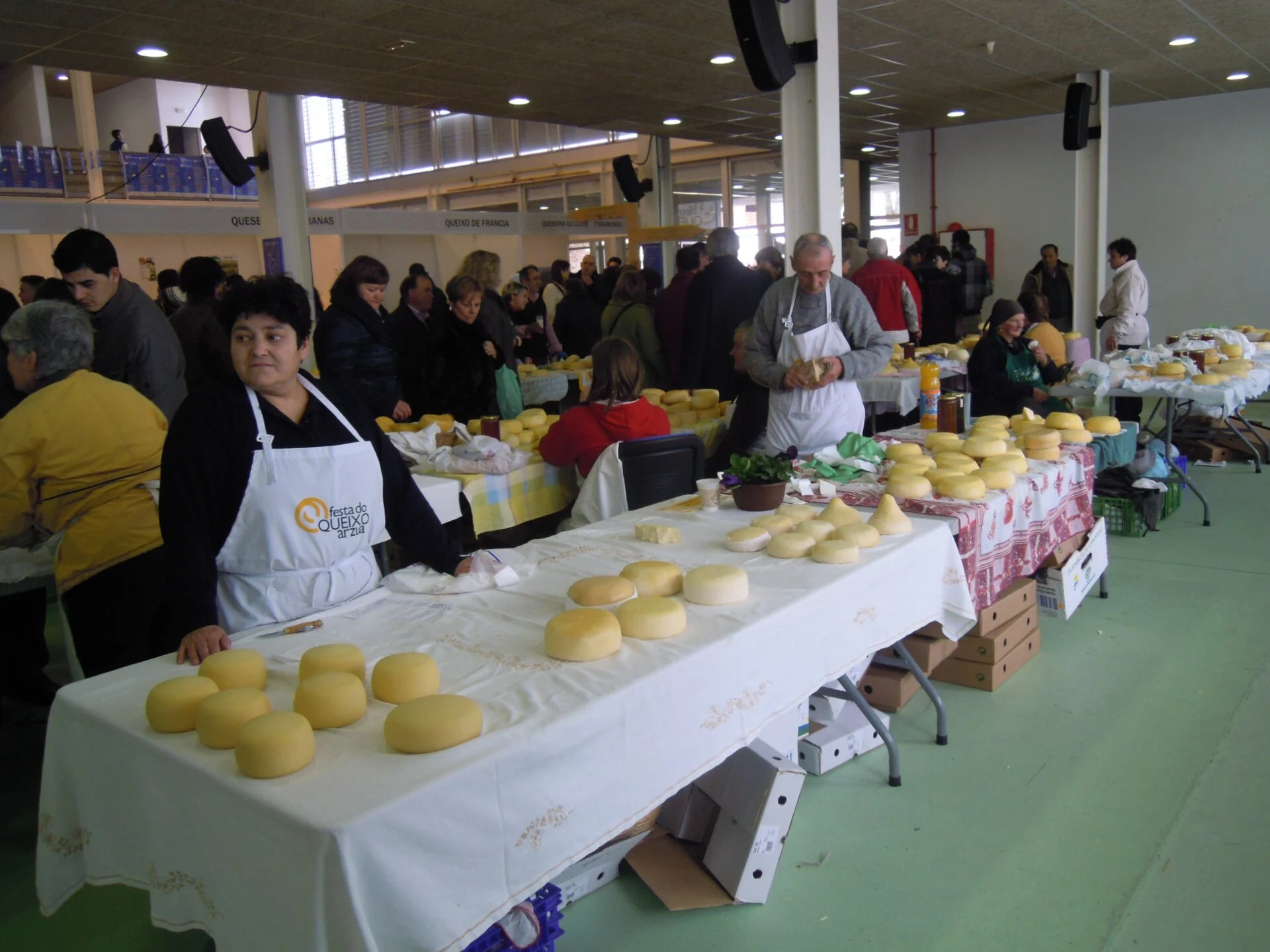
Arzúa It is also land of legends -almost each of its 22 parishes has one to tell-, of streams that jump between the rocks, of the bucolic calm of the reservoir of Portodemouros, of granaries and more granaries, of churches with their stones darkened by the centuries, of chapels lost in the middle of the forest, of valleys of such an intense color that the place is promoted like a green paradise. And cheeses, many cheeses.
Learning to taste
“Wait, not yet. First you have to open the cheese and sniff it. Do you smell butter? Well, you take a small piece, squeeze it between your fingers, and sniff it again. And now? Look how it has changed, and the aroma of milk feels more intense." Thank goodness I am with a tasting expert who teaches me to perceive the visual and organoleptic sensations that, in this case, the Arzúa-Ulloa DOP, the symbol of a town with gallons to be the capital of cheese, at least, in Galicia.
We are in Brandariz House, 10 minutes from Arzúa. It is a rural estate from the 16th century transformed into a boutique hotel, where within its stone walls I continue to learn how to taste this cow's milk cheese, to close your eyes and feel its soft and creamy flavor, where the nuances of milk and butter are perceived.
FOUNTAIN: NATIONAL GEOGRAPHIC

















