Much more than the French Way
When someone talks about the Camino de Santiago, most people automatically think of the Camino Frances. It stands to reason. This is the best-known route, the most traveled and the one that appears in most photographs, documentaries and pilgrimage guides.
However, there is a reality that surprises even many veteran pilgrims: the Camino de Santiago is not a single route, but an enormous network of paths that extends throughout Europe.
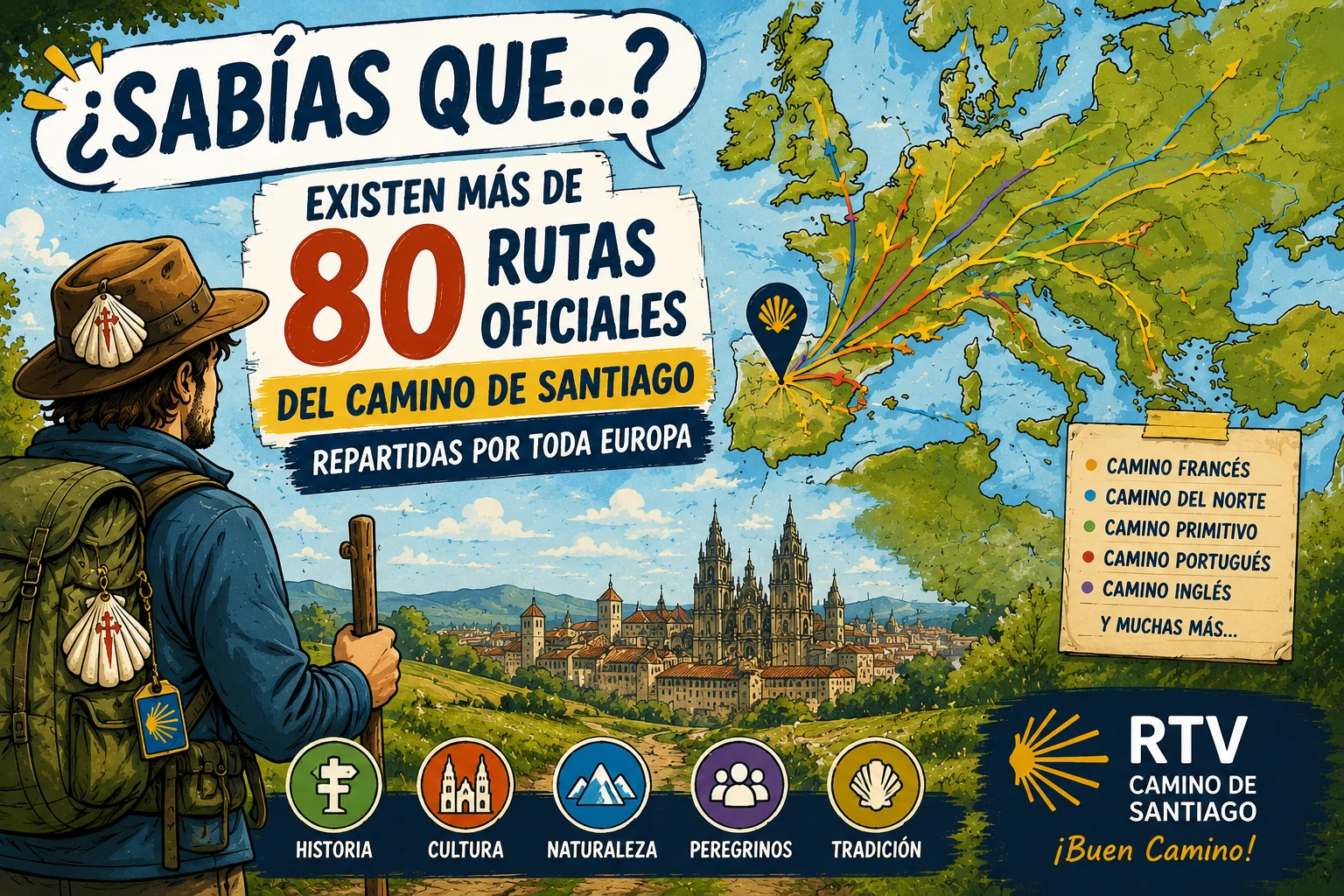
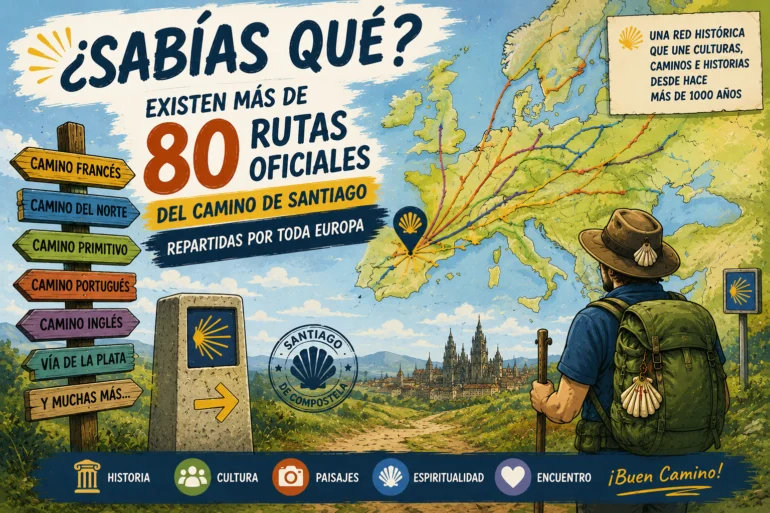
Currently there are more than 80 official Jacobean routes recognized, signposted and documented, making the Camino de Santiago one of the largest historical and cultural networks in the world.
A network that unites all of Europe
Since the Middle Ages, millions of pilgrims have traveled to Santiago de Compostela from different European countries.
As the number of walkers increased, new paths emerged that connected towns, cities and entire regions with the main route.
France, Portugal, Italy, Germany, Belgium, Switzerland, Poland, the Netherlands and even some Scandinavian countries developed their own Jacobean itineraries.
All of them had a common objective: to lead the pilgrim to the tomb of the Apostle Santiago in Galicia.
Over the centuries, many of these routes were forgotten, but in recent decades they have been recovered and signposted, allowing thousands of people to travel them again.
The French Way remains the most popular
Despite the enormous variety of existing routes, the French Way continues to be the most traveled by pilgrims.
Its history, abundance of hostels, signage and the large number of services available mean it remains a favorite option for many walkers.
This route passes through emblematic places such as Roncesvalles, Pamplona, Logroño, Burgos, León, Astorga, Ponferrada and finally Santiago de Compostela.
But every year interest grows in other, less crowded paths that offer completely different experiences.
Some routes you may not have known about
In addition to the French Way, there are numerous alternatives to get to Santiago.
Among the best known we find:
- North Road.
- Primitive Path.
- Portuguese Way.
- English Way.
- Via de la Plata.
- Winter Road.
- Sanabrés Road.
- Basque Route of the Interior.
- Aragonese Way.
- Lebaniego Road.
- Fisterra and Muxía road.
Each one has its own personality.
While the Camino del Norte accompanies the pilgrim next to the Cantabrian Sea, the Camino Primitivo crosses spectacular Asturian mountains. The Portuguese Way stands out for its cultural richness and the Lebaniego Way allows you to discover one of the most important holy places in Christianity: Santo Toribio de Liébana.
Much more than walking
One of the reasons why the Camino de Santiago continues to attract thousands of people every year is that it offers much more than a simple sporting experience.
Each route allows you to discover historical monuments, Romanesque churches, cathedrals, monasteries, castles, natural landscapes and centuries-old traditions.
Furthermore, the Camino has become a meeting place between people of different cultures, ages and nationalities.
It is not unusual to share a table with pilgrims from several continents in the same hostel.
This diversity is precisely one of the great riches of the Jacobean phenomenon.
A unique heritage in the world
Few historical routes can boast a network as extensive as that of the Camino de Santiago.
More than a thousand years after the first medieval pilgrims, the yellow arrows continue to guide thousands of walkers towards Compostela.
What began as a religious pilgrimage ended up becoming a cultural, social and tourist phenomenon of global reach.
And although most people still associate the Camino with the famous French Way, the reality is much broader.
There are more than 80 official routes waiting to be discovered.
Maybe some of them pass very close to your house.
The first step of a great adventure
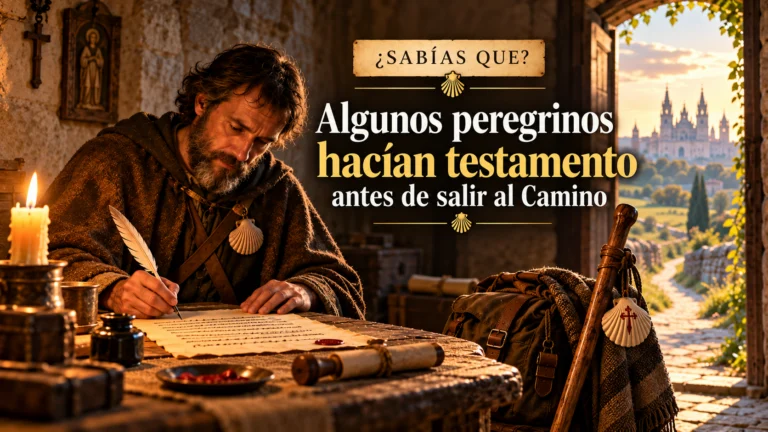
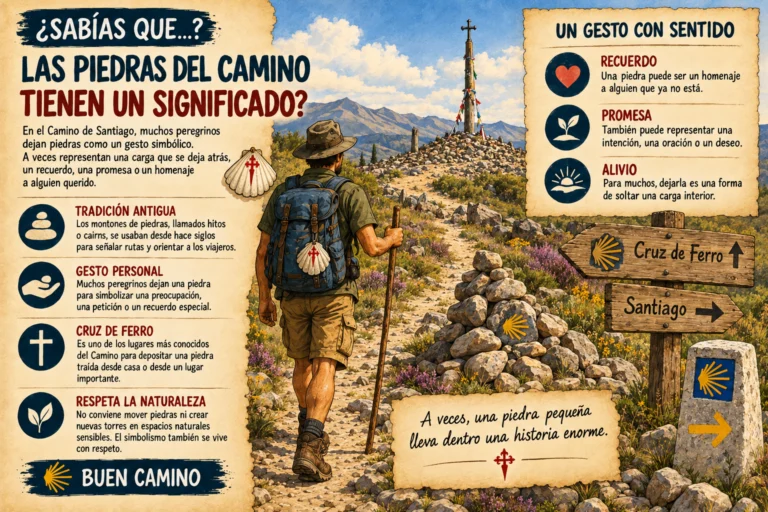
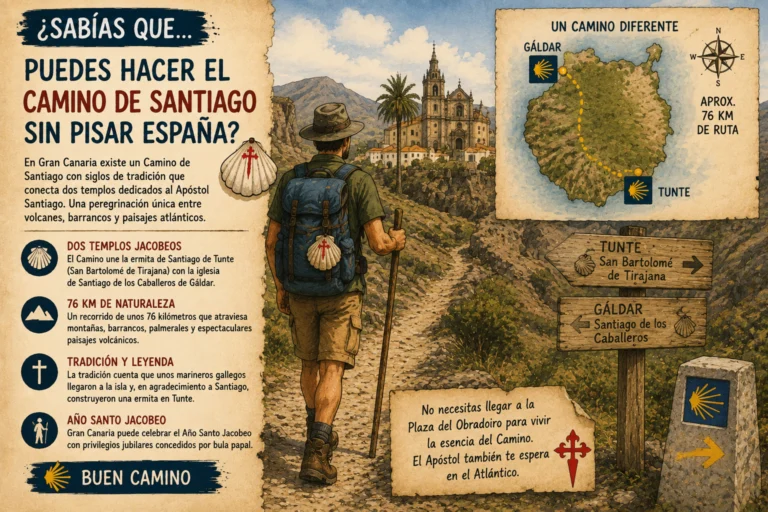
This curiosity inaugurates the new section “Did you know what?” from RTV Camino de Santiago.
Starting today we will discover stories, surprising facts, legends, monuments and curiosities related to the Camino and its pilgrims.
Because behind every yellow arrow there is always something new to learn.
And because the Camino never ceases to surprise.
Did you know the existence of so many Jacobean routes? Which one would you like to visit?